If You're Curious About These Questions...
You should listen to this audiobook
- What if your most intense feelings of rage weren't something to be suppressed, but were actually the hidden catalyst for your personal and collective liberation?
- Have you ever wondered how the ancient practices of mindfulness and meditation could be used as a strategic manual for social justice and systemic change?
- What’s the secret to channeling the heat of anger into a sustainable fire for healing and long-term activism?
Listen to Love and Rage — Cinematic Audio Edition
Loading player...
Key Takeaways from Love and Rage
- Discover how to transform anger from a suppressed emotion or guardian of personal pain into a dynamic force for healing, solidarity, and social justice.
- Understand why anger often acts as a protective layer masking your deepest emotional vulnerabilities, and learn to address the root causes of your pain instead of lashing out.
- Learn how to manage anger constructively by turning inward with kindness and empathetic engagement, shifting your focus from outward aggression to internal self-care.
- Master the SNOELL strategy—Seeing, Naming, Owning, Experiencing, Letting go, and Letting float—to mindfully process and release toxic emotional energy.
- Find out how cultivating and dedicating everyday moments of joy and happiness to others can strengthen your mindfulness muscle and aid in healing your anger.
Learning Tools
Reinforce what you learned from Love and Rage
Mind Map
Love and Rage
Understanding Anger's True Nature+
Processing Anger (SNOELL Method)+
Cultivating Joy and Happiness+
Radical Self-Care and Compassion+
Transforming Anger Through Love+
Quiz — Test Your Understanding
Question 1 of 6
What is the fundamental nature of anger, according to Lama Rod Owens?
Question 2 of 6
In the SNOELL mindfulness method, why is 'Owning' the emotion considered particularly vital, especially for marginalized individuals?
Question 3 of 6
How does the author distinguish between the emotional experiences of happiness and joy?
Question 4 of 6
According to the text, how does true self-care differ from mere self-indulgence?
Question 5 of 6
What specific role does 'silence' play in the practice of self-care described in the book?
Question 6 of 6
What does it mean to 'love our anger' in the context of the book?
Love and Rage — Full Chapter Overview
- 1Recommendation
- 2Anger invites us to see our deepest hurts
- 3We must acknowledge our anger before we can release it
- 4Embracing joy and happiness can help heal our anger
- 5Self-care is the cornerstone of true compassion
- 6We can overcome anger only when we learn to love it
- 7Final summary
Love and Rage Summary & Overview
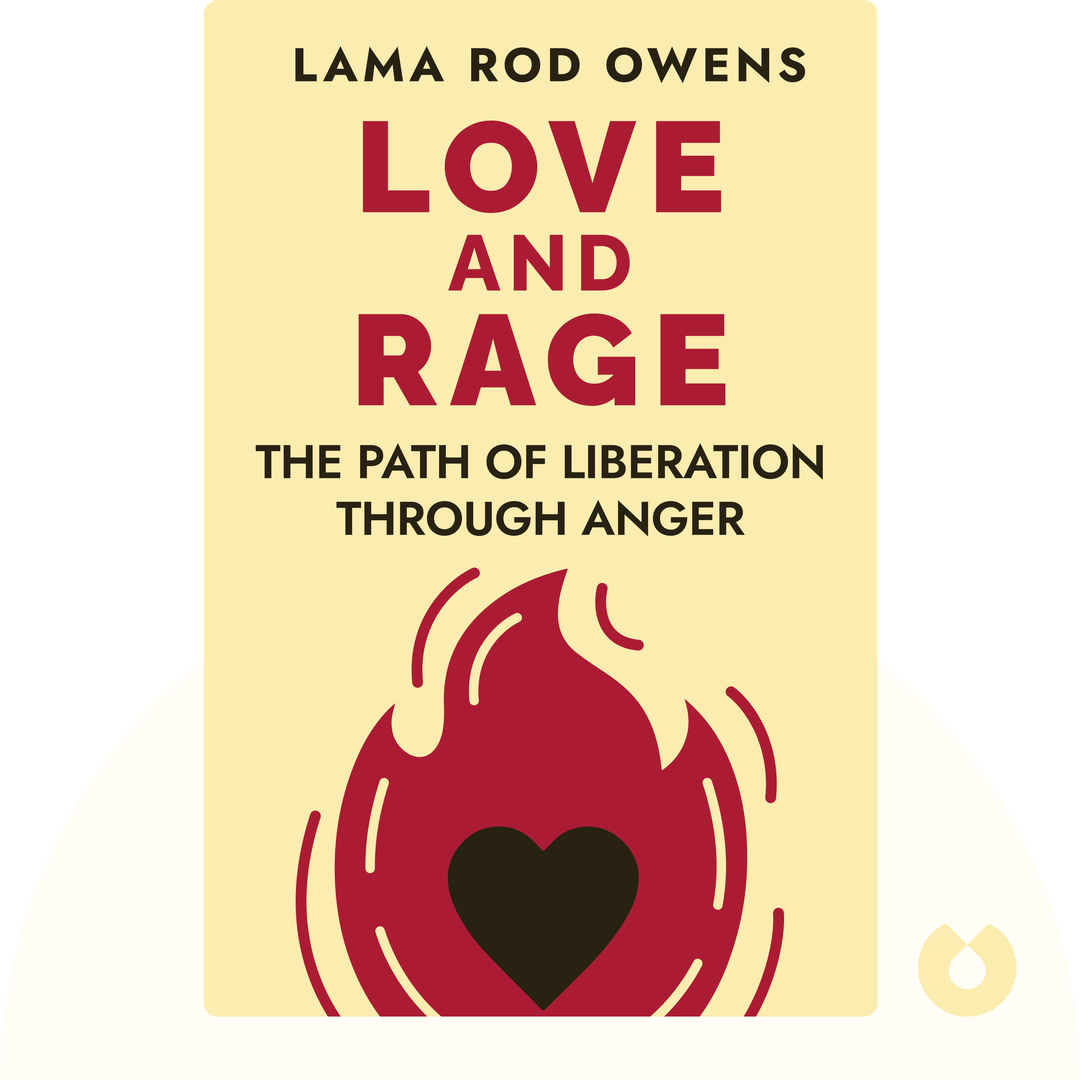
Love and Rage (2020) explores the transformative power of anger in the context of systemic racism and violence. It combines Buddhist philosophy, meditation, and mindfulness to offer a method for turning anger into a constructive force for justice and liberation. A therapeutic guide and a strategic manual for individuals grappling with deep-seated rage, it provides pathways to channel this negative emotion in healing ways.
Who Should Listen to Love and Rage?
- Activists grappling with anger and seeking constructive outlets
- Readers interested in Buddhist philosophy and meditation practices
- Individuals exploring self-help through spiritual and holistic approaches
Books Similar to Love and Rage
Readers who enjoyed this also liked these titles.