If You're Curious About These Questions...
You should listen to this audiobook
- Did you know that the company that once controlled nearly half of the global smartphone market saw its empire crumble in just a few short years?
- What was the secret behind a small, obscure Canadian startup outmaneuvering tech giants to redefine how the entire world communicates?
- Have you ever wondered why the very pioneers who invented the smartphone failed to see the one innovation that would lead to their ultimate downfall?
Listen to Losing The Signal — Free Audiobook
Loading player...
Key Takeaways from Losing The Signal
- Understand why companies must continuously adapt to rapidly changing markets or face extinction, as demonstrated by the dramatic rise and sudden fall of BlackBerry.
- Discover how a perfect symbiosis in leadership—blending engineering genius with sharp business acumen—created the ideal foundation for RIM's technological innovation.
- Learn how diversifying your product portfolio can save a business from disaster, just as RIM survived the loss of a major client by pivoting to create a two-way email communicator.
- Find out how strategic win-win partnerships and clever branding—like choosing a calming, nature-inspired name for a stressful work device—can propel a new product to market dominance.
- Master the art of driving B2B product adoption by targeting key influencers, just as RIM sparked a corporate chain reaction by directly convincing top executives to champion their device.
Learning Tools
Reinforce what you learned from Losing The Signal
Mind Map
Losing The Signal
The Founders' Synergy+
The Rise of BlackBerry+
Defending the Market+
The Apple Disruption+
Internal Collapse+
Core Lessons+
Quiz — Test Your Understanding
Question 1 of 10
What made Jim Balsillie and Mike Lazaridis an ideal leadership pair for RIM in its early days?
Question 2 of 10
Why did RIM shift its focus from supplying radio modems to developing its own portable two-way communicator?
Question 3 of 10
What was the strategic reasoning behind naming the device 'BlackBerry'?
Question 4 of 10
How did RIM successfully establish the BlackBerry in the corporate market?
Question 5 of 10
What was Jim Balsillie's true intention behind the 'BlackBerry Connect' project with companies like Nokia?
Question 6 of 10
According to the text, how did the introduction of the iPhone fundamentally change consumer expectations in the mobile market?
Question 7 of 10
Why did RIM's first touchscreen device, the Storm, fail in the market?
Question 8 of 10
What was a major functional flaw of RIM's tablet, the PlayBook?
Question 9 of 10
What specific event first jeopardized the relationship and trust between co-CEOs Balsillie and Lazaridis?
Question 10 of 10
What is the overarching lesson from the fall of RIM and Kodak as described in the text?
Losing The Signal — Full Chapter Overview
- 1Recommendation
- 2Jim Balsillie and Mike Lazaridis first met in Canada.
- 3Balsillie and Lazaridis chose wireless communication and built their own device.
- 4A partnership with BellSouth helped create the BlackBerry brand.
- 5BlackBerry’s success began by winning over key executives.
- 6By stalling and misleading competitors, Balsillie gave RIM a strong market position.
- 7The iPhone pushed RIM to rush out a rival product, but it failed.
- 8The iPad, technical problems, and another failed product ended RIM’s dominance.
- 9Personal tensions between Balsillie and Lazaridis accelerated RIM’s decline.
- 10Final summary
Losing The Signal Summary & Overview
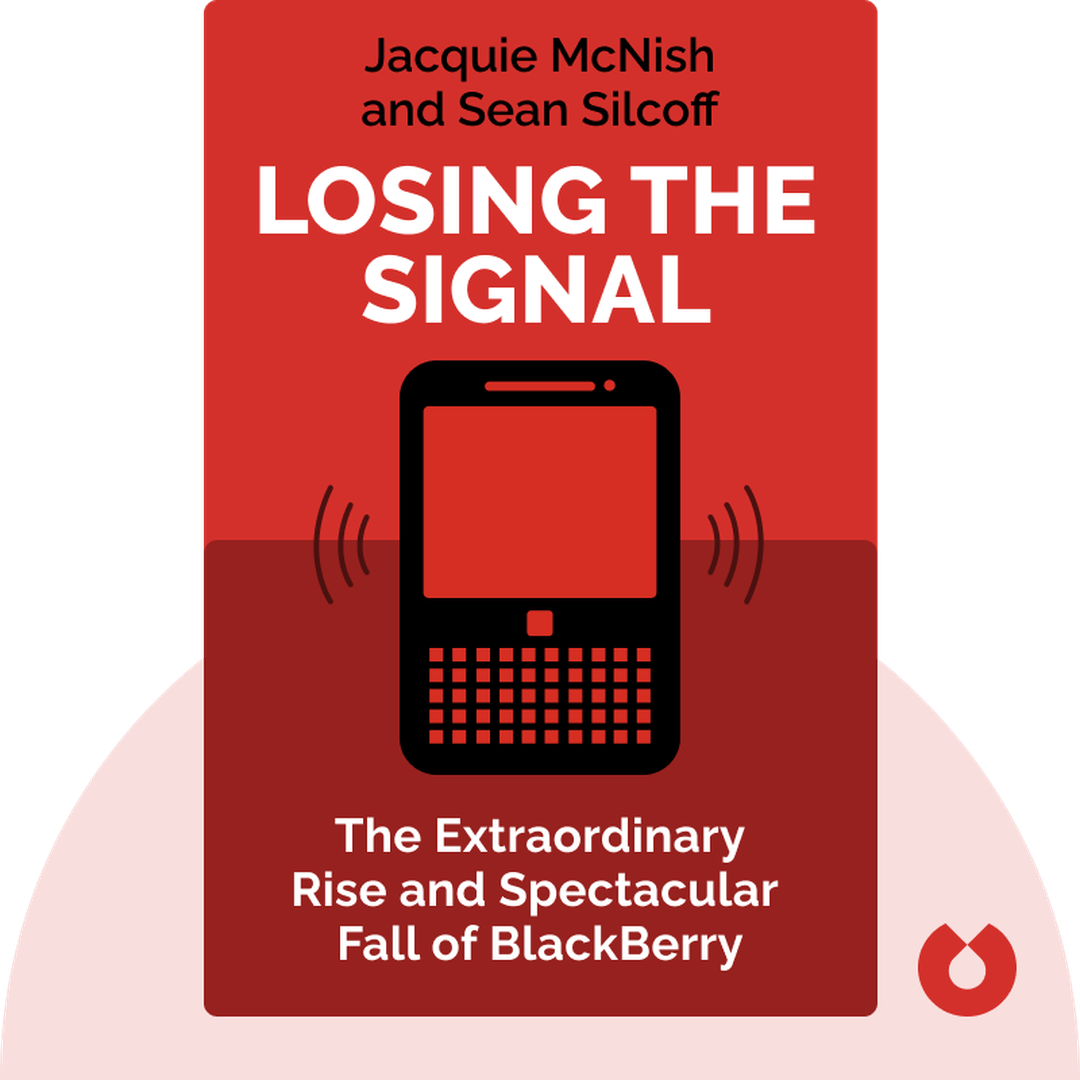
Losing the Signal (2015) tells the story of Research in Motion, the company that created the BlackBerry. Beginning with RIM’s time as a minor contender in wireless communication in the mid-1990s, it takes us through its triumph as the most influential player in the wireless communication devices market in the mid-2000s, and reveals why RIM sank as rapidly as it rose.
Who Should Listen to Losing The Signal?
- Entrepreneurs
- Business leaders
- Anyone interested in technology
Books Similar to Losing The Signal
Readers who enjoyed this also liked these titles.