If You're Curious About These Questions...
You should listen to this audiobook
- Have you ever wondered why the story of your iPhone begins in the dangerous depths of a Bolivian mine and ends in a top-secret laboratory?
- Did you know that many of the iPhone’s most iconic features weren't actually invented by Apple, but were adapted from forgotten military tech and obscure inventors?
- Are you curious about the high-stakes 'Project Purple' and the extreme lengths Apple engineers went to while building a device that would change the world forever?
Listen to The One Device — Free Audiobook
Loading player...
Key Takeaways from The One Device
- Discover why Steve Jobs wasn't the sole visionary behind the iPhone, and learn about the secret team of Apple engineers who actually pioneered its multitouch interface.
- Uncover the hidden human cost behind modern consumer technology, including the harsh realities of South American mines and Chinese mega-factories.
- Trace the surprising century-old history of mobile devices, starting from a 1910 Swedish car phone to IBM's bulky 1990s smartphone.
- Understand how the 1970s oil crisis inadvertently sparked the creation of the iPhone's battery by pushing scientists to develop stable, rechargeable lithium-ion technology.
- Learn why Apple initially viewed the iPhone camera as an afterthought, and how it evolved from an inferior two-megapixel lens into an indispensable 200-part module.
Learning Tools
Reinforce what you learned from The One Device
Mind Map
The One Device
Origins & True Inventors+
Core Technologies+
The Human Cost+
Quiz — Test Your Understanding
Question 1 of 8
Who initiated the early development of the iPhone's multi-touch and user interface technology?
Question 2 of 8
What was the primary reason the first smartphone, IBM's Simon Personal Communicator, failed to achieve widespread popularity?
Question 3 of 8
How did John Goodenough improve early lithium-ion battery design to make it viable for modern electronics?
Question 4 of 8
Which of the following is true regarding Apple's initial attitude toward the iPhone camera?
Question 5 of 8
What early technological breakthrough served as a direct inspiration for the development of Siri?
Question 6 of 8
Why is Cerro Rico in Bolivia, a major source of tin for iPhone components, known as "The Mountain That Eats Men"?
Question 7 of 8
How did Foxconn and Steve Jobs respond to the tragic wave of worker suicides at the Shenzhen plant in 2010?
Question 8 of 8
According to the book, what is a dual purpose of the intense security measures (like facial recognition and barbed wire) at Apple supplier factories like Pegatron?
The One Device — Full Chapter Overview
- 1Recommendation
- 2The iPhone transformed technology, and its story goes far beyond Steve Jobs.
- 3The first mobile phone is a hundred years old, but cell phones only took off in the 1980s.
- 4The iPhone’s rechargeable battery exists thanks to long years of research and experimentation.
- 5The selfie has been around for ages, but the iPhone’s camera made it mainstream.
- 6Early versions of the iPhone’s AI technology were developed decades earlier.
- 7The raw materials inside your iPhone bring immense human suffering.
- 8The components inside your iPhone are built by exploited laborers.
The One Device Summary & Overview
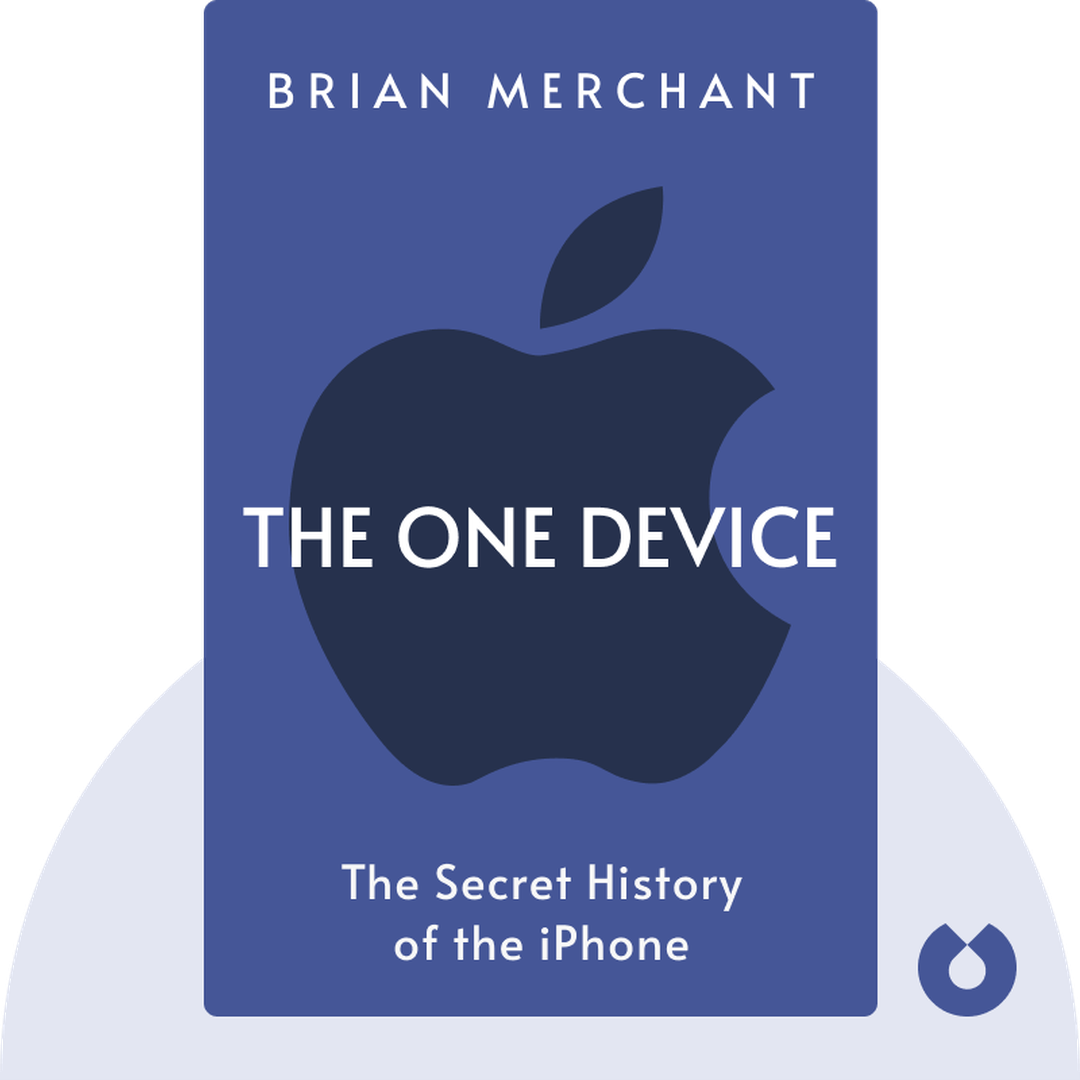
The One Device (2017) lays out the history of what may be the most important piece of technology on the market: the Apple iPhone. From an interview with an IBM engineer to the frightening depths of a Bolivian mine, Merchant takes us everywhere and explains how the iPhone was born and what it means for the world.
Who Should Listen to The One Device?
- Tech geeks and gadget nerds
- Lovers of technological history
- iPhone users
Books Similar to The One Device
Readers who enjoyed this also liked these titles.