If You're Curious About These Questions...
You should listen to this audiobook
- Have you ever wondered why most people end up living someone else’s dream, and how you can avoid the 'drift' that leads to a life of regret?
- What if you could design a personal roadmap that ensures your most important priorities—like family and health—never get pushed aside by your to-do list again?
- What’s the secret to creating a 'Life Plan' that actually sticks, allowing you to regain total control over where your future is headed?
Listen to Living Forward — Free Audiobook
Loading player...
Key Takeaways from Living Forward
- Understand how unawareness, overwhelm, and distraction cause you to silently drift through life, and learn how to consciously regain your direction.
- Discover why an effective Life Plan is not a rigid, one-time assignment, but a dynamic, evolving document that acts as a personal GPS for your future.
- Master the foundation of a meaningful life by answering three pivotal questions: what legacy you wish to leave, what matters most, and how to get there.
- Learn how to use your Life Plan as a reliable filter to evaluate daily opportunities, allowing you to confidently reject distractions and make space for what truly matters.
- Find out how to craft vivid 'Legacy Statements' by imagining the end of your life, identifying your most important relationships, and defining the exact emotional impact you want to leave behind.
Learning Tools
Reinforce what you learned from Living Forward
Mind Map
Living Forward
The Problem: The Drift+
The Solution: The Life Plan+
Question 1: What is my legacy?+
Question 2: What is most important?+
Question 3: How will I get there?+
Creating the Document+
Taking Control of Time+
The Review Cycle+
Quiz — Test Your Understanding
Question 1 of 8
According to the authors, why do many people find themselves disoriented and adrift by the time they reach their forties or fifties?
Question 2 of 8
How do the authors describe the ideal format and function of a Life Plan?
Question 3 of 8
What is the first crucial step and question you must ask yourself when creating a Life Plan?
Question 4 of 8
What are 'Life Accounts' in the context of a Life Plan?
Question 5 of 8
What do the authors recommend regarding the actual process of writing your Life Plan?
Question 6 of 8
To effectively implement your Life Plan, the authors suggest adopting the role of a 'triage officer.' What does this mean?
Question 7 of 8
How do the authors suggest you embed your newly written Life Plan into your consciousness so it doesn't just gather dust?
Question 8 of 8
According to the authors, why should workplace leaders encourage their team members to develop their own Life Plans?
Living Forward — Full Chapter Overview
- 1Recommendation
- 2To take charge of your life, you need a Life Plan.
- 3A Life Plan helps you clarify priorities, set goals, and build a strategy to achieve them.
- 4Your vision for your legacy should guide the design of your Life Plan.
- 5Identify your priorities by assessing your Life Accounts.
- 6To carry out your Life Plan, commit to a clear course of action.
- 7Set aside a full day in the next two weeks to write your Life Plan.
- 8To put your Life Plan into practice, take responsibility for how you use your time.
- 9Your Life Plan will only help you if you act on it.
- 10Final summary
Living Forward Summary & Overview
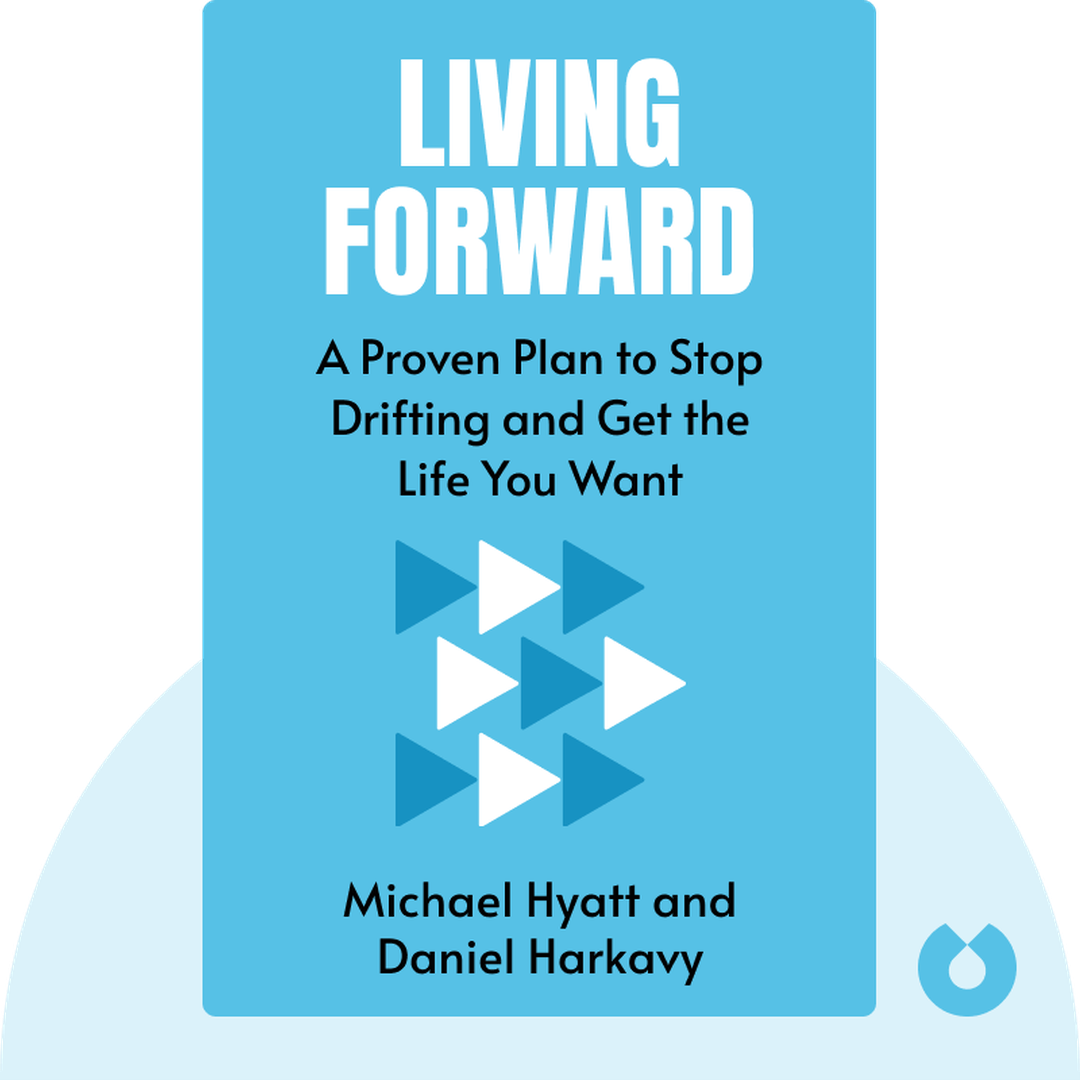
Living Forward (2016) offers a solution to a realization many of us face: our life hasn’t turned out the way we’d hoped. When we don’t have a clear and relevant plan in place, our lives tend to get carried away on tangents and filled up with other people’s agendas. These blinks offer step-by-step instructions on how to create a Life Plan so you can regain control and get to where you really want to be.
Who Should Listen to Living Forward?
- Drifters who want to take control of their lives
- Procrastinators who can’t work out where they want to go
- Stress-heads who struggle with prioritizing personal goals
Books Similar to Living Forward
Readers who enjoyed this also liked these titles.