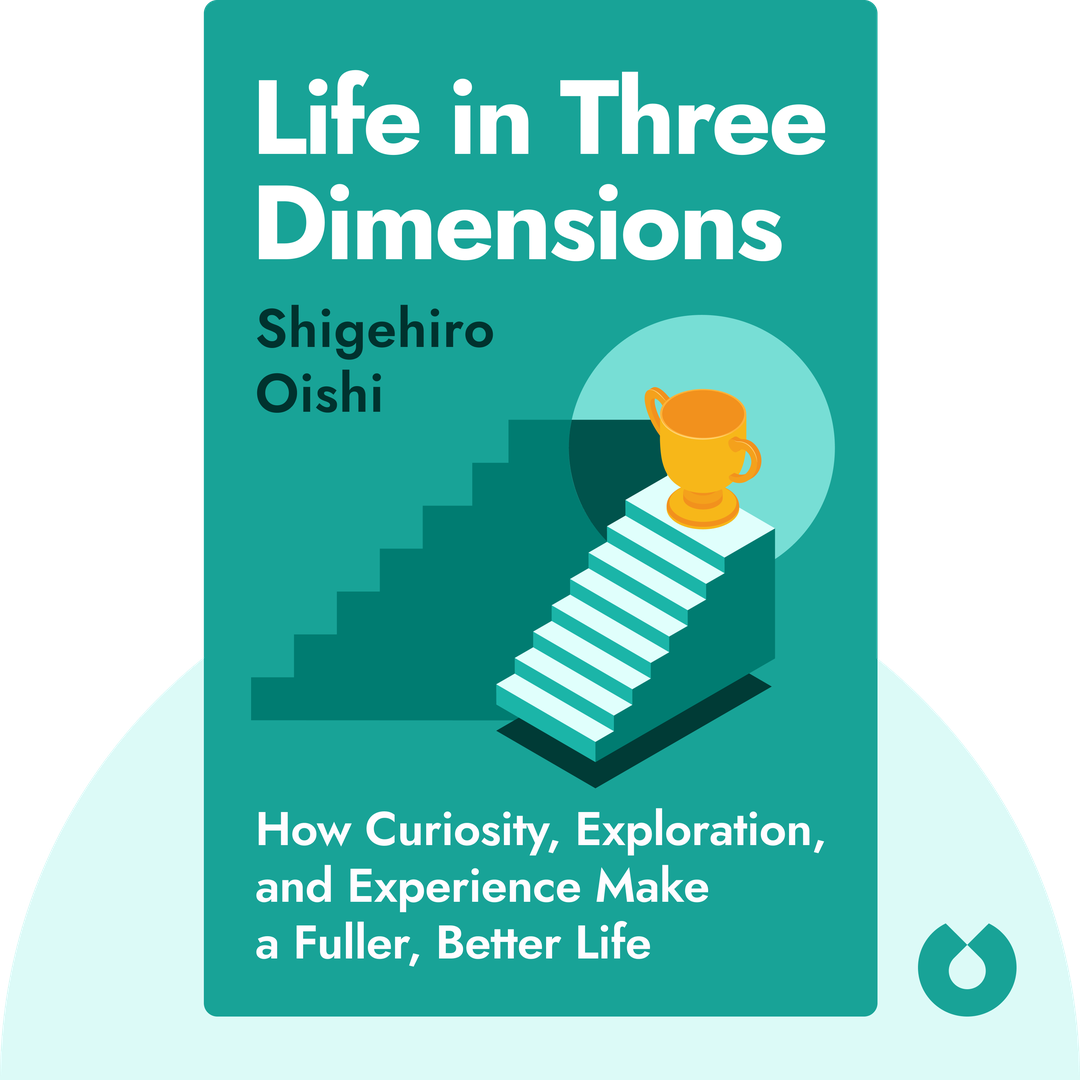
Life in Three Dimensions
Start ListeningDownload Try free on iPhoneScan to start in 5 seconds
Categories:
If You're Curious About These Questions...
You should listen to this audiobook
- Did you know that a truly fulfilling life requires a specific ‘third dimension’ that goes beyond just being happy or having a sense of purpose?
- Have you ever wondered why seeking out variety and perspective-shifting experiences might be more important for your long-term satisfaction than finding stability?
- What if the secret to a rich, vibrant life at any age isn't about how much you achieve, but how you choose to explore the world around you?
Listen to Life in Three Dimensions — Cinematic Audio Edition
Loading player...
Key Takeaways from Life in Three Dimensions
- Discover the 'third dimension' of a well-lived life known as psychological richness, which moves beyond standard happiness and meaning to embrace curiosity, exploration, and surprising experiences.
- Understand the critical differences between the hedonic pursuit of joy and the eudaimonic search for meaning, and why relying solely on either pathway is insufficient for true fulfillment.
- Learn why relentlessly chasing happiness can actually backfire by preventing your natural 'psychological immune system' from effectively processing unavoidable negative emotions.
- Recognize that the emotional boost from personal achievements fades quickly, and that prioritizing career success over close relationships quietly creates a long-term happiness deficit.
- Find out how striving for a grand, world-changing purpose can set you up for disappointment, and why embracing subjective, everyday contributions offers a more reliable route to a meaningful life.
Learning Tools
Reinforce what you learned from Life in Three Dimensions
Mind Map
Life in Three Dimensions
The Three Pathways+
The Happiness Trap+
The Meaning Trap+
Drivers of Psychological Richness+
Cultivating Everyday Richness+
Adversity and Richness+
The Ultimate Conclusion+
Quiz — Test Your Understanding
Question 1 of 8
According to happiness psychologists and the author, what are the three dimensions of a well-lived life?
Question 2 of 8
What is a major downside of the 'happiness trap' when we directly pursue positive emotions?
Question 3 of 8
Why does the author warn against trying to emulate extraordinary figures like Steve Jobs in the pursuit of meaning?
Question 4 of 8
Which of the Big Five personality traits is most strongly linked to naturally gravitating toward a psychologically rich life?
Question 5 of 8
How does the 'network extraversion bias' contribute to a psychologically rich life?
Question 6 of 8
Which of the following is recommended by the author as a practical way to invite psychological richness into your everyday life?
Question 7 of 8
What crucial factor determines whether severe adversity becomes a psychologically enriching experience rather than just a traumatic one?
Question 8 of 8
In the book's concluding analogy of the father and the son, what is the ultimate answer to the question, 'Who is happier?'
Life in Three Dimensions — Full Chapter Overview
- 1Recommendation
- 2Two ways of living
- 3Is there a formula for happiness?
- 4The trap of happiness
- 5The trap of meaning
- 6Happiness or meaning?
- 7The third dimension: psychological richness
- 8Experiencing psychological richness every day
- 9The psychological richness found in adversity
- 10Life in three dimensions
- 11Final summary
Life in Three Dimensions Summary & Overview
Life in Three Dimensions (2025) expands the field of happiness research by introducing the concept of ‘psychological richness’ as a key element of a fulfilling life. The book explores the foundations of psychological richness – curiosity, variety, and exploration – and offers practical strategies for weaving these experiences into everyday life.
Who Should Listen to Life in Three Dimensions?
- Young people looking for a framework to build a fulfilling life
- Life transitioners, from expectant parents to career changers
- Retirees committed to staying curious and seeking new experiences
Books Similar to Life in Three Dimensions
Readers who enjoyed this also liked these titles.