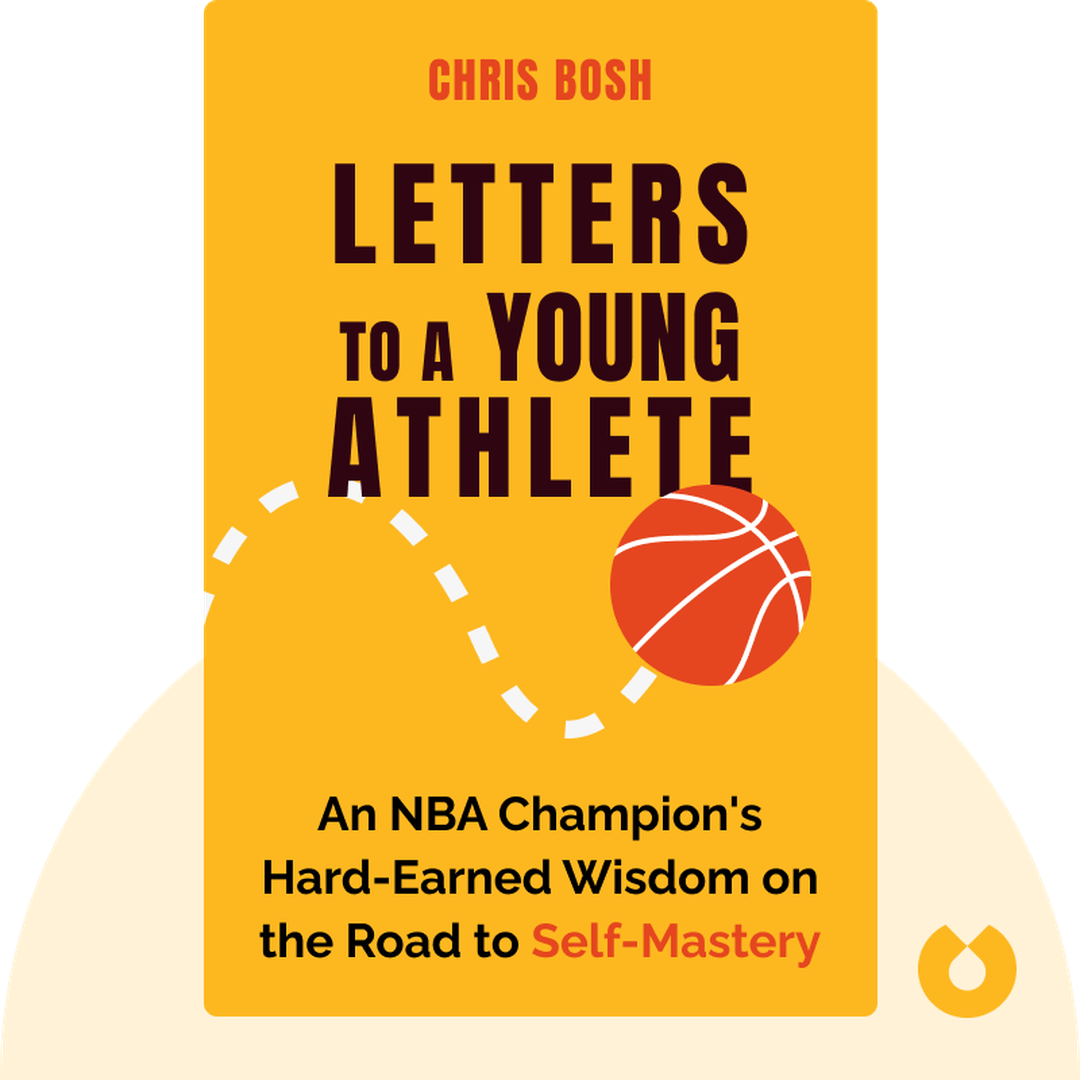
Letters to a Young Athlete
Start ListeningDownload Try free on iPhoneScan to start in 5 seconds
Categories:
If You're Curious About These Questions...
You should listen to this audiobook
- What’s the secret to finding a drive that goes much deeper than the pursuit of money or fame?
- Have you ever wondered why true excellence requires you to master yourself before you can ever hope to master your sport?
- Did you know that the most valuable lessons a champion learns often have nothing to do with what happens on the court?
Listen to Letters to a Young Athlete — Free Audiobook
Loading player...
Key Takeaways from Letters to a Young Athlete
- Discover why you must train past your perceived limits of physical and mental exhaustion to perform effortlessly under immense pressure.
- Learn how to combine your passion with a deeper, higher purpose to sustain your motivation through both devastating losses and triumphant victories.
- Understand why financial rewards are temporary and ineffective motivators compared to dedicating your efforts to a meaningful cause greater than yourself.
- Master the ability to check your ego and prioritize your team's needs, transforming personal struggles into essential, selfless contributions.
- Find out how to embrace the feeling of total exhaustion rather than suppress it, allowing you to tap into hidden reserves and build unbreakable resilience.
Learning Tools
Reinforce what you learned from Letters to a Young Athlete
Mind Map
Letters to a Young Athlete
Training & Limits+
Purpose & Motivation+
Ego & Teamwork+
Winning & Losing+
Holistic Self-Care+
Quiz — Test Your Understanding
Question 1 of 8
What is the primary reason Chris Bosh was able to execute an effortless-looking, crucial pass to Ray Allen during the 2013 NBA Finals?
Question 2 of 8
According to the book, why is money considered a flawed source of motivation for an athlete?
Question 3 of 8
How did Chris Bosh overcome his early struggles when he first joined the NBA and faced more famous stars?
Question 4 of 8
What does Juwan Howard's role on the Miami Heat demonstrate about effective team leadership?
Question 5 of 8
What lesson did Chris Bosh learn from Karl Malone's reaction to losing the 1997 NBA Finals?
Question 6 of 8
What critical distinction must an elite athlete learn to make regarding their physical state, as highlighted by Kawhi Leonard's story?
Question 7 of 8
What is a key purpose of Stephen Curry's intense, choreographed pregame and post-practice routines?
Question 8 of 8
Why does Chris Bosh recommend that young athletes cultivate interests outside of their sport, such as reading or playing an instrument?
Letters to a Young Athlete — Full Chapter Overview
- 1Recommendation
- 2To play beyond your limits, you have to train beyond them.
- 3To deepen your passion, connect it to a higher purpose.
- 4Ego stands in the way of improvement.
- 5To build a strong team, lead by example and nurture communication.
- 6Don’t get too carried away by winning, or too discouraged by losing.
- 7Value your health, your future, and your peace of mind.
- 8If you want to reach your potential, you have to do the work, whatever it takes.
- 9Final summary
Letters to a Young Athlete Summary & Overview
In Letters to a Young Athlete (2021), basketball legend Chris Bosh shares the wisdom he earned through his remarkable career. Bosh shows us that true excellence requires deep motivation, mastery of self, and a commitment to something far greater than money or fame.
Who Should Listen to Letters to a Young Athlete?
- Young athletes
- Their teachers, coaches, and parents
- Anyone who wants to know what it takes to be a champion
Books Similar to Letters to a Young Athlete
Readers who enjoyed this also liked these titles.