If You're Curious About These Questions...
You should listen to this audiobook
- Have you ever wondered why big-budget marketing campaigns often fail while lean, focused strategies consistently win?
- What if you could apply the high-efficiency principles of manufacturing to your marketing to eliminate waste and maximize every dollar spent?
- What’s the secret to moving away from annoying 'interruption marketing' and toward building authentic relationships that naturally convert?
Listen to Lean Marketing — Free Audiobook
Loading player...
Key Takeaways from Lean Marketing
- Discover how to merge authentic, community-driven brand building with ruthless, data-driven measurement to create a predictable profit engine.
- Understand why the best product doesn't automatically win, and how to prioritize strategic visibility over throwing money at aimless ad campaigns.
- Learn to apply Toyota’s lean manufacturing principles to your marketing by systematically eliminating any effort that doesn't add direct value to the customer.
- Find out how to replace wasteful, spray-and-pray advertising with genuinely useful touchpoints that make your marketing feel like a helpful service.
- Master the process of mapping your marketing value chain to uncover and fix hidden inefficiencies, like complex sign-up forms or disconnected messaging between departments.
Learning Tools
Reinforce what you learned from Lean Marketing
Mind Map
Lean Marketing
Core Philosophy+
Lean Principles+
Targeting & Positioning+
Metrics & Growth+
Quiz — Test Your Understanding
Question 1 of 8
According to the text, what is the ideal approach to modern marketing?
Question 2 of 8
What core principle did Toyota use to revolutionize its production system, which serves as the foundation for lean marketing?
Question 3 of 8
How does lean marketing fundamentally differ from traditional advertising?
Question 4 of 8
What does the text identify as a major source of 'waste' within a business's marketing efforts?
Question 5 of 8
What is a key characteristic of 'market-first' thinking?
Question 6 of 8
According to Eugene Schwartz's framework, what defines a 'Solution Aware' customer?
Question 7 of 8
What does the text suggest is often a highly effective path to growth that entrepreneurs frequently overlook?
Question 8 of 8
Why is it crucial for a lean marketer to track 'leading indicators' like weekly email signups?
Lean Marketing — Full Chapter Overview
- 1Recommendation
- 2Why good products fail
- 3How Japan became lean
- 4Creating value through your marketing
- 5Reaching customers where they are
- 6The marketing metrics that really matter
- 7Final summary
Lean Marketing Summary & Overview
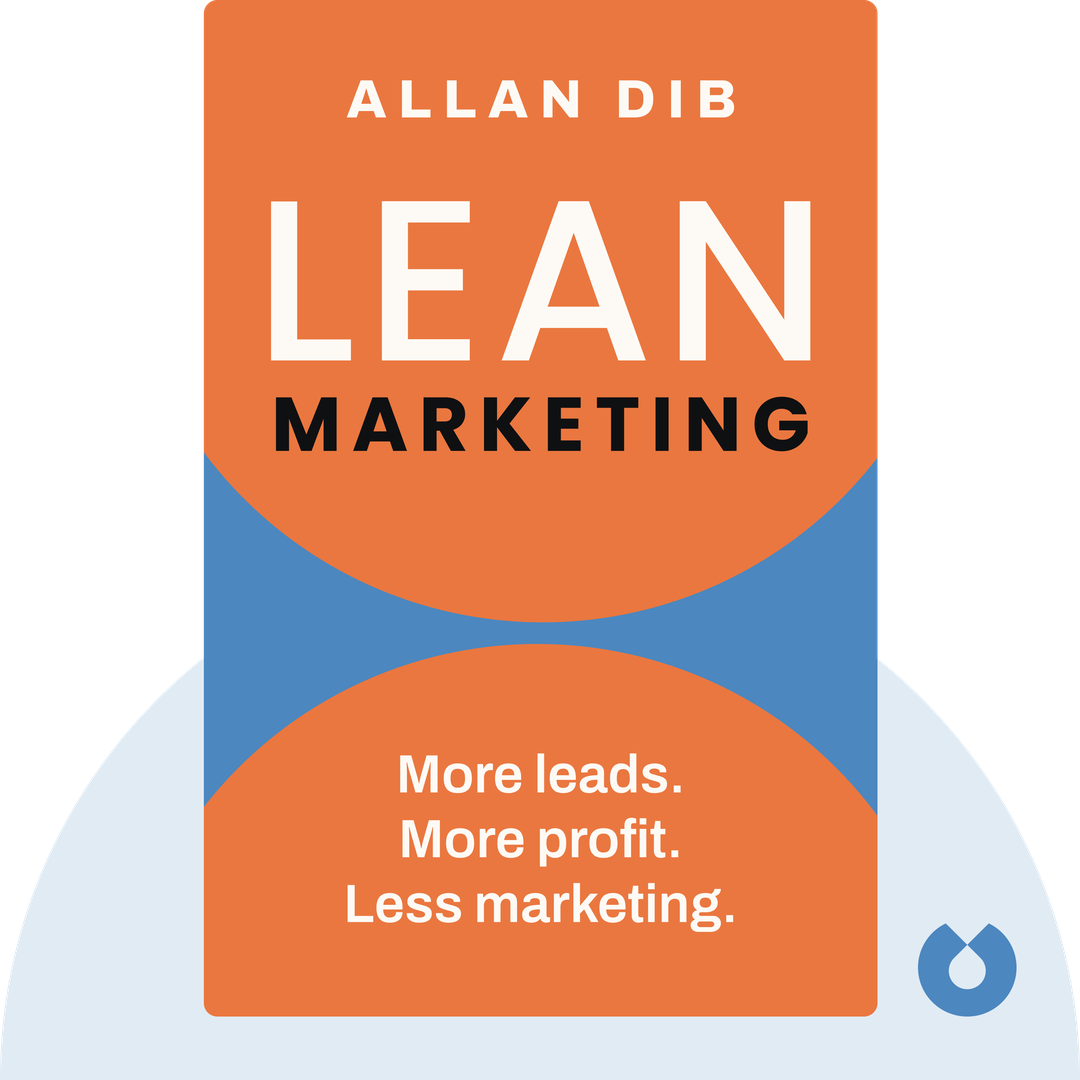
Lean Marketing (2024) addresses the frustration entrepreneurs face when expensive, complex campaigns fail to deliver results. It applies manufacturing efficiency principles to marketing, showing how to eliminate wasteful practices while creating genuinely valuable customer touchpoints. It focuses on precise targeting, meaningful metrics, and building authentic relationships rather than interrupting potential customers with irrelevant messages.
Who Should Listen to Lean Marketing?
- Startup founders tired of burning cash on ineffective advertising
- Small business owners struggling against competitors with bigger budgets
- Anyone in business looking to align product, marketing, and sales
Books Similar to Lean Marketing
Readers who enjoyed this also liked these titles.