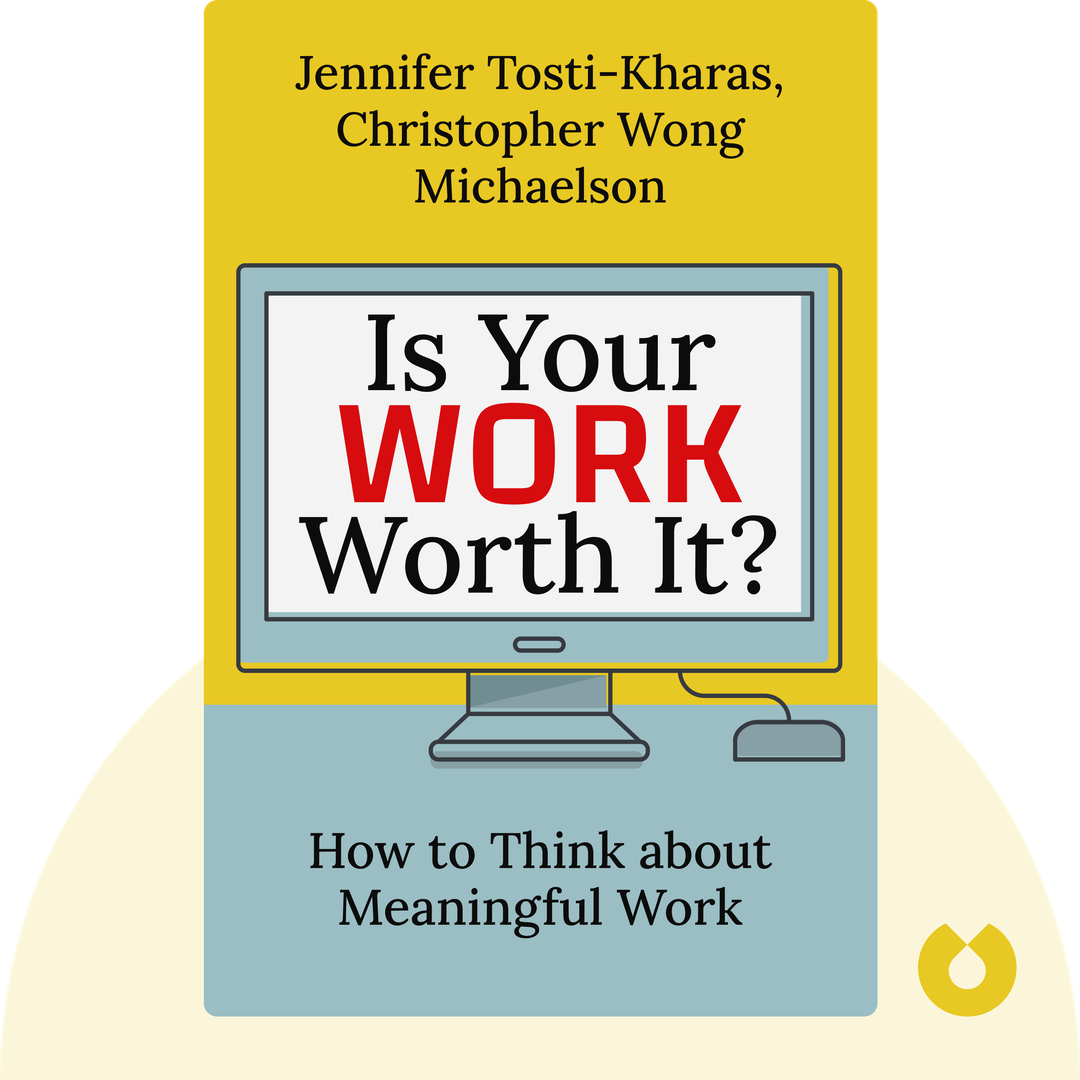
Is Your Work Worth It?
Start ListeningDownload Try free on iPhoneScan to start in 5 seconds
Categories:
If You're Curious About These Questions...
You should listen to this audiobook
- Have you ever wondered if following your passion is actually the key to a meaningful career, or if the pursuit of profit is a more honest path to fulfillment?
- What if you could pinpoint the exact moment when working harder stops benefiting your life and starts taking away from your well-being?
- Are you curious about the surprising trade-offs required to transform your daily grind into a purposeful calling that actually benefits society?
Listen to Is Your Work Worth It? — Cinematic Audio Edition
Loading player...
Key Takeaways from Is Your Work Worth It?
- Understand the fundamental differences between viewing your daily tasks as a job, a career, or a calling, and how these personal definitions exist independently of your actual occupation.
- Discover why our societal obsession with career progression contributes surprisingly little to our ultimate legacy compared to family, hobbies, and meaningful personal connections.
- Learn why turning a beloved passion into a profession can actually diminish your happiness, challenging the romanticized ideal of finding a single perfect calling.
- Master the art of finding deep satisfaction in any role by shifting your mindset, just as hospital cleaners find profound purpose by viewing their work as essential to the healing process.
- Explore the three universal elements of all work—effort, purpose, and recognition—and discover how balancing them can help you navigate the conflicting demands of making a living and living well.
Learning Tools
Reinforce what you learned from Is Your Work Worth It?
Mind Map
Is Your Work Worth It?
Evaluating Work's Purpose+
The Mindset of Fulfillment+
Meaning vs. Compensation+
Changing Paradigms: FIRE Movement+
Creating Meaning Now+
Quiz — Test Your Understanding
Question 1 of 7
According to the insights from the 'Portraits of Grief' series, how is the categorization of work as a job, career, or calling distributed among workers?
Question 2 of 7
What cautionary insight do the authors provide regarding the pursuit of a 'calling' that perfectly aligns passion, skill, and economic viability?
Question 3 of 7
How does the study of hospital cleaners illustrate the authors' point about finding fulfillment in work?
Question 4 of 7
Based on the text, what is the key difference between what anthropologist David Graeber called 'bullshit jobs' and 'crummy jobs'?
Question 5 of 7
What does the comparison between the work of stockbrokers and daycare workers highlight?
Question 6 of 7
Beyond early retirement, what is a core philosophical motivation for adherents of the FIRE (Financial Independence, Retire Early) movement?
Question 7 of 7
Why do the authors warn against settling for an unfulfilling job while waiting for 'ideal' financial circumstances to pursue a passion?
Is Your Work Worth It? — Full Chapter Overview
- 1Recommendation
- 2Work Is About More Than Just Money
- 3Fulfilling Work Is Partly About Mindset
- 4Meaning and Money Don’t Always Align
- 5Society’s Ideas About Work Are Changing
- 6Now Is the Best Time for Meaningful Work
- 7Final summary
Is Your Work Worth It? Summary & Overview
Is Your Work Worth It? (2024) explores the fundamental role of work in our lives. It questions whether work should be pursued for passion or profit, the ideal work quantity, and its effects on personal and societal well-being. Weaving together real-life stories with scholarly insights and perspectives from philosophy, art, and literature, it clarifies the nature of purposeful work and the compromises required to achieve it.
Who Should Listen to Is Your Work Worth It??
- Professionals seeking deeper meaning in their careers
- Business leaders aiming to enhance workplace fulfillment
- Students exploring career paths and ethical work practices
Books Similar to Is Your Work Worth It?
Readers who enjoyed this also liked these titles.