If You're Curious About These Questions...
You should listen to this audiobook
- Have you ever wondered why being 'wise' often leads to misery, while a little bit of folly might actually be the secret to true human happiness?
- Did you know that your most successful relationships and social connections might actually depend on a healthy dose of shared ignorance and 'foolishness'?
- What if the very institutions and traditions we respect the most are actually built on the exact same 'folly' they claim to despise?
Listen to In Praise of Folly — Free Audiobook
Loading player...
Key Takeaways from In Praise of Folly
- Discover why true wisdom actually lies in recognizing your own foolishness, allowing you to view everyday blunders with humor and grace.
- Understand how embracing your silly side serves as a vital source of joy, preventing your life from becoming starkly serious and devoid of laughter.
- Learn how seemingly 'foolish' ideas can lead to groundbreaking discoveries and form the powerful foundation of lifelong human connections.
- Find out how acknowledging your foolish tendencies can foster greater empathy, cultivate humility, and prevent you from taking yourself too gravely.
- Explore how recognizing the omnipresence of folly in society's most solemn institutions can help you reflect on your true values and safely embrace life's absurdities.
Learning Tools
Reinforce what you learned from In Praise of Folly
Mind Map
In Praise of Folly
Context & Background+
Core Philosophy+
Targets of Satire+
Benefits of Embracing Folly+
Quiz — Test Your Understanding
Question 1 of 5
What is the central thesis of 'In Praise of Folly' as presented in the text?
Question 2 of 5
What was Erasmus's broader purpose in writing this satirical essay?
Question 3 of 5
How is the concept of Folly presented in the narrative?
Question 4 of 5
According to Erasmus, what is the relationship between true wisdom and folly?
Question 5 of 5
According to the final summary, how does folly play a positive role in human relationships?
In Praise of Folly — Full Chapter Overview
- 1Recommendation
- 2Discovering wisdom in life’s laughter
- 3Final summary
In Praise of Folly Summary & Overview
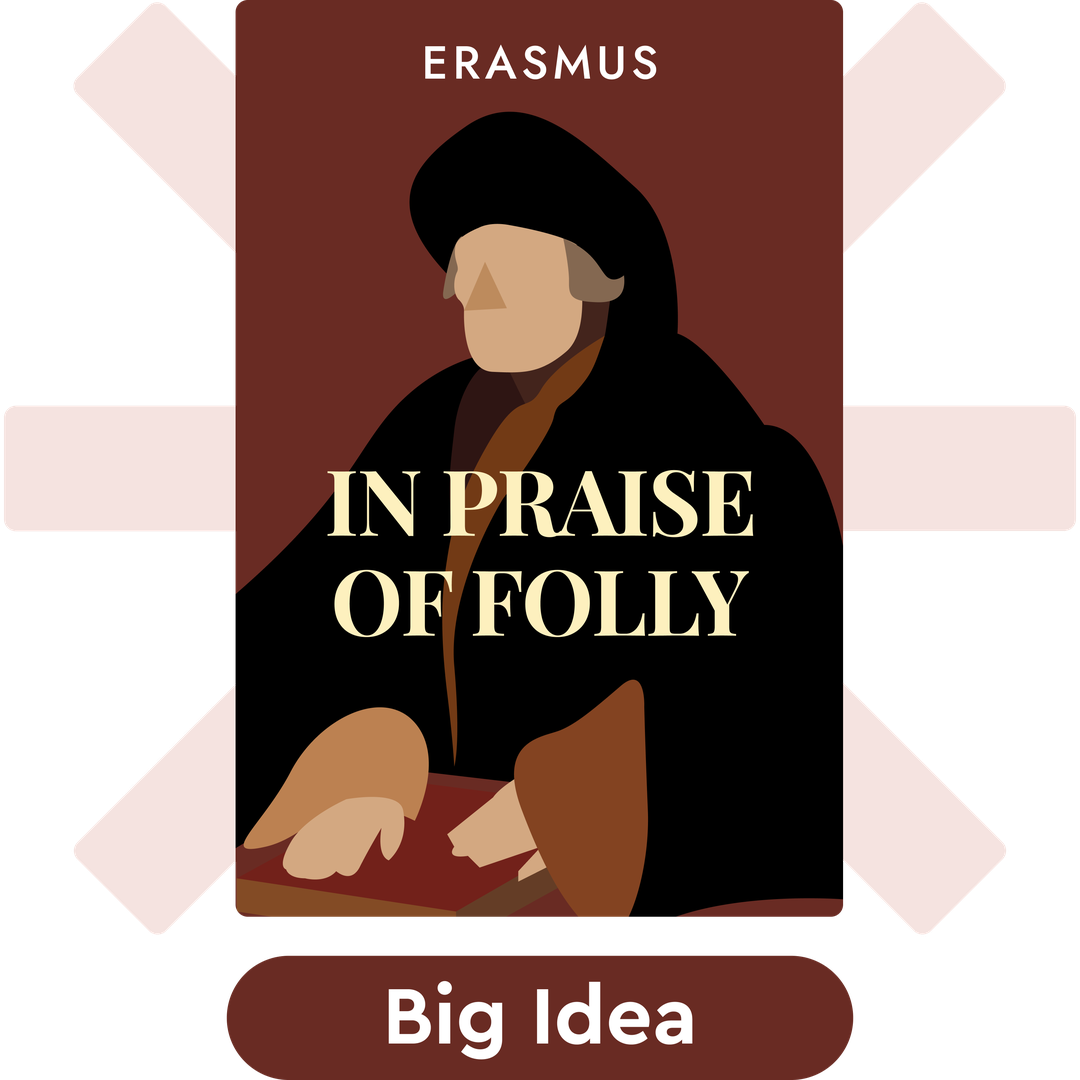
In Praise of Folly (1511) is a critical examination of societal norms and institutions with a satirical lens, unveiling an unconventional wisdom that praises folly, or foolishness, as a driving force behind much human action and happiness.
Who Should Listen to In Praise of Folly?
- Fans of Renaissance literature
- Students of philosophy
- Individuals questioning societal norms
Books Similar to In Praise of Folly
Readers who enjoyed this also liked these titles.