If You're Curious About These Questions...
You should listen to this audiobook
- Have you ever wondered why assertive Black women are so often mischaracterized in the workplace, and what it really takes to break free from those damaging tropes?
- What if you could navigate the complexities of corporate culture without ever having to compromise your identity or silence your truth?
- What’s the secret to transforming the unique obstacles faced by Black women in business into powerful tools for career mastery and personal empowerment?
Listen to I'm Not Yelling — Cinematic Audio Edition
Loading player...
Key Takeaways from I'm Not Yelling
- Discover how to take yourself off 'mute' in corporate America to reclaim your authentic voice and drive systemic change in your workplace.
- Learn how embracing your unfiltered personal story, including past struggles and hidden truths, can unlock profound professional confidence and unexpected career opportunities.
- Understand the crucial difference between 'imposter syndrome' and 'imposter treatment' so you can stop internalizing the doubts and prejudices of others.
- Master the courage to challenge workplace microaggressions in the moment to protect your mental health and establish a new standard of respect for future generations.
- Find out why abandoning exhausting code-switching and image-managing routines is an essential step toward honoring your true identity and stepping into your fullest self.
Learning Tools
Reinforce what you learned from I'm Not Yelling
Mind Map
I'm Not Yelling
Context & Purpose+
Own Your Story & Voice+
Challenge Toxic Behaviors+
Stop Code-Switching+
Leadership & Mentorship+
Quiz — Test Your Understanding
Question 1 of 7
What does the pandemic-era phrase 'You're on mute' symbolize for Black businesswomen in the context of this book?
Question 2 of 7
How did Elizabeth Leiba's approach to her personal history change as she decided to step into her authentic self?
Question 3 of 7
How does the book suggest reframing the concept of 'imposter syndrome' for Black women in the workplace?
Question 4 of 7
According to the text, what is a severe consequence of leaving subtle workplace microaggressions unaddressed?
Question 5 of 7
In the context of the book, what is the hidden cost of code-switching and image management?
Question 6 of 7
What realization did Leiba have when she finally reached the leadership position she had pursued for two decades?
Question 7 of 7
According to the Black Girl Ventures Foundation study mentioned in the book, what measurable impact does mentorship have on Black women?
I'm Not Yelling — Full Chapter Overview
- 1Recommendation
- 2Own your story and your voice
- 3Confront imposter treatment and microaggressions
- 4Stop code-switching and managing your image
- 5Take your seat at the table and open the door
- 6Final summary
I'm Not Yelling Summary & Overview
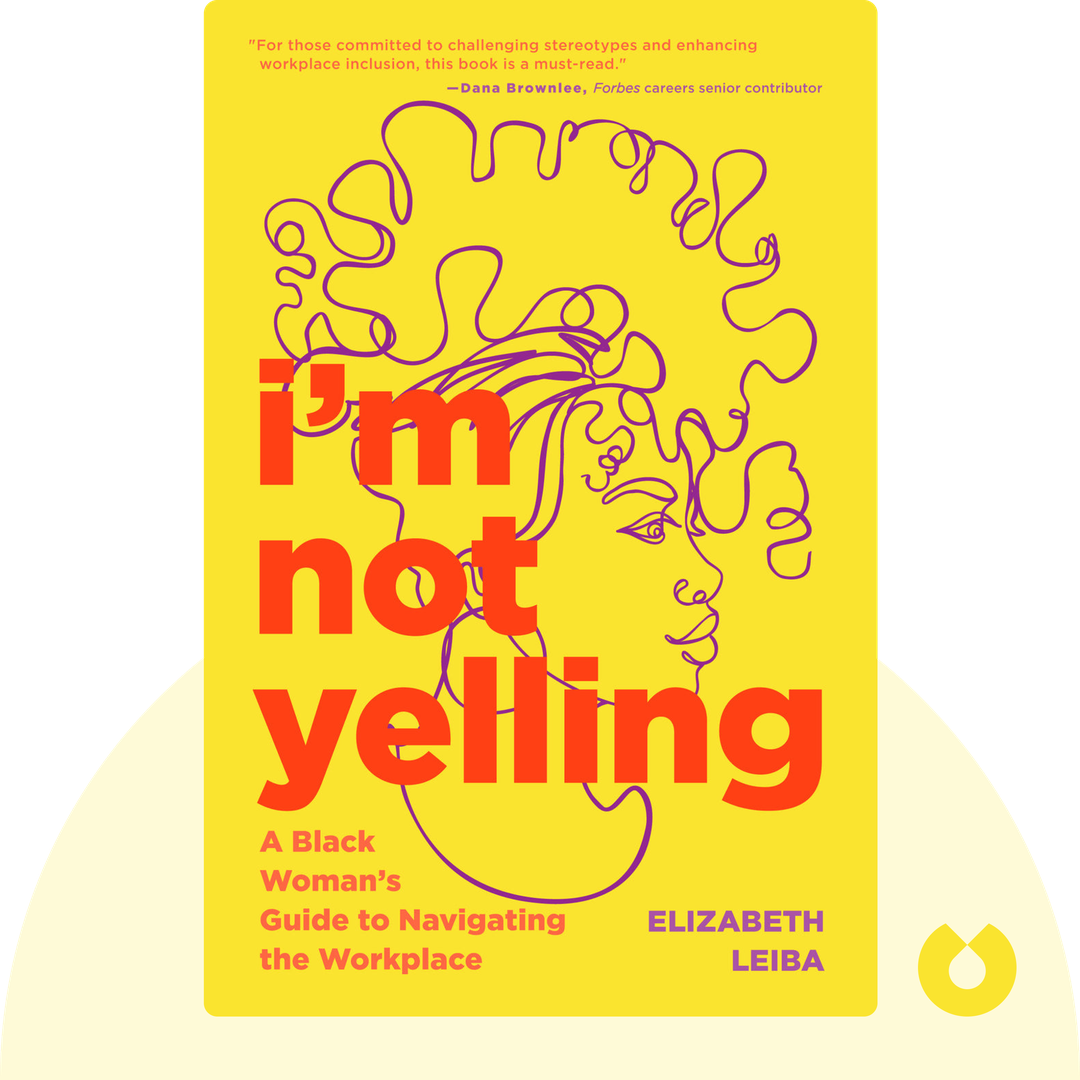
I’m Not Yelling (2022) is part memoir, part tactical guide for Black women navigating corporate America. Filled with anecdotes and statistical data, it highlights the unique challenges Black women face in the workplace, and offers a range of reflections, strategies, and affirmations to empower you to step into your full potential.
Who Should Listen to I'm Not Yelling?
- Black businesswomen and female entrepreneurs
- Anyone wanting to educate themselves on the Black experience in America
- Individuals of minority groups committed to reclaiming their voice in the workplace
Books Similar to I'm Not Yelling
Readers who enjoyed this also liked these titles.