If You're Curious About These Questions...
You should listen to this audiobook
- Have you ever wondered why the world’s most successful scientists value what they don't know far more than the facts they’ve already proven?
- What if the secret to a groundbreaking career in research isn't about how much you learn, but about how well you navigate what you don't understand?
- Are you curious about how 'ignorance' actually serves as the most powerful engine for human discovery and scientific progress?
Listen to Ignorance — Free Audiobook
Loading player...
Key Takeaways from Ignorance
- Discover how identifying the gaps in your knowledge is the true starting point for all scientific progress and discovery.
- Understand why scientific facts are never completely objective, as they are inherently limited by human biases and the physical boundaries of our minds.
- Learn why sweeping predictions about the future usually fail, and how framing forecasts as unresolved questions creates lasting scientific value.
- Find out why failing to prove a hypothesis is actually celebrated as a valuable scientific discovery that reveals new questions to pursue.
- Master the scientific method of achieving major breakthroughs step-by-step by breaking down massive research goals into specific, smaller questions.
Learning Tools
Reinforce what you learned from Ignorance
Mind Map
Ignorance
Nature of Scientific Facts+
Value of Ignorance+
Methodology of Questioning+
Breakthroughs via Ignorance+
Embracing Ignorance in Society+
Quiz — Test Your Understanding
Question 1 of 9
According to the book, what is the true starting point of scientific inquiry?
Question 2 of 9
Why does the author argue that scientific facts fall short of being completely objective?
Question 3 of 9
How did mathematician Daniel Hilbert successfully approach making predictions about the future of math in 1900?
Question 4 of 9
What did physicist Enrico Fermi teach his students about failing to prove a hypothesis with an experiment?
Question 5 of 9
In science, what is the purpose of using a 'model system', such as studying the brains of mice instead of humans?
Question 6 of 9
What did the story of 'Clever Hans', the counting horse, ultimately highlight for scientists?
Question 7 of 9
What specific 'knowledge gap' in physics was string theory developed to address?
Question 8 of 9
What did neuroscientists Larry Abbot and Stefano Fusi discover when investigating how the brain remembers massive amounts of information without having enough synapses?
Question 9 of 9
How does the author suggest modern education needs to change in the age of the internet?
Ignorance — Full Chapter Overview
- 1Recommendation
- 2Though we see it as objective truth, science is always shaped by imperfect humans.
- 3Scientists’ urge to predict the future can sometimes produce flawed forecasts.
- 4Scientific breakthroughs happen when we ask questions to confront our ignorance.
- 5Smaller, specific questions help answer big research questions one step at a time.
- 6Investigating ignorance gave scientists a “glimpse” into how animals think.
- 7Ignorance in physics gave rise to “string theory.”
- 8A gap in neuroscience knowledge led to fresh insights into how memory works.
- 9Scientists should help teachers and students embrace ignorance and ask questions.
- 10Final summary
Ignorance Summary & Overview
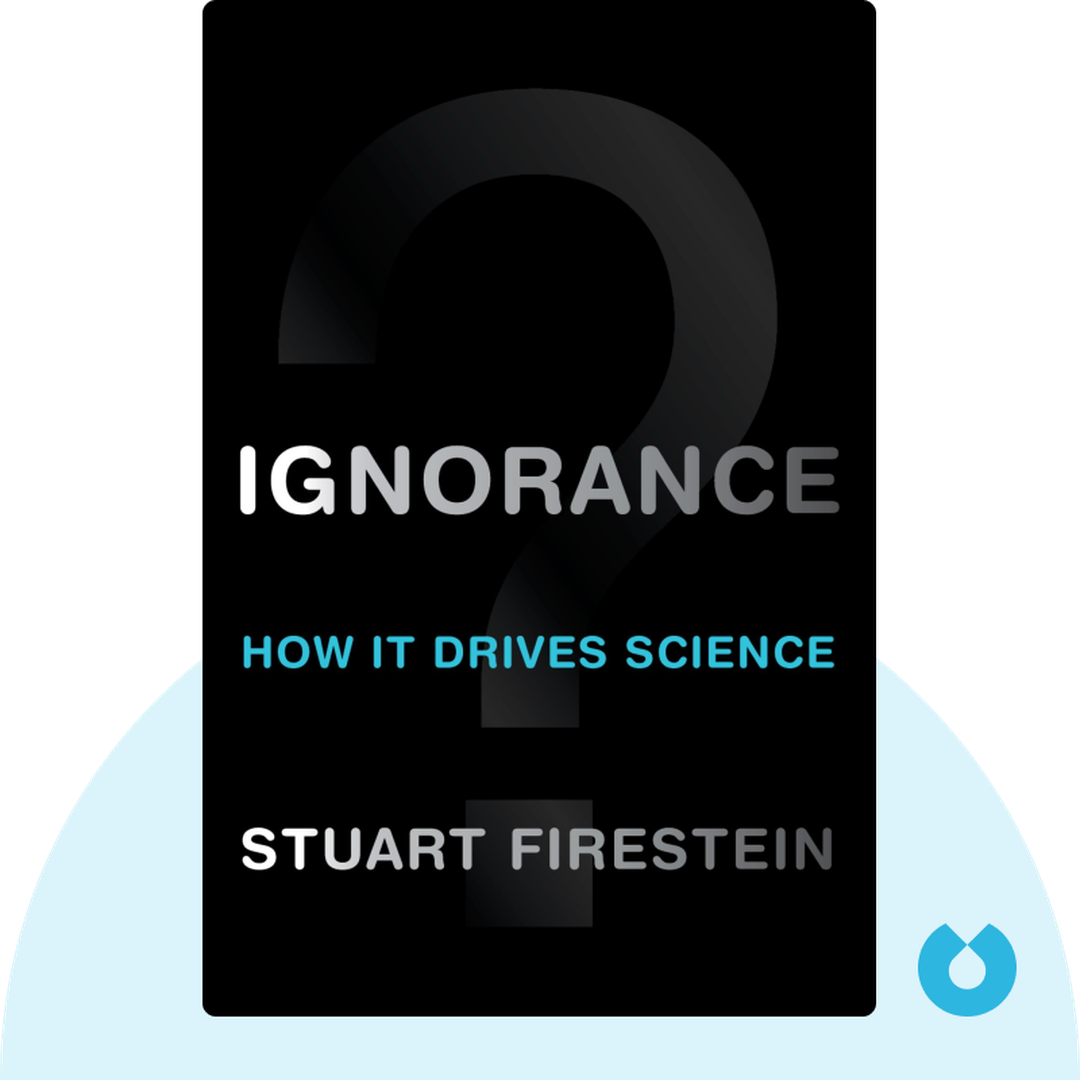
Ignorance investigates the strengths and weaknesses of the scientific method and reveals the importance of asking the right questions over the discovery of simple facts. Using real-life examples from history, Ignorance shows that it is our awareness of what we don’t know that drives scientific discovery.
Who Should Listen to Ignorance?
- Anyone considering working in a laboratory or research facility
- Anyone who wants to know how a scientist’s mind works
- Anyone interested in the history of knowledge
Books Similar to Ignorance
Readers who enjoyed this also liked these titles.