If You're Curious About These Questions...
You should listen to this audiobook
- Have you ever wondered how to build a deeply meaningful and moral life without relying on traditional religious dogmas?
- Did you know that some of history’s most brilliant writers and scientists shared a common philosophy that could transform how you relate to the world today?
- Are you curious about how the ancient roots of humanism can provide a surprisingly modern roadmap for staying optimistic in a cynical age?
Listen to Humanly Possible — Free Audiobook
Loading player...
Key Takeaways from Humanly Possible
- Discover how humanism functions as a centuries-old philosophy that promotes moral behavior, freethinking, and human dignity without the need for religious scripture.
- Learn how 14th-century pioneers like Petrarch and Boccaccio shaped humanism by preserving historical texts and prioritizing empathy during the collective trauma of the bubonic plague.
- Understand why the ability to write or speak is meaningless without a human reason behind it, making the communication of our shared humanity the core of all studies.
- Find out how pioneering women like Christine de Pizan broke Renaissance-era barriers by using literature to highlight women's capabilities and forge independent careers.
- Explore the humanist approach to lifelong learning, which emphasizes that true education comes from independently pursuing subjects like history, philosophy, and poetry outside of formal schooling.
Learning Tools
Reinforce what you learned from Humanly Possible
Mind Map
Humanly Possible
Defining Humanism+
The Founders (14th Century)+
Female Voices (15th Century)+
Kindness & Inquiry (15th-16th Century)+
Enlightenment & Progress (18th Century)+
Confronting Darkness (20th Century)+
Modern Relevance+
Quiz — Test Your Understanding
Question 1 of 7
Why does humanism often pose a threat to nations with conservative religious leadership, according to the text?
Question 2 of 7
What was a defining characteristic of Petrarch and Boccaccio's contribution to early humanism?
Question 3 of 7
What was the primary focus of Christine de Pizan's 'The Book of the City of Ladies'?
Question 4 of 7
How did Erasmus use the human body to argue for his humanist beliefs?
Question 5 of 7
What was Michel de Montaigne's approach to religion within his humanist philosophy?
Question 6 of 7
According to Voltaire's 'Candide', what is the danger of the Church's 'all is good' philosophy following the Lisbon earthquake?
Question 7 of 7
What caused Thomas Mann to abandon his initial belief that authors should remain apolitical?
Humanly Possible — Full Chapter Overview
- 1Recommendation
- 2Free thinking
- 3Preserving books with Petrarch and Boccaccio
- 4Leaving a mark with Christine de Pizan
- 5Practicing kindness with Erasmus and Montaigne
- 6Empathy and advancement with Voltaire
- 7Escaping fascism with Thomas Mann
- 8Final summary
Humanly Possible Summary & Overview
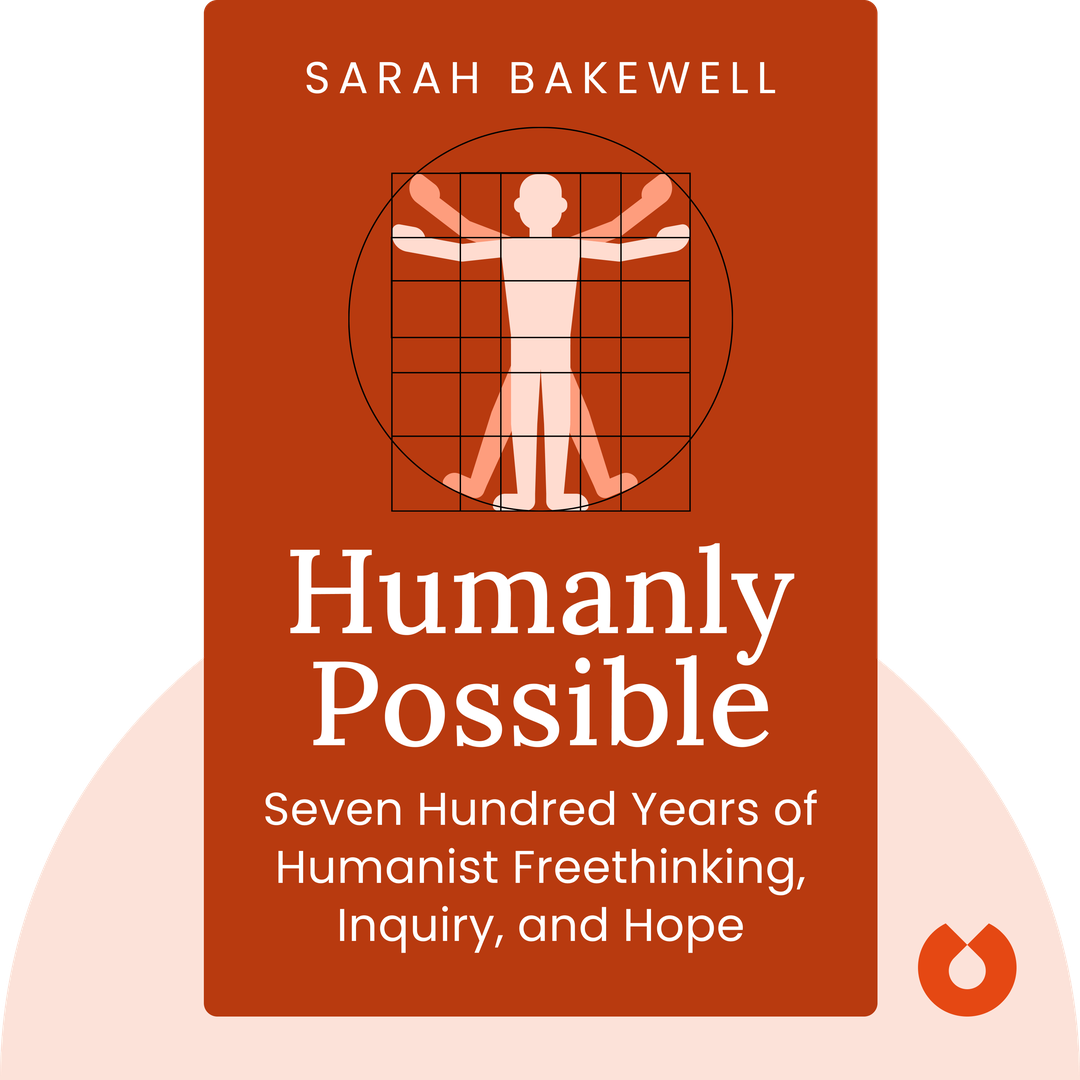
Humanly Possible (2023) traces the roots of humanism in literature and science back through history. While telling the stories of the great humanist thinkers, it sheds light on humanity today as well as how we can better relate to our lives and environment through humanist beliefs and pursuits.
Who Should Listen to Humanly Possible?
- Anyone interested in the humanities
- People looking for non-religious alternatives to moral thinking
- Optimists
Books Similar to Humanly Possible
Readers who enjoyed this also liked these titles.