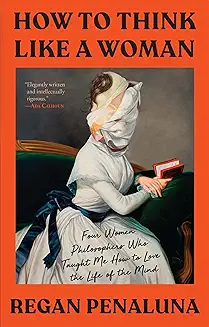
How to Think Like a Woman
Start ListeningDownload Try free on iPhoneScan to start in 5 seconds
Categories:
If You're Curious About These Questions...
You should listen to this audiobook
- Did you know that some of the most groundbreaking philosophical minds of the 17th and 18th centuries were women whose voices were systematically erased from the history of thought?
- Have you ever wondered how our understanding of the world might change if we finally looked beyond the traditional male-dominated philosophical canon?
- Are you curious about what it takes to reclaim your intellectual passion in a field that was never designed for you to succeed?
Listen to How to Think Like a Woman — Free Audiobook
Loading player...
Key Takeaways from How to Think Like a Woman
- Understand how deeply ingrained sexism in academic philosophy—from ancient thinkers to modern institutions—creates a self-perpetuating cycle of marginalization for women.
- Discover the hidden lineage of remarkable female philosophers, such as Mary Astell and Damaris Masham, whose foundational works were concealed within the margins of the male-authored canon.
- Learn how 17th-century pioneer Mary Astell championed female education, expertly dismantling the arguments of prominent male thinkers to prove women's intellectual equality.
- Uncover the crucial yet unacknowledged roles women played in shaping Western philosophy, exemplified by Damaris Masham's profound intellectual exchanges with John Locke.
- Recognize the importance of building supportive communities and engaging in ongoing self-reflection to overcome patriarchal obstacles and carve out spaces for intellectual flourishing.
Learning Tools
Reinforce what you learned from How to Think Like a Woman
Mind Map
How to Think Like a Woman
Philosophy's Gender Problem+
Mary Astell (17th Century)+
Damaris Masham (17th Century)+
Mary Wollstonecraft (18th Century)+
Catharine Cockburn (17th/18th Century)+
Reimagining the Canon+
Quiz — Test Your Understanding
Question 1 of 6
According to the text, what is a major consequence of the historical scarcity of women in the field of academic philosophy?
Question 2 of 6
How did historically revered male philosophers like Aristotle and Hegel view women's intellectual abilities, according to the text?
Question 3 of 6
While Mary Astell passionately advocated for women's right to education, what moral blind spot did Penaluna identify in Astell's philosophy?
Question 4 of 6
How did Damaris Masham's philosophical views contrast with the thinkers of her time who preached austere detachment?
Question 5 of 6
What key realization did Penaluna have when studying Mary Wollstonecraft's life and works, particularly her unfinished novel "Maria"?
Question 6 of 6
How did Catharine Cockburn continue to engage with philosophical questions during her 17-year retreat from public life to raise her children?
How to Think Like a Woman — Full Chapter Overview
- 1Recommendation
- 2Philosophy’s problem with women
- 3Mary Astell: An advocate for female education
- 4Damaris Masham: The woman behind the man
- 5Mary Wollstonecraft: A revolutionary feminist
- 6Catherine Cockburn: A mother and philosopher
- 7Final summary
How to Think Like a Woman Summary & Overview
How to Think Like a Woman (2023) is an exploration of one woman’s journey to reclaim her love of philosophy in the face of a male-dominated canon. Interweaving memoir with the biographies of four extraordinary seventeenth- and eighteenth-century women philosophers, this inventive meditation challenges the foundations of traditional philosophical thought and envisions a more inclusive future for the discipline.
Who Should Listen to How to Think Like a Woman?
- Women in academia who have experienced the challenges of navigating a male-dominated field
- Fans of thought-provoking memoirs and biographies
- Anyone seeking an alternative perspective on the traditional Western philosophical canon
Books Similar to How to Think Like a Woman
Readers who enjoyed this also liked these titles.