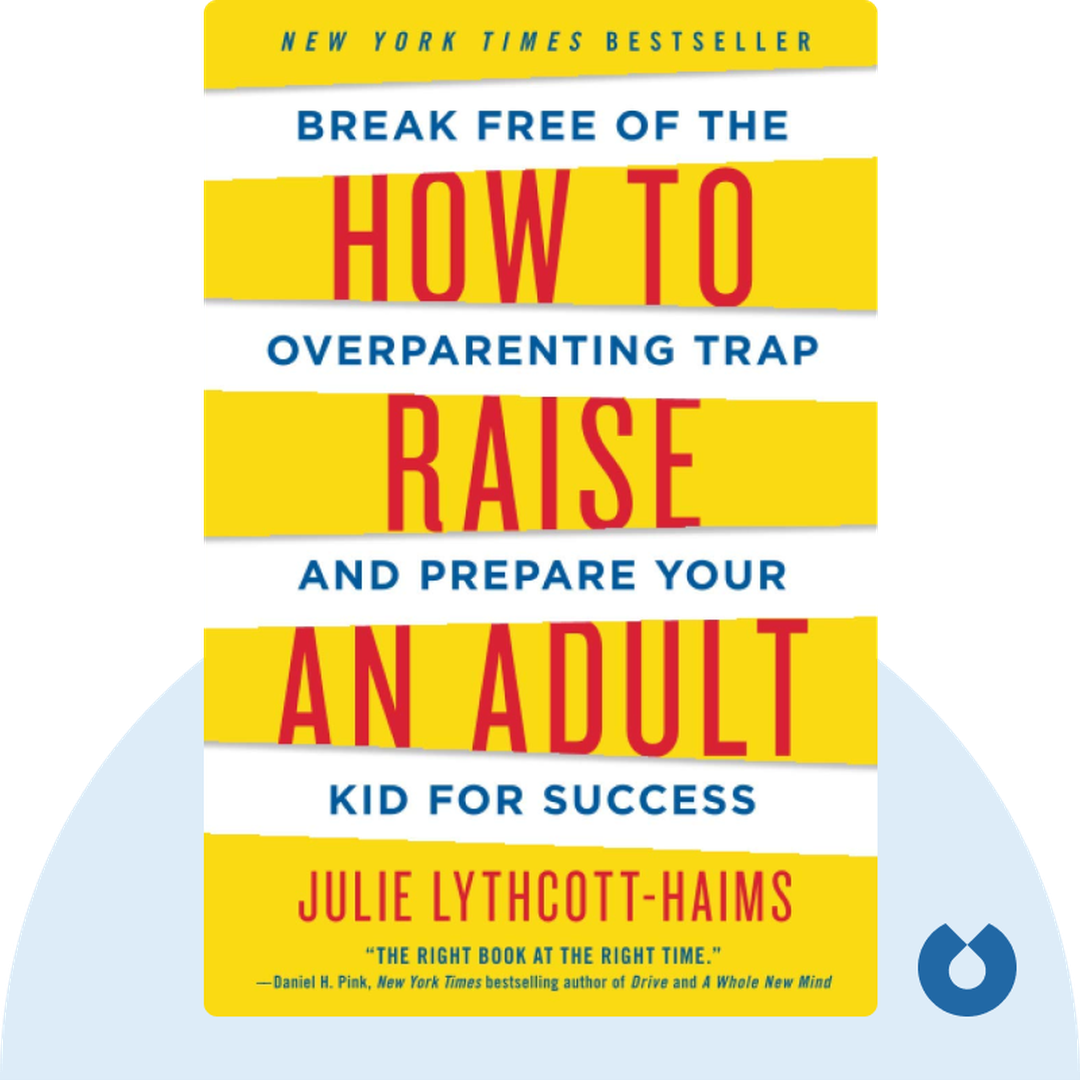
If You're Curious About These Questions...
You should listen to this audiobook
- Did you know that the very parenting habits meant to ensure your child's success might actually be robbing them of the resilience they need for adulthood?
- What if the secret to raising a capable, independent adult isn't about doing more for your child, but intentionally doing less?
- Are you curious about how to stop being your child's 'concierge' and reclaim your own life without compromising their future?
Listen to How to Raise an Adult — Cinematic Audio Edition
Loading player...
Key Takeaways from How to Raise an Adult
- Discover how to find a kinder middle ground in parenting that allows you to remain emotionally present while giving your child the space to become capable.
- Understand how cultural shifts like 1980s headline fears and the self-esteem movement unintentionally transformed parenting into constant supervision.
- Learn why the loving urge to manage your child's daily life can accidentally replace their self-trust with dependence and lead to 'existential incompetence.'
- Explore the psychological concept of self-efficacy and why allowing children to try, stumble, and recover is essential for building their belief in their own problem-solving abilities.
- Recognize the paradox of overparenting, where shielding kids from every mistake ultimately deprives them of the very experiences needed to develop true confidence.
Learning Tools
Reinforce what you learned from How to Raise an Adult
Mind Map
How to Raise an Adult
The Trap of Overparenting+
Consequences of Helicoptering+
The Authoritative Solution+
Building Essential Competencies+
Fostering True Independence+
Reclaiming Parenthood+
Quiz — Test Your Understanding
Question 1 of 8
What historical shift contributed to the rise of 'helicopter parenting' in the United States?
Question 2 of 8
Why do children of overeager parents often feel overwhelmed by unrealistic expectations?
Question 3 of 8
How does overparenting negatively impact a child's future job prospects?
Question 4 of 8
What is the author's primary criticism of the obsession with standardized tests like the SAT?
Question 5 of 8
According to the book, which parenting style should parents strive for in order to raise independent adults?
Question 6 of 8
Which of the following best describes the 'authoritative' parenting style?
Question 7 of 8
How does the book suggest parents should approach playtime and household chores?
Question 8 of 8
Why does the author argue that parents need to reclaim their own personal time and hobbies?
How to Raise an Adult — Full Chapter Overview
- 1Recommendation
- 2Too Much Parenting Isn’t Good for Your Kids
- 3Overparenting Leaves Many Kids with Psychological Problems and Drug Abuse Issues
- 4Overparenting Makes It Harder for Kids to Find Jobs Later in Life
- 5Aim to Be an Authoritative Parent — Not an Authoritarian One
- 6Great Parents Teach Life Skills and Hard Work — Without Forgetting Playtime
- 7Truly Listen to Your Children and Let Them Find Their Own Path
- 8Reclaim Personal Time and Defend Your New Parenting Approach
- 9Final summary
How to Raise an Adult Summary & Overview
How to Raise an Adult (2015) reveals the ways in which the most common parenting method today, helicopter parenting, is doing more harm than good, both for parents and kids. These blinks outline a better way to parent – one that actually raises children to become truly independent adults.
Who Should Listen to How to Raise an Adult?
- Parents who want to raise stronger and more independent children
- Parents who don’t want to give up their whole life just to raise their kids
- New and expecting parents
Books Similar to How to Raise an Adult
Readers who enjoyed this also liked these titles.