If You're Curious About These Questions...
You should listen to this audiobook
- Have you ever wondered why most innovation projects fail despite having brilliant teams and massive budgets?
- What if you could master the exact formula that balances creative 'magic' with commercial 'money' to guarantee a successful product launch?
- Are you curious about how the world’s most successful companies move past 'mythical' ideas to find innovations that are actually profitable?
Listen to How to Kill a Unicorn — Free Audiobook
Loading player...
Key Takeaways from How to Kill a Unicorn
- Learn how to build successful innovation teams by combining 'Money' (financial and strategic experts) with 'Magic' (creatives who understand consumer desires).
- Discover why encouraging constructive debate and criticism generates far more creative ideas than traditional, criticism-free brainstorming.
- Understand how to create highly effective solutions by addressing the consumer's interests and the company's internal operational silos simultaneously.
- Master the practical side of innovation by pairing the visionary 'wow' of a grand idea with the logistical 'how' of financial and operational execution.
- Find out why the strategies established companies view as radically innovative are often just obvious, practical problem-solving methods used by start-ups to survive.
Learning Tools
Reinforce what you learned from How to Kill a Unicorn
Mind Map
How to Kill a Unicorn
The Unicorn Concept+
Building the Dream Team+
Balancing Consumer & Business+
The 'Wow' and The 'How'+
The Start-Up Mindset+
Root Cause Problem Solving+
Quiz — Test Your Understanding
Question 1 of 8
What does the term 'unicorn' refer to in the context of this book?
Question 2 of 8
What is the 'Money & Magic' approach used by Fahrenheit 212 to build innovation teams?
Question 3 of 8
Based on the UC Berkeley study mentioned in the book, why is debating recommended over traditional brainstorming?
Question 4 of 8
According to the book, what is the proper relationship between the 'wow' and the 'how' in project innovation?
Question 5 of 8
How do start-ups typically view their own innovative ideas compared to how established companies view them?
Question 6 of 8
In the Tuthilltown Spirits case study, why did using half-size whiskey bottles turn out to be a massive success?
Question 7 of 8
How did Fahrenheit 212 solve the problem of top customers abandoning a billion-dollar hotel brand?
Question 8 of 8
What is the core philosophy for creating lasting, innovative solutions according to the final summary?
How to Kill a Unicorn — Full Chapter Overview
- 1Recommendation
- 2To make innovation happen, create a diverse team and let them debate.
- 3Become more innovative by understanding both consumer and business interests.
- 4To build successful innovations, remember the how behind the wow.
- 5What big companies consider radical innovations are often obvious ideas to start-ups.
- 6Established businesses should innovate by asking better questions, not chasing quick fixes.
- 7Final summary
How to Kill a Unicorn Summary & Overview
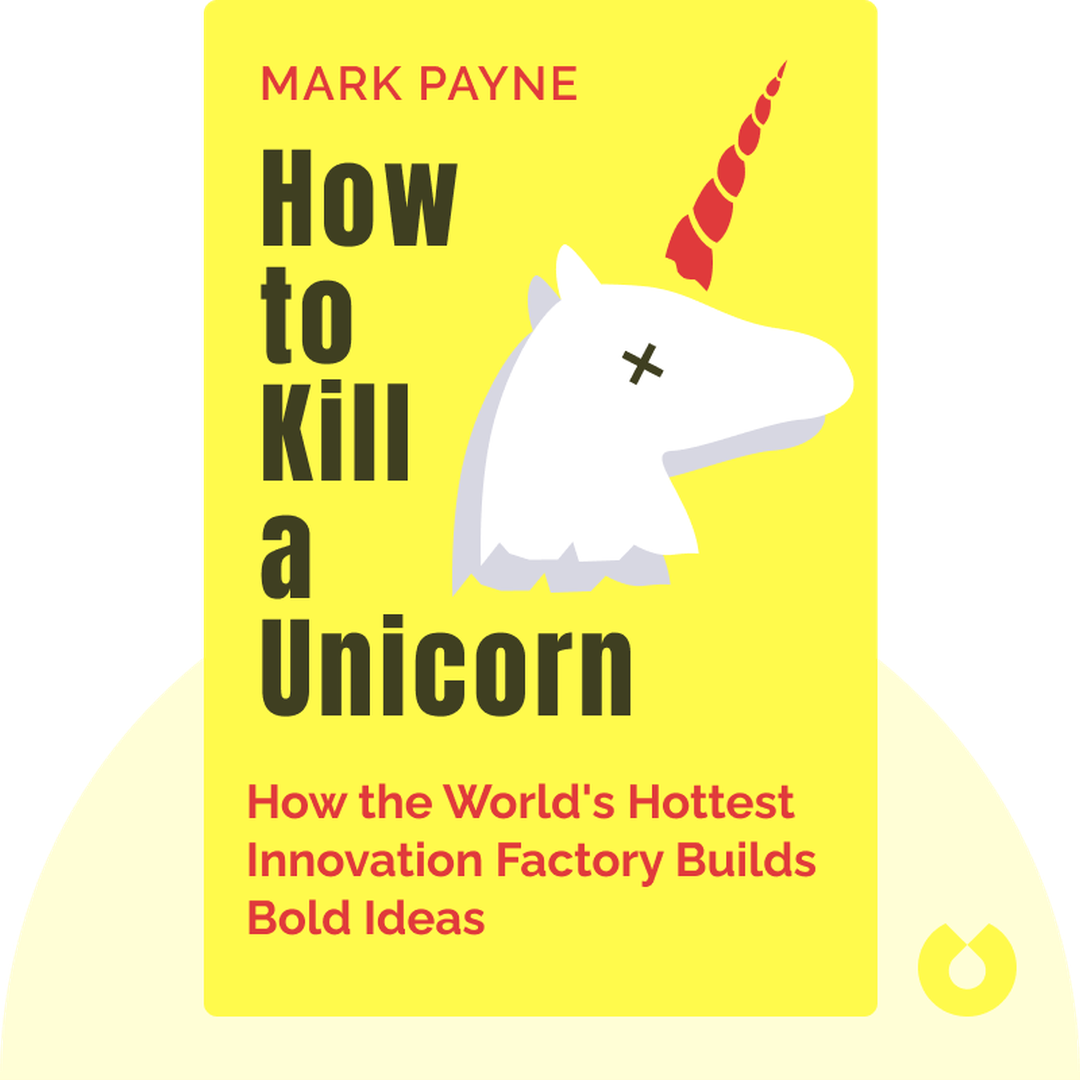
How to Kill a Unicorn (2014) is about how to approach innovative projects in a way that will make the outcome truly great – a sort of road map for innovation, filled with practical examples encountered by the consulting company Fahrenheit 212.
Who Should Listen to How to Kill a Unicorn?
- Big and mid-sized companies that want to boost innovation
- Entrepreneurs curious about innovative projects
Books Similar to How to Kill a Unicorn
Readers who enjoyed this also liked these titles.