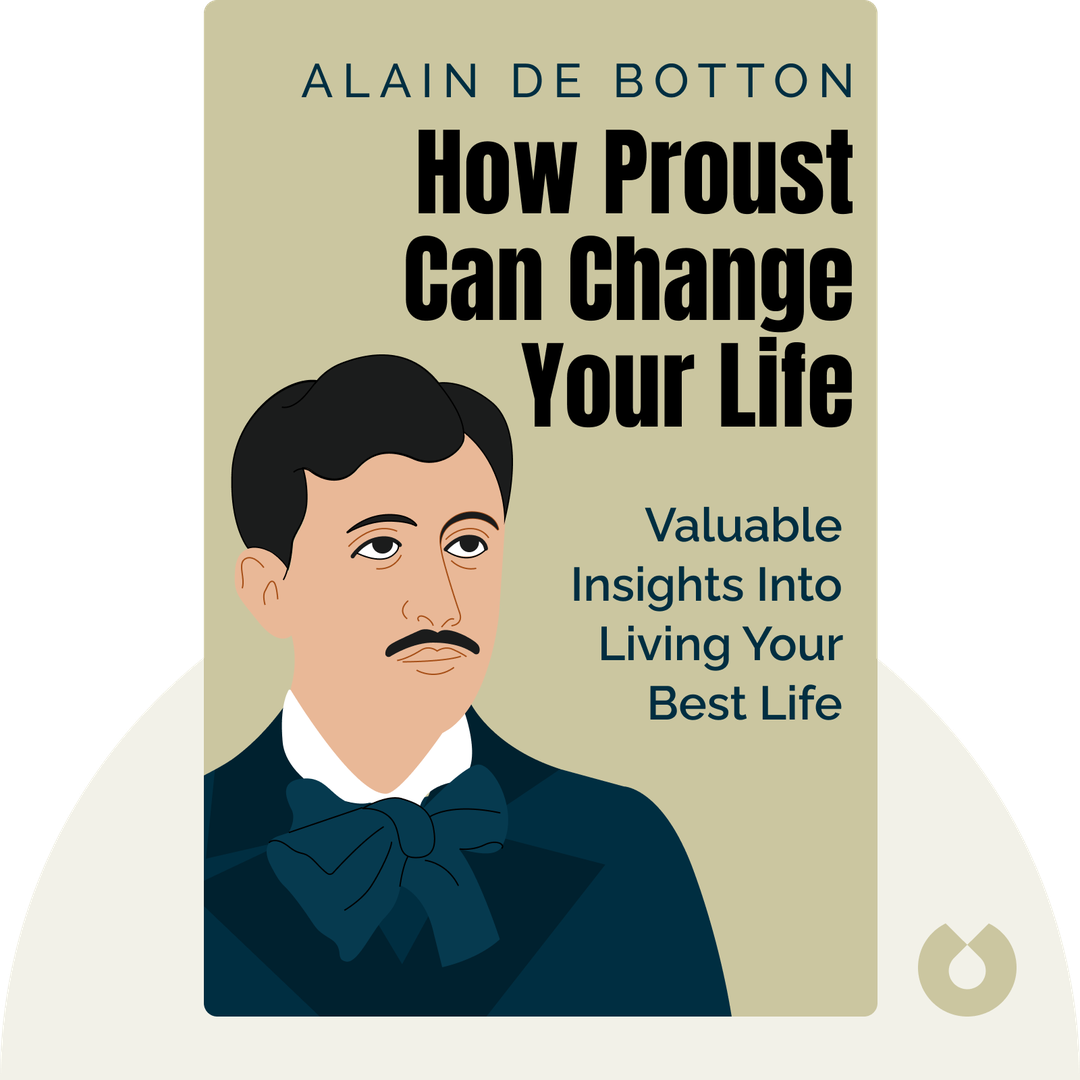
How Proust Can Change Your Life
Start ListeningDownload Try free on iPhoneScan to start in 5 seconds
Categories:
If You're Curious About These Questions...
You should listen to this audiobook
- What if the secret to living a more meaningful life was hidden inside one of the world’s longest and most intimidating novels?
- Did you know that Marcel Proust believed the key to true wisdom isn’t found in grand achievements, but in the way we handle our everyday suffering and disappointments?
- Have you ever wondered how looking at the world through the eyes of a legendary recluse could help you find more joy in your own daily routine?
Listen to How Proust Can Change Your Life — Free Audiobook
Loading player...
Key Takeaways from How Proust Can Change Your Life
- Discover why Marcel Proust believed reading fiction provides profound therapeutic benefits that can heal your mind just as medicine heals the body.
- Learn how to feel truly at home in works of art by finding personal connections between the subjects on a canvas and the people in your everyday life.
- Understand how immersing yourself in richly drawn characters can cure loneliness by revealing that your most isolating, intimate thoughts are actually shared by others.
- Find out why embracing incredibly long, complex books forces you to slow down in a fast-paced world, ultimately expanding your capacity for nuance and empathy.
- Realize how reading deeply helps you discover your true identity, proving Proust's famous belief that every reader is ultimately reading their own self.
Learning Tools
Reinforce what you learned from How Proust Can Change Your Life
Mind Map
How Proust Can Change Your Life
The Therapeutic Power of Reading+
Savoring Life by Slowing Down+
Love and Relationships+
Finding Beauty in the Ordinary+
Practical Life Advice+
Quiz — Test Your Understanding
Question 1 of 8
How did Marcel Proust's view of literature differ from his father's perspective on medicine?
Question 2 of 8
According to the text, why is the extreme length of 'In Search of Lost Time' actually a reason people should read it?
Question 3 of 8
What does Proust's descriptive writing style share with the work of Impressionist painters like the fictional Elstir?
Question 4 of 8
What lesson about love does Proust illustrate using the invention of the telephone and the story of Noah's Ark?
Question 5 of 8
Why does Proust recommend that a gloomy, impoverished young aesthete look at the paintings of Jean-Baptiste Chardin?
Question 6 of 8
In Proust's novel, what is the true power of the famous madeleine pastry that Marcel eats?
Question 7 of 8
What was Proust's attitude toward intellectual snobbery and choosing friends?
Question 8 of 8
What does the text suggest you should do if reading Proust inspires you to start a new project or live more fully?
How Proust Can Change Your Life — Full Chapter Overview
- 1Recommendation
- 2Reading can be therapeutic.
- 3Reading more slowly teaches us to savor life.
- 4Proust reminds us not to take love for granted.
- 5Seeing the world through an artist’s eyes helps us find beauty in the ordinary.
- 6Proust offers advice for almost every occasion.
- 7Final summary
How Proust Can Change Your Life Summary & Overview
How Proust Can Change Your Life (1997) melds literary biography with a self-help structure to argue that reading the work of twentieth-century French author Marcel Proust is not only culturally enriching, but potentially life-enhancing. Botton’s close reading of Proust’s masterpiece, In Search of Lost Time, offers up surprising and delightful insights into how to live better.
Who Should Listen to How Proust Can Change Your Life?
- Voracious readers who have yet to embark on In Search of Lost Time
- Reluctant readers who’d like to read more than they currently do
- Anyone looking to take on a literary challenge
Books Similar to How Proust Can Change Your Life
Readers who enjoyed this also liked these titles.