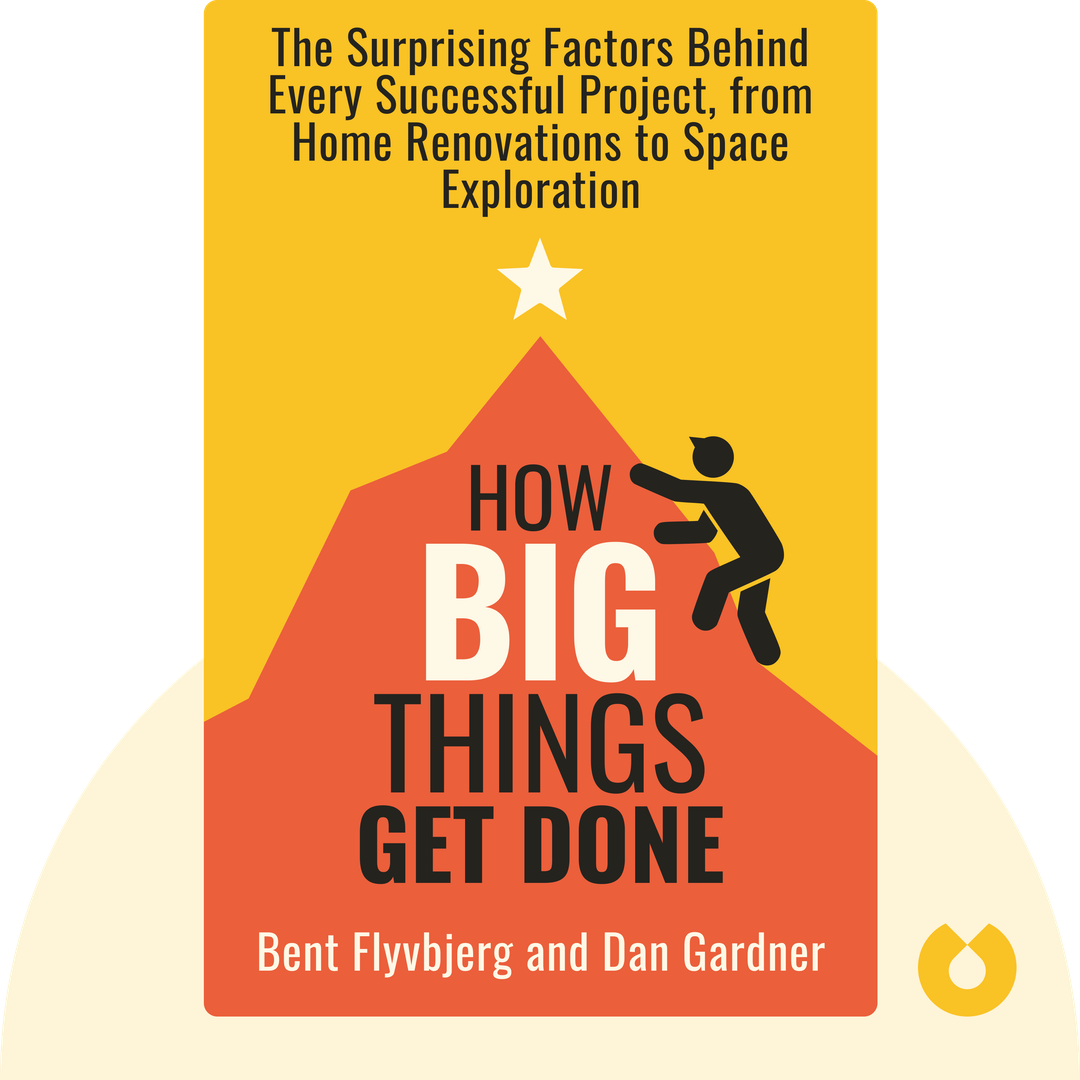
How Big Things Get Done
Start ListeningDownload Try free on iPhoneScan to start in 5 seconds
Categories:
If You're Curious About These Questions...
You should listen to this audiobook
- Did you know that a staggering 99.5% of large-scale projects fail to meet their budget or timeline, and are you curious about the one secret that sets the successful 0.5% apart?
- Have you ever wondered why 'thinking slow' is actually the most effective way to finish your projects faster than ever before?
- What’s the secret to Elon Musk’s ability to deliver massive, complex projects, and how can you apply his 'modular' approach to your own business or career?
Listen to How Big Things Get Done — Cinematic Audio Edition
Loading player...
Key Takeaways from How Big Things Get Done
- Understand the 'iron law of megaprojects' and discover why a staggering 91.5 percent of projects fail to hit their cost and time targets due to complex, unpredictable systems.
- Recognize that even small personal projects are vulnerable to extreme cost overruns, and learn why you must take 'fat-tailed' risks seriously to avoid financial disaster.
- Learn how to avoid the 'commitment fallacy' by evaluating risks realistically rather than blindly pouring more time and money into an already failing endeavor.
- Discover why maintaining transparency about potential costs and staying flexible enough to adapt your plans are crucial steps for ensuring overall project success.
- Master the strategy of 'thinking from right to left' by starting with your ultimate desired outcome and reverse-engineering the exact steps needed to achieve it.
Learning Tools
Reinforce what you learned from How Big Things Get Done
Mind Map
How Big Things Get Done
The Iron Law of Megaprojects+
Avoiding the Commitment Fallacy+
Thinking Right to Left+
Find Your Lego (Modularity)+
Quiz — Test Your Understanding
Question 1 of 6
What is the primary reason cited by the authors for why the 'iron law of megaprojects' holds true?
Question 2 of 6
According to the text, why should individuals undertaking small projects (like a home renovation) be concerned about the risks associated with megaprojects?
Question 3 of 6
How does the California high-speed rail project illustrate the 'commitment fallacy'?
Question 4 of 6
What does it mean to apply the concept of 'thinking from right to left' to a new project?
Question 5 of 6
In the example of the Guggenheim Museum in Bilbao, what was the actual 'end goal' the local government started with when thinking from right to left?
Question 6 of 6
What is the main advantage of using 'modularity' (finding your Lego) in large projects, as demonstrated by Elon Musk's Gigafactory 1?
How Big Things Get Done — Full Chapter Overview
- 1Recommendation
- 2The iron law behind megaprojects.
- 3How to avoid the commitment fallacy.
- 4The power of thinking right to left.
- 5Finding your Lego.
- 6Final Summary
How Big Things Get Done Summary & Overview
How Big Things Get Done (2023) explores what it takes to make large-scale projects work. It tackles tough questions like why so many big projects fail, and what makes the ones that succeed stand out from the rest. With real-life success stories as well as cautionary tales, its lessons can be applied to projects of any size, shape, or form.
Who Should Listen to How Big Things Get Done?
- Project managers looking to hone in their skills
- Anyone about to embark on a new project or start a new business
- Fans of Elon Musk wanting to learn how he works his magic
Books Similar to How Big Things Get Done
Readers who enjoyed this also liked these titles.