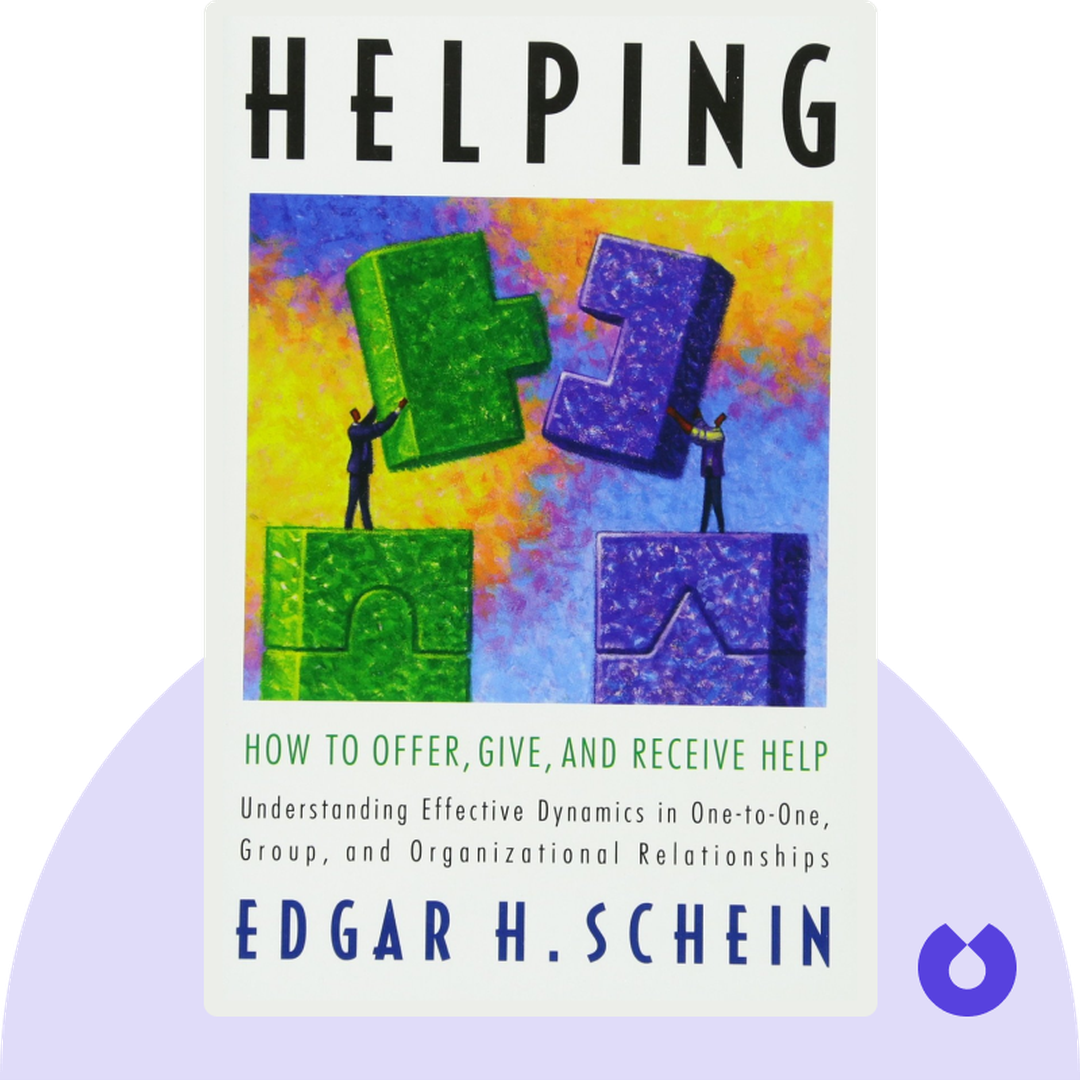
If You're Curious About These Questions...
You should listen to this audiobook
- Have you ever wondered why your well-intentioned advice is often met with resistance or resentment instead of gratitude?
- What’s the secret to ensuring your help is actually welcome and useful, rather than being seen as an unwanted intrusion?
- Did you know that the simple act of helping involves a delicate social dance that can either build trust or accidentally damage a relationship?
Listen to Helping — Free Audiobook
Loading player...
Key Takeaways from Helping
- Discover why well-intentioned efforts to help often backfire, and learn how underlying social and psychological dynamics can obstruct healthy helping relationships.
- Understand how everyday cooperation functions as an unspoken psychological contract, acting as the invisible glue that holds both personal and professional environments together.
- Learn to categorize assistance into informal, semi-formal, and formal types, and discover why the most commonly overlooked informal help actually shapes our lives the most.
- Realize that helping dynamics closely mirror economic transactions, requiring an equitable exchange of give-and-take to maintain a healthy social equilibrium.
- Explore how human interactions resemble theatrical performances, shaping the specific roles and behaviors we adopt when navigating the complexities of giving and receiving help.
Learning Tools
Reinforce what you learned from Helping
Mind Map
Helping by Edgar H. Schein
The Nature of Helping+
Three Categories of Help+
Underlying Social Dynamics+
The Status Imbalance+
How Receivers Complicate Help+
How Helpers Complicate Help+
The Solution: Humble Inquiry+
Quiz — Test Your Understanding
Question 1 of 9
What are the three basic categories of helping described in the book?
Question 2 of 9
According to the text, which type of help receives the most attention in literature, despite being less frequently needed in our daily lives?
Question 3 of 9
How does the book compare human relationships and helping to economics?
Question 4 of 9
Why do we standardize the roles of 'helper' and 'client' similarly to actors in a theatrical performance?
Question 5 of 9
What is the fundamental psychological obstacle that often makes receiving help problematic?
Question 6 of 9
According to the text, what might it mean when a person who needs help attacks or ridicules the helper?
Question 7 of 9
Which of the following is a way that a helper can unintentionally hinder the helping process?
Question 8 of 9
What is the primary purpose of beginning a helping relationship with a 'humble inquiry'?
Question 9 of 9
What actionable advice does the author give to ensure your help remains useful over time?
Helping — Full Chapter Overview
- 1Recommendation
- 2Helping is fundamental to human society, though we don’t always notice it.
- 3Helping falls into three basic categories.
- 4Human relationships resemble economics, even when we’re helping one another.
- 5Human relationships resemble theater, including when we help each other.
- 6Both helping and receiving help can be difficult.
- 7As recipients of help, we can complicate or obstruct the helping process in different ways.
- 8As helpers, we can sometimes be profoundly unhelpful.
- 9To understand how to help someone, start with humble inquiry.
- 10Final summary
Helping Summary & Overview
Helping (2009) explores a common phenomenon; when we offer help to other people, we’re often met with resistance, ungratefulness and even resentment. Drawing from a variety of real-life scenarios, author Edgar Schein describes the social and psychological dynamics that underlie this most fundamental human activity and, perhaps more importantly, how we can ensure that our help is both welcome and genuinely useful.
Who Should Listen to Helping?
- Educators, therapists and lawyers looking to provide more effective assistance
- Team-players in the corporate world
- Anyone looking to be a better helper in their day-to-day lives
Books Similar to Helping
Readers who enjoyed this also liked these titles.