If You're Curious About These Questions...
You should listen to this audiobook
- How did the depletion of unused, arable land in the fifteenth century transform Hawaii from an egalitarian society into a complex, centralized political order?
- In what ways did the 1848 Māhele—Hawaii's first establishment of private property—unintentionally lay the groundwork for the overthrow of the Hawaiian monarchy by foreign sugar barons?
- Why did the powerful 'Big Five' sugar corporations, which dominated Hawaii's colonial-era politics, suddenly shift from opposing US statehood to actively championing it in the 1930s?
Listen to Hawai'i — Free Audiobook
Loading player...
Key Takeaways from Hawai'i
- Early Hawaiian society was highly egalitarian due to an abundance of arable land, but rapid population growth and land scarcity eventually led to a strict class divide between elites and commoners.
- The arrival of Europeans in 1778 triggered a devastating population collapse and rapid urbanization, which severely destabilized Hawaii's traditional agriculture-based labor market.
- The 1848 Māhele introduced European-style private property to Hawaii, inadvertently allowing foreign investors and native elites to consolidate land for highly profitable sugar plantations.
- Seeking cheaper access to American markets and increased infrastructure spending, foreign sugar barons collaborated with the US government to overthrow Queen Lili'uokalani and annex Hawaii.
- Following statehood in 1959, the 1967 Land Reform Act helped dismantle the colonial-era leasehold system, forcing large estates to sell land to homeowners to create a more equitable, stable economy.
Learning Tools
Reinforce what you learned from Hawai'i
Mind Map
Hawai'i
Pre-Contact Settlement & Society+
European Contact & Transformation+
The Māhele & Rise of Big Sugar+
Overthrow & Colonization+
Statehood & Land Reform+
Quiz — Test Your Understanding
Question 1 of 9
How do historians learn about Hawaii's pre-19th-century history despite the lack of a written language?
Question 2 of 9
Why was early Polynesian society in Hawaii considered politically egalitarian during its first century of settlement?
Question 3 of 9
What primary factor led to the end of Hawaii's early egalitarian society and the rise of a complex, hierarchical political order?
Question 4 of 9
What was the primary purpose and consequence of the Māhele approved by King Kamehameha III in 1848?
Question 5 of 9
How did the massive growth of the sugar industry in the late 19th century drastically alter Hawaii's demographics?
Question 6 of 9
What economic event directly motivated Hawaii's sugar planters to overthrow Queen Lili’uokalani and seek annexation by the United States?
Question 7 of 9
During the early 20th century, how did the "Big Five" corporations maintain political dominance despite the establishment of a territorial legislature?
Question 8 of 9
Why did the "Big Five" sugar corporations eventually change their stance and support Hawaiian statehood in the 1930s?
Question 9 of 9
What was the primary effect of the 1967 Land Reform Act (LRA) in Hawaii?
Hawai'i — Full Chapter Overview
- 1Recommendation
- 2When humans first settled Hawaii, they found an agriculturally rich and politically egalitarian paradise.
- 3Early population growth made Hawaii’s social order increasingly complex.
- 4The first encounter between Europeans and Native Hawaiians rapidly transformed Hawaii’s politics and society.
- 5The Māhele set the stage for the eventual dominance of Big Sugar.
- 6The US government and sugar barons worked closely together to overthrow the Hawaiian monarchy.
- 7Even as Hawaiians gained political rights, the Big Five kept dominating the islands.
- 8When Hawaii became a state, most residents gained greater access to the political system.
- 9After statehood, voters used their new power to distribute land more fairly.
- 10Final summary
Hawai'i Summary & Overview
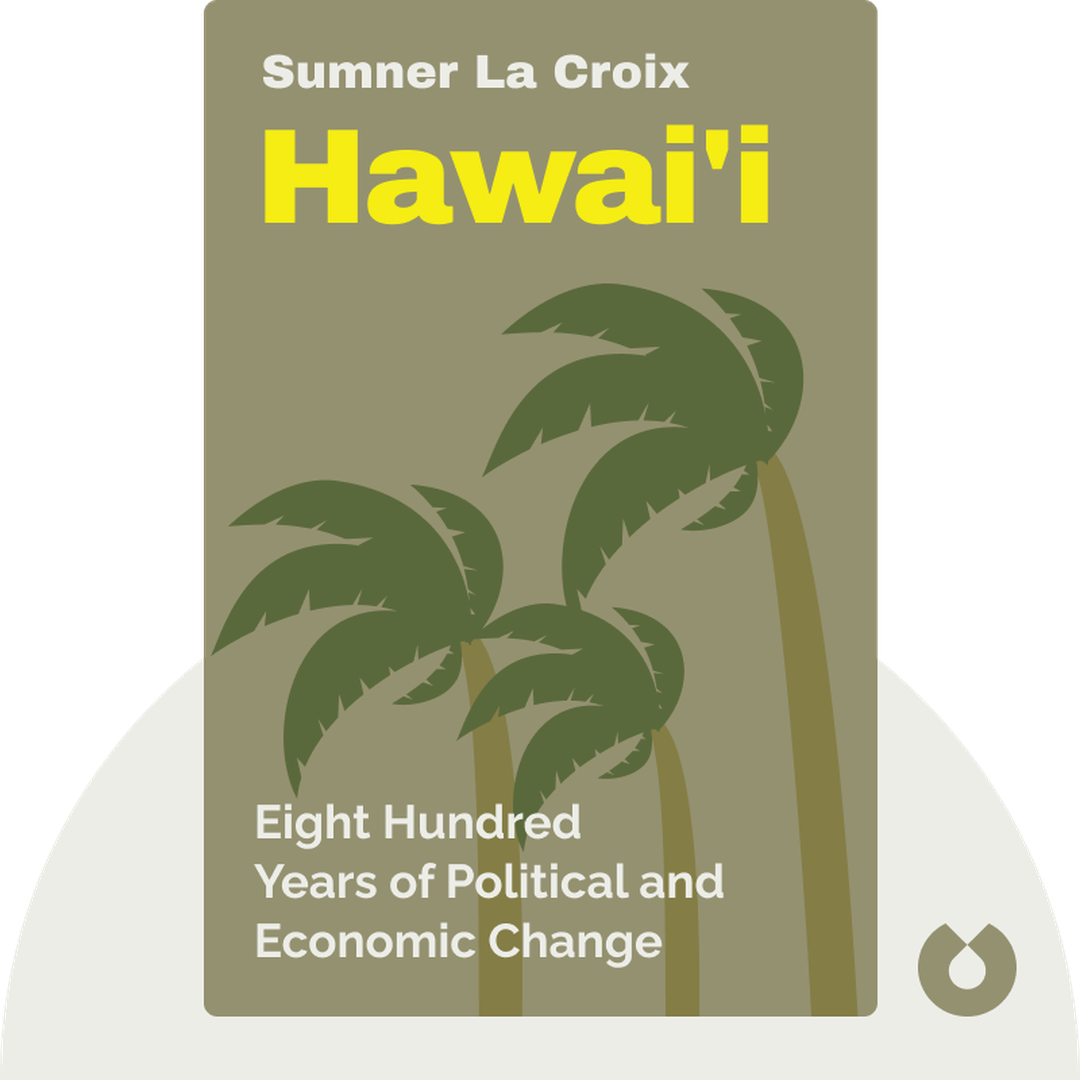
Hawai’i (2019) is a detailed history of the economic forces that have shaped Hawaiian society. Author Sumner La Croix traces the arc of commerce, from traditions first established in the twelfth century by Polynesian colonists to the modern Hawaiian state. Along the way, he examines what has changed and what has stayed the same.
Who Should Listen to Hawai'i?
- Anyone interested in the dark side of paradise
- Students of colonialism
- Labor historians
Books Similar to Hawai'i
Readers who enjoyed this also liked these titles.