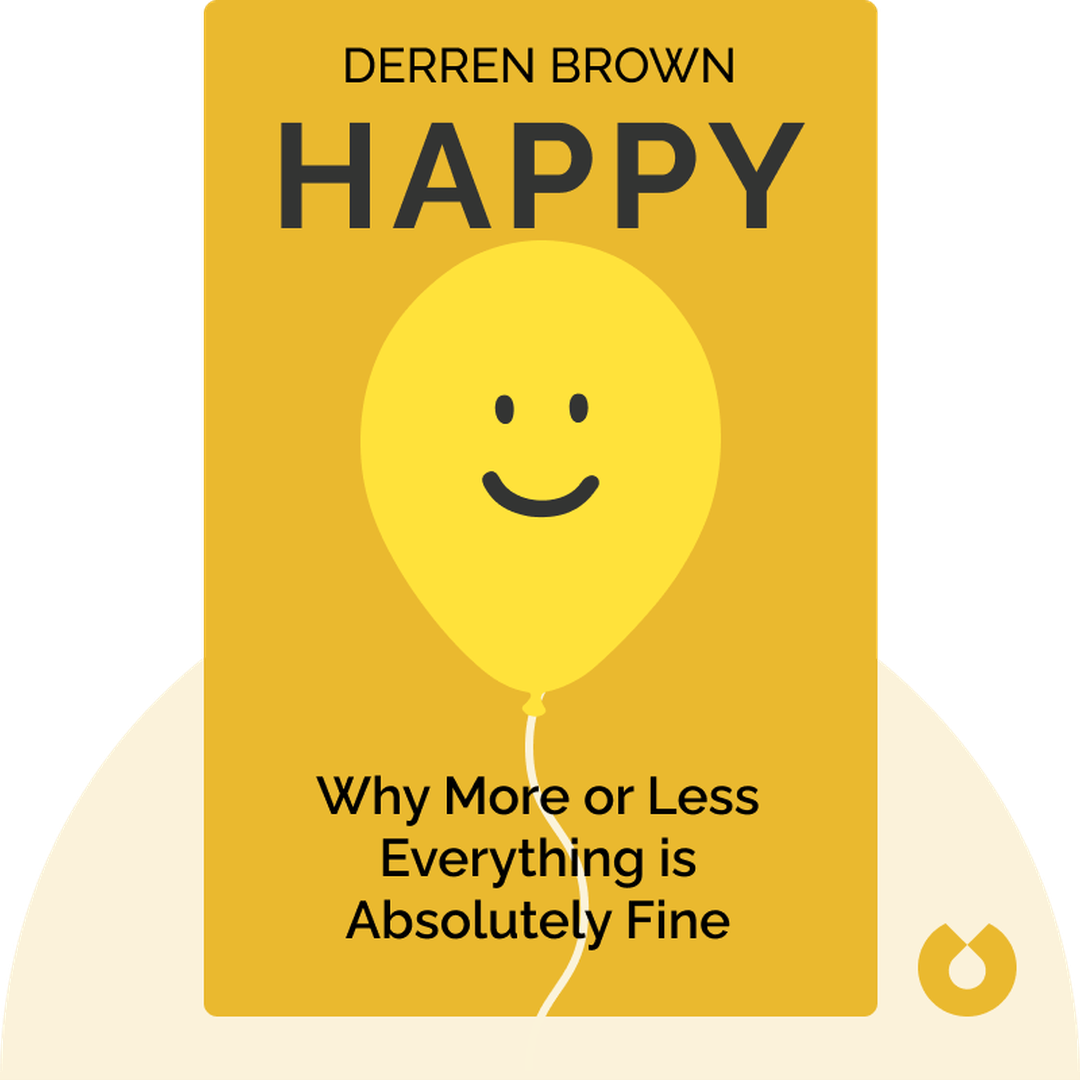
If You're Curious About These Questions...
You should listen to this audiobook
- What if the secret to lasting tranquility isn't about finding external success, but about mastering the one thing that is truly within your control?
- Did you know that the ancient Stoics developed a robust psychological toolkit that can transform your relationship with stress and anger today?
- Have you ever wondered why our modern obsession with 'positive thinking' might actually be preventing us from achieving true happiness?
Listen to Happy — Free Audiobook
Loading player...
Key Takeaways from Happy
- Understand why true happiness isn't dependent on acquiring material goods, but rather on adjusting your expectations and appreciating what you already have.
- Discover how to master your emotional reactions by realizing that feelings are driven by the subjective stories you tell yourself, not objective external events.
- Learn the liberating Stoic practice of dividing life's problems into two categories: your own thoughts and actions, and the external factors you must simply let go.
- Find out how to stop dwelling on the past and weaving negative narratives so you can cultivate true inner tranquility.
- Master the art of focusing your time and energy entirely on your own performance instead of endlessly obsessing over unpredictable outcomes.
Learning Tools
Reinforce what you learned from Happy
Mind Map
Happy
Core Stoic Philosophy+
Wealth & Consumerism+
Managing Reactions+
Performance vs. Outcomes+
Cultivating Inner Peace+
Overcoming Anger+
Actionable Advice+
Quiz — Test Your Understanding
Question 1 of 9
What does Epicurus argue is the true source of happiness regarding material goods?
Question 2 of 9
According to Marcus Aurelius and Stoic philosophy, what is the primary cause of our emotional reactions to external events?
Question 3 of 9
Based on the teachings of Epictetus, which of the following are the only two things we can truly control?
Question 4 of 9
Why does the author use the example of actor Bryan Cranston?
Question 5 of 9
How does the Stoic concept of 'prosoché' apply to someone trying to break a bad habit, like smoking?
Question 6 of 9
How do Stoics view the anxious habit of searching for 'deeper' meanings or hidden flaws in other people's actions?
Question 7 of 9
According to the text, what underlying emotion is most often found at the root of an angry outburst?
Question 8 of 9
Why do Stoics like Seneca and Plutarch advise against excessive curiosity about what others say behind your back?
Question 9 of 9
What does the book suggest as a practical way to start your day using 'Stoic meditation'?
Happy — Full Chapter Overview
- 1Recommendation
- 2Stoicism builds on Epicurean insights and can help us live happier lives in a consumerist age.
- 3Stoics argue that you can’t change the world around you, but you can change your response to it.
- 4Learning to release what you can’t control can be deeply liberating.
- 5Focusing on your performance is more worthwhile than obsessing over results.
- 6Stoics trust first impressions and develop stronger self-awareness.
- 7Anger is the enemy of reason and always leads to unhappiness and regret.
- 8The best way to manage anger is to let the moment pass and examine what triggered it.
- 9Limiting your curiosity helps protect your peace of mind.
- 10Final summary
Happy Summary & Overview
Happy (2016) takes a look at the ancient world’s most zen philosophers – the Stoics – and asks what thinkers like Epicurus, Seneca and Marcus Aurelius can teach us about happiness. The answer according to Derren Brown? A great deal. Packed with insights into the robust and rational outlooks of these Greek and Roman sages, these blinks illuminate a vital chapter in the history of Western philosophy while showing us how we can lead better, more fulfilling lives today.
Who Should Listen to Happy?
- Philosophers and thinkers
- The short-tempered and stressed
- Happiness-seekers
Books Similar to Happy
Readers who enjoyed this also liked these titles.