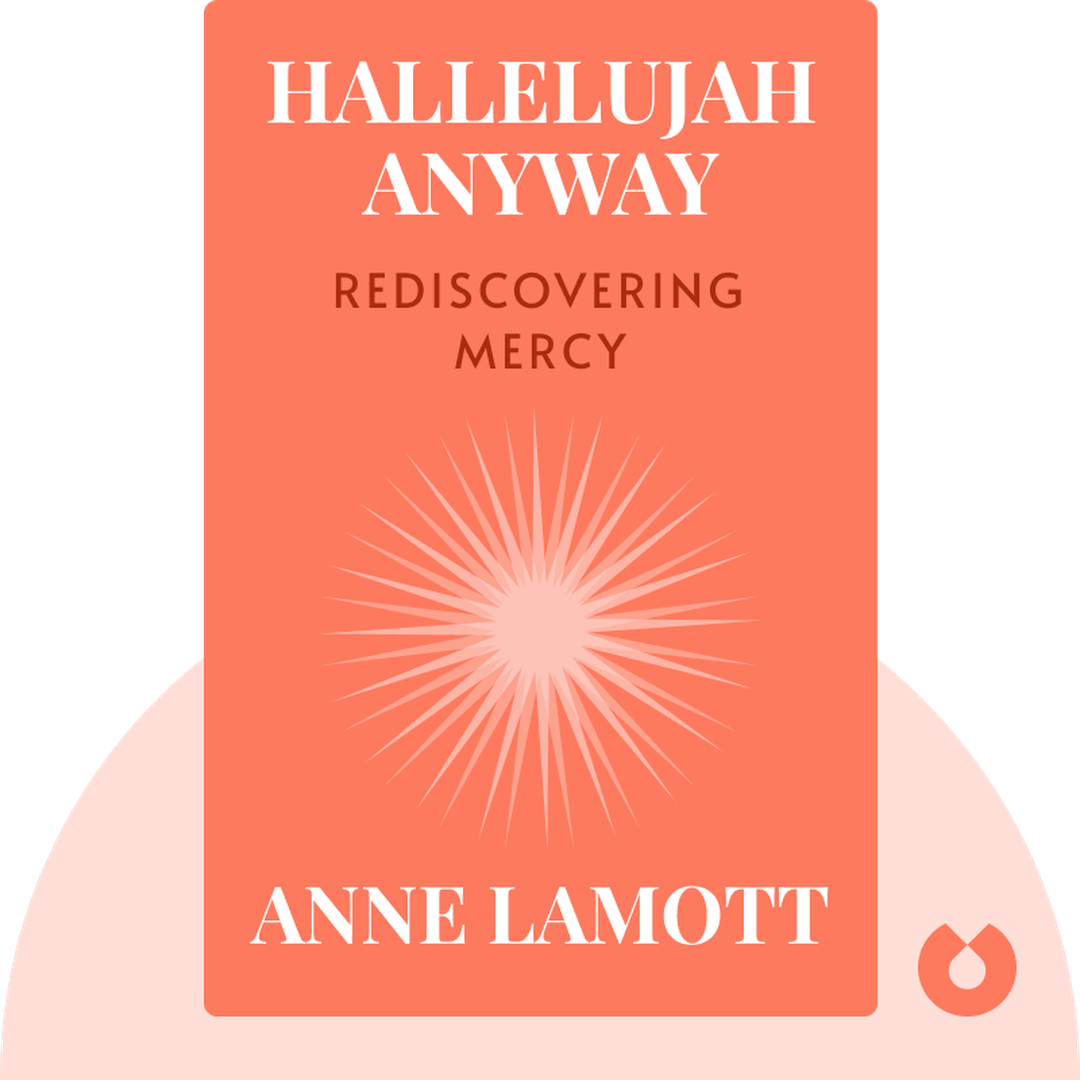
If You're Curious About These Questions...
You should listen to this audiobook
- Have you ever wondered why mercy is often the hardest gift to give ourselves, yet the only thing that can truly unlock a sense of lasting peace?
- What’s the secret to reclaiming your sense of joy and kindness when the world feels overwhelmingly harsh and unforgiving?
- What if you could stop the cycle of self-judgment and finally discover the transformative power that comes from embracing your own imperfections?
Listen to Hallelujah Anyway — Free Audiobook
Loading player...
Key Takeaways from Hallelujah Anyway
- Understand why true mercy requires radical humility, and discover how our instinct to build emotional defenses after past hurts prevents us from practicing this profound kindness.
- Learn how to reclaim your lost happiness by intentionally reconnecting with specific, joyful memories from a time before childhood trauma or stress took over.
- Discover how the pressure to perfectly meet the expectations of your parents and society 'folds' you into a tight bundle that stifles your true individuality.
- Master the art of self-acceptance by acknowledging your flaws, cutting yourself some slack, and allowing yourself to 'unfold' rather than constantly striving to do more.
- Recognize why retail therapy is merely a smoke screen meant to distract you from life's difficult realities, and realize that buying material things will never heal your emotional wounds.
Learning Tools
Reinforce what you learned from Hallelujah Anyway
Mind Map
Hallelujah Anyway
Defining Mercy+
Overcoming Past Trauma+
False Comforts vs. True Acceptance+
Navigating Despair+
The Rule of Love+
The Process of Mercy+
Catalysts for Mercy+
Quiz — Test Your Understanding
Question 1 of 9
Why does the author argue that genuine humility is so rare in modern society?
Question 2 of 9
According to the author, what is an effective way to reconnect with lost happiness and innocence?
Question 3 of 9
What does it mean to feel 'folded up,' as described by the poet Rilke in the text?
Question 4 of 9
How does the author view 'retail therapy' in the context of personal struggles?
Question 5 of 9
What lesson does the author draw from the biblical story of Jesus, Mary, and Martha?
Question 6 of 9
What is the 'rule of love' as described in the book?
Question 7 of 9
How does the author suggest we handle the unmanageable chaos and bad events in life?
Question 8 of 9
According to the text, what is one unexpected 'shortcut' to finding mercy?
Question 9 of 9
What actionable advice does the author give regarding people who annoy you?
Hallelujah Anyway — Full Chapter Overview
- 1Recommendation
- 2Mercy can come from unexpected places, and simple truths aren’t always easy to practice.
- 3The pain of growing up can distance us from happiness, but memories can reconnect us.
- 4Life can fold us into tight bundles, but acceptance can help us unfold.
- 5We think buying more things will make us happy, but it’s only an unhelpful distraction.
- 6Everyone loses hope at times, and when we do, we need consolation.
- 7We can move closer to mercy by reconnecting with our youthful perspective.
- 8Mercy can take time, so be patient and accept your shortcomings.
- 9There are shortcuts to finding mercy, including facing mortality or finding a teacher.
- 10Final summary
Hallelujah Anyway Summary & Overview
Hallelujah Anyway (2017) is a reintroduction to the concepts of mercy and kindness. If you’ve ever wondered whether these values have all but disappeared, this provides some much-needed insight into why they’re in short supply and what we can do to bring them back into our lives. Don’t waste another day feeling sad for yourself; get on the path to rediscovering the joy in life.
Who Should Listen to Hallelujah Anyway?
- People suffering from addiction
- Writers, poets and other aspiring artists
- Soul seekers
Books Similar to Hallelujah Anyway
Readers who enjoyed this also liked these titles.