If You're Curious About These Questions...
You should listen to this audiobook
- Have you ever wondered why the traditional classroom model often works against the natural way your brain actually processes and retains information?
- What if you could master complex new skills more effectively by using the secret 'learning science' techniques that modern education often ignores?
- Did you know that the standard 'factory model' of schooling was designed for a different era—and there's a scientifically proven way to upgrade how we learn for the modern world?
Listen to Grasp — Free Audiobook
Loading player...
Key Takeaways from Grasp
- Understand why traditional schooling's focus on 'winnowing' students through standardized testing fails to capture true intelligence and wastes immense human potential.
- Learn how true education requires moving beyond rote memorization to build deep, contextualized knowledge that you can actually apply to real-world challenges.
- Discover why learning doesn't have to be a painful chore, and how harnessing your brain's natural, childhood-like curiosity makes the process far more effective.
- Master the science of long-term potentiation by replacing last-minute cramming with spaced learning techniques that permanently strengthen your memory.
- Find out how counterintuitive study tactics, such as interleaving different subjects and allowing yourself to forget information, can significantly improve your long-term retention.
Learning Tools
Reinforce what you learned from Grasp
Mind Map
Grasp
Flaws of Traditional Education+
Cognitive Science of Learning+
Curiosity and Discovery+
Balancing Structure and Scale+
Future Implementation+
Quiz — Test Your Understanding
Question 1 of 7
According to the author, what is the harmful process of 'winnowing' in traditional education?
Question 2 of 7
What outdated assumption about learning does the book suggest we need to overturn?
Question 3 of 7
How does 'forgetting a little' actually improve the learning process over the long term?
Question 4 of 7
Which of the following is an example of the learning technique known as 'interleaving'?
Question 5 of 7
While discovery education models like Montessori are effective, what is one of their major limitations according to the text?
Question 6 of 7
What is a proven benefit of MIT's technology-enabled active learning (TEAL) system mentioned in the text?
Question 7 of 7
According to the book, what is a potential danger of heavily integrating technology into education?
Grasp — Full Chapter Overview
- 1Recommendation
- 2Our schools aren’t always designed for our brains – and the cost is high.
- 3Learning doesn’t have to feel bad. In fact, it works better when it doesn’t.
- 4Spaced learning isn’t just helpful, it’s essential – but schools often overlook it.
- 5Curiosity can greatly boost the learning process and drive better learning.
- 6Structure and formal teaching are needed for effective learning at scale.
- 7The time is right for a new approach to education – but quick fixes won’t work.
- 8Final summary
Grasp Summary & Overview
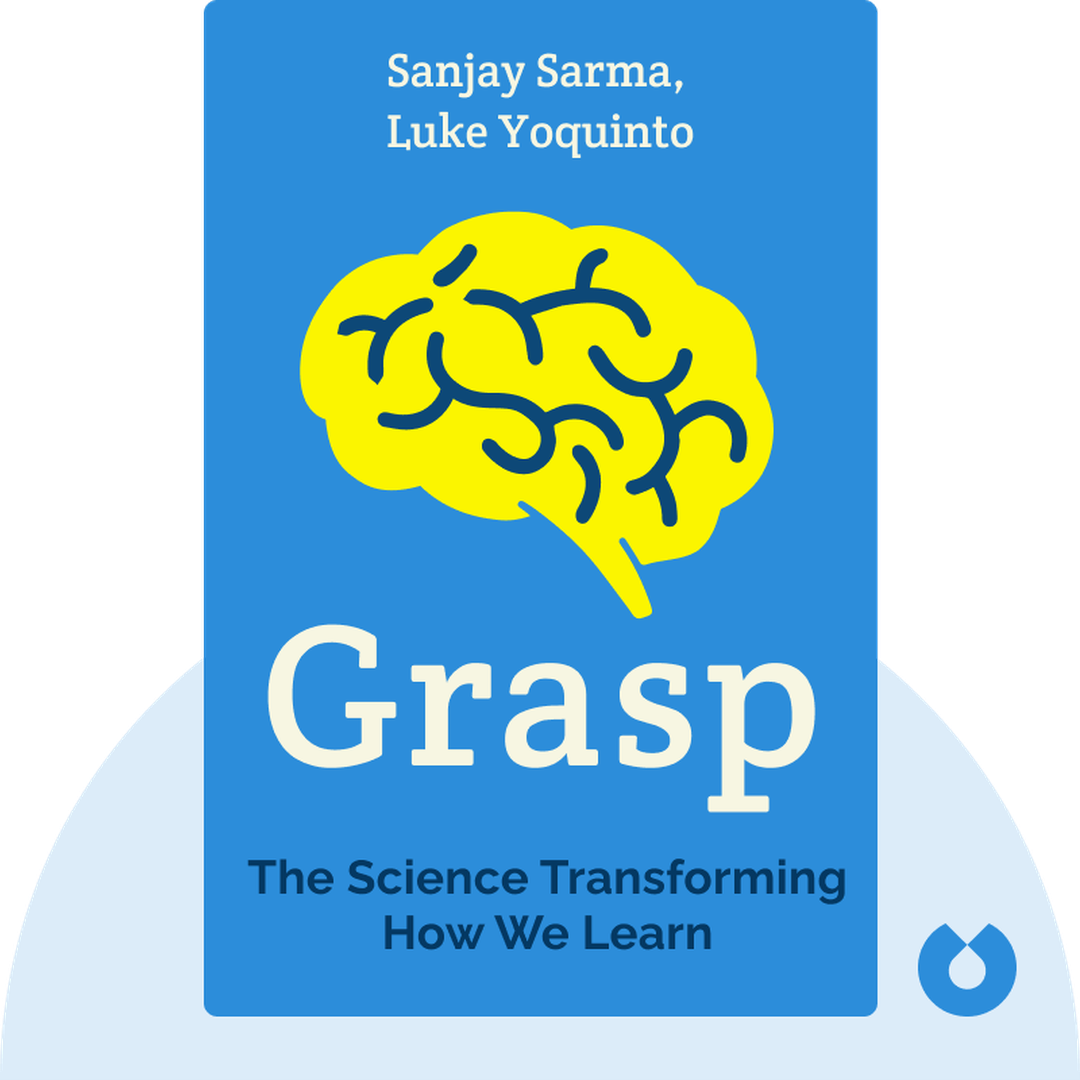
Grasp (2020) covers the development of modern education systems and the ways in which their current forms conflict with recent scientific insights into how the brain works. It describes a variety of experimental techniques being applied to improve education and discusses how they might become more broadly generalized.
Who Should Listen to Grasp?
- Academics, teachers, school administrators
- Students
- Anyone interested in improving their own ability to learn
Books Similar to Grasp
Readers who enjoyed this also liked these titles.