If You're Curious About These Questions...
You should listen to this audiobook
- Did you know that some of the most widely accepted medical treatments in history were actually deadlier than the diseases they were meant to cure?
- Have you ever wondered which unsung heroes risked everything to fight epidemics while the rest of the world turned its back in fear?
- Are you curious about the bizarre theories—from bad smells to planetary alignments—that our ancestors once believed were the secret causes of the world's deadliest plagues?
Listen to Get Well Soon — Free Audiobook
Loading player...
Key Takeaways from Get Well Soon
- Discover how the bizarre 1518 'dancing plague' was ultimately cured by community care and psychological comfort rather than actual medical intervention.
- Understand why medieval Europeans resisted effective hygiene during the bubonic plague, mistakenly believing that warm baths expanded pores and invited disease into the body.
- Learn how a lack of viral immunity, rather than superior military strength, allowed a handful of Spanish conquistadors to easily conquer the massive Incan empire.
- Find out how an English physician's simple observation of milkmaids catching cowpox led to the development of the world's first vaccine and the eradication of smallpox.
- Uncover the surprising truth about leprosy: the disease itself doesn't cause appendage loss, but rather destroys nerve endings, making sufferers completely numb to severe accidental injuries.
Learning Tools
Reinforce what you learned from Get Well Soon
Mind Map
Get Well Soon
The Dancing Plague (1518)+
Bubonic Plague (14th Century)+
Smallpox (16th-20th Century)+
Leprosy+
Cholera (19th Century London)+
Spanish Flu (1917-1919)+
Key Lessons+
Quiz — Test Your Understanding
Question 1 of 7
During the 'dancing plague' of 1518 in Strasbourg, what was the most likely true antidote that eventually helped the afflicted?
Question 2 of 7
Why did some people during the Middle Ages believe that living in sewers or avoiding bathing would protect them from the bubonic plague?
Question 3 of 7
How did Edward Jenner's observation of milkmaids lead to the development of the world's first smallpox vaccine?
Question 4 of 7
Which of the following best describes the actual cause of appendage loss in leprosy sufferers?
Question 5 of 7
What was the fatal flaw in the 19th-century medical establishment's approach to preventing cholera in London?
Question 6 of 7
Why did the deadly 1917 influenza pandemic become known as the 'Spanish Flu'?
Question 7 of 7
According to the book's final summary, what is the key lesson humanity should learn from historical disease outbreaks?
Get Well Soon — Full Chapter Overview
- 1Recommendation
- 2Don’t let Saint Vitus inspire your dance moves.
- 3No one understood what caused the plague, and the attempted cures were often quite odd.
- 4Spanish colonialists’ conquests were aided by smallpox.
- 5Compassion, not isolation, helps leprosy sufferers.
- 6To avoid cholera, don’t place your water source next to your sewage trench.
- 7Censorship kills, especially when it comes to the Spanish flu.
- 8Final summary
Get Well Soon Summary & Overview
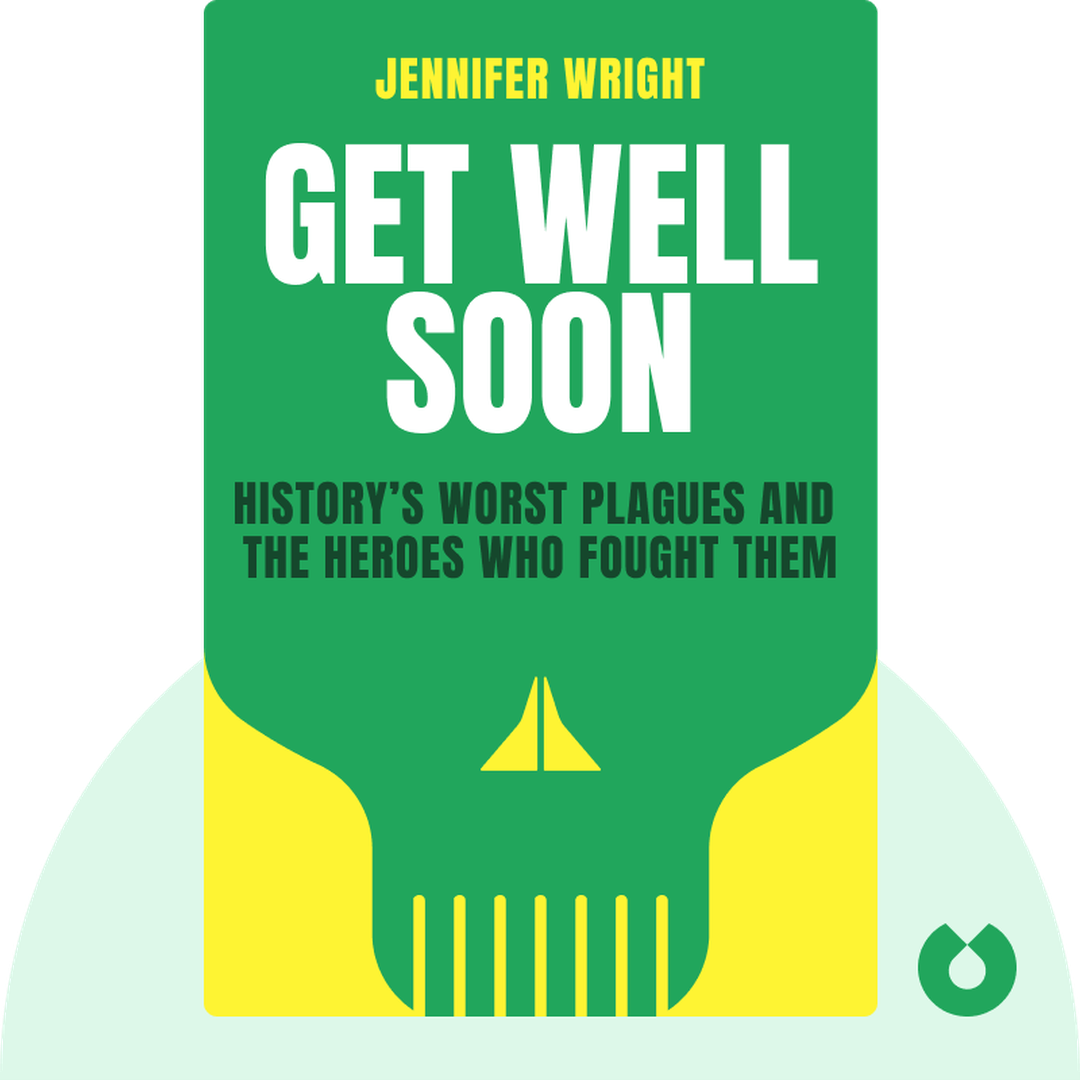
Get Well Soon (2017) tells the story of the diseases and epidemics that have plagued humans from the distant past right up to the twentieth century, detailing the theories that people once had about certain diseases and how to treat them. There’s room in the story too for the heroes who made breakthroughs in the treatment and prevention of diseases, or who helped sufferers when others shunned them.
Who Should Listen to Get Well Soon?
- Students of history and the history of medicine
- Anyone interested in public health
- Medics in need of quirky anecdotes for dinner parties
Books Similar to Get Well Soon
Readers who enjoyed this also liked these titles.