If You're Curious About These Questions...
You should listen to this audiobook
- Have you ever wondered what it would actually be like to be handed the leadership of a powerful street gang for twenty-four hours?
- Did you know that in communities ignored by the government, local gangs often step in to provide the essential social services that the state fails to deliver?
- Are you curious about the hidden business logic and complex social rules that govern life inside one of America’s most notorious public housing projects?
Listen to Gang Leader For A Day — Cinematic Audio Edition
Loading player...
Key Takeaways from Gang Leader For A Day
- Discover how residents of Chicago's poorest housing projects build a thriving, interdependent underground economy to survive when official unemployment hits 96 percent.
- Understand why calling 911 in the projects is rarely an option, forcing residents to create their own systems for emergency medical response and community justice.
- Learn the surprising ways a notorious street gang acts as a local benefactor by protecting vulnerable tenants, funding community needs, and enforcing strict educational requirements for its members.
- Uncover the dark reality behind gang-provided security, where community protection comes at the steep cost of rampant drug addiction, violence, and the relentless extortion of neighborhood businesses.
- Find out what managing a violent criminal enterprise has in common with running a legitimate corporation through the eyes of a sociologist who became a gang leader for a day.
Learning Tools
Reinforce what you learned from Gang Leader For A Day
Mind Map
Gang Leader For A Day
The Underground Economy+
Systemic Neglect & Corruption+
The Black Kings Gang+
Project Power Brokers+
Research Challenges+
Quiz — Test Your Understanding
Question 1 of 8
Despite official statistics showing 96 percent unemployment, how do residents of the Robert Taylor Homes primarily survive financially?
Question 2 of 8
Why do residents of the housing projects rarely call 911 during emergencies?
Question 3 of 8
What surprising requirement did the Black Kings gang enforce among its members?
Question 4 of 8
How did the Black Kings interact with residents who ran independent underground businesses, such as selling candy or sex?
Question 5 of 8
In what way did JT, the leader of the Black Kings, operate similarly to a corporate manager?
Question 6 of 8
What did the author discover when he was allowed to be 'gang leader for a day'?
Question 7 of 8
What role does Ms. Bailey, the building manager, play in the Robert Taylor Homes?
Question 8 of 8
What legal dilemma did the author face while conducting his sociological research in the projects?
Gang Leader For A Day — Full Chapter Overview
- 1Recommendation
- 2Even though everyone in the projects is officially unemployed, entrepreneurship thrives.
- 3Emergency calls from the projects are often ignored; honest police are mocked, crooked police feared.
- 4The Black Kings also have a charitable side, helping the elderly and keeping kids in school.
- 5With the gang in the projects, drugs, violence, and shootings become normal life.
- 6Gang leader or CEO? Managing project drug dealers is like running a sales team.
- 7The author becomes a gang leader for a day and discovers it’s harder than he thought.
- 8In the projects, status is all about power; the building manager works with the gang to keep hers.
- 9After so much time in the projects, the author struggled to remain impartial in his research.
- 10Final summary
Gang Leader For A Day Summary & Overview
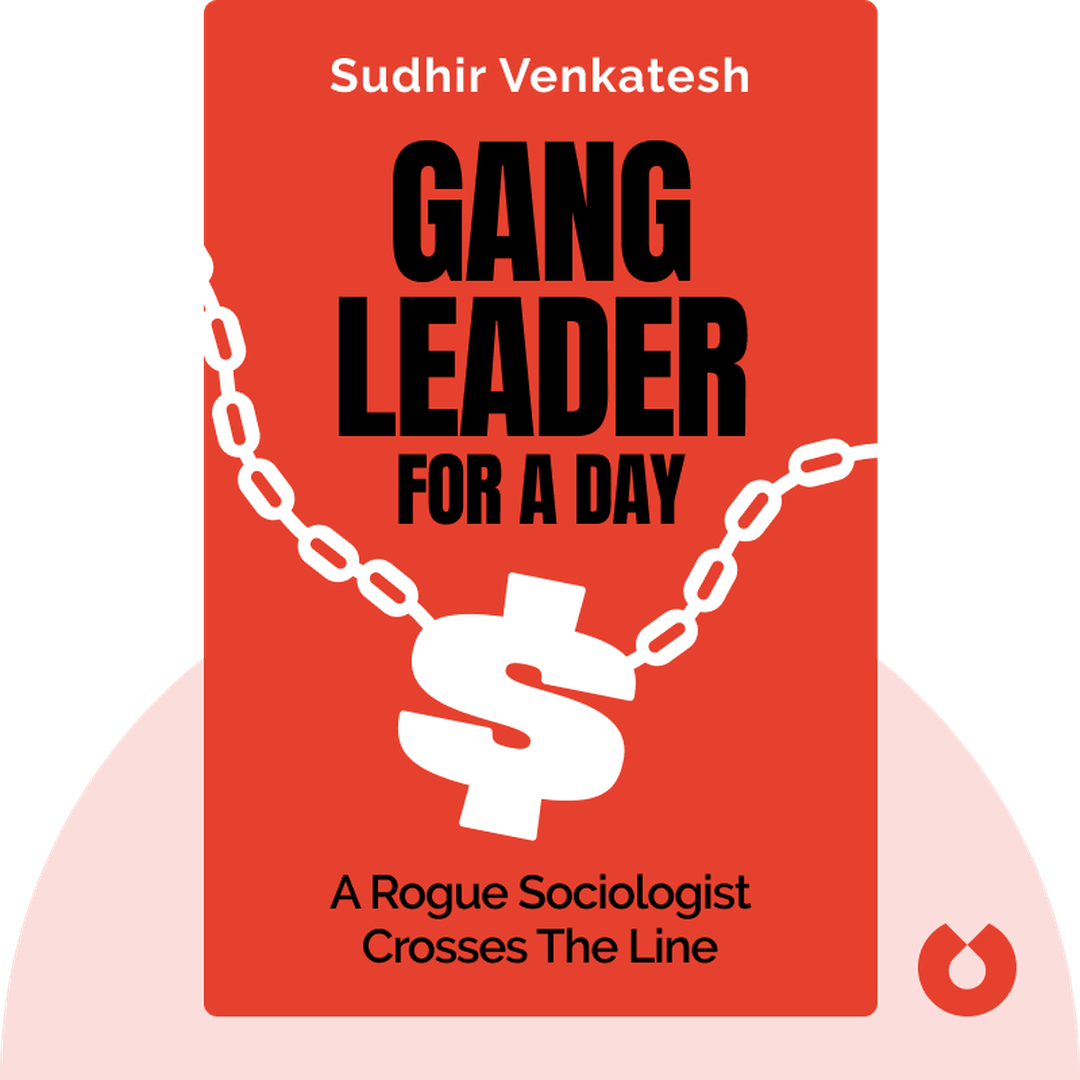
Gang Leader For A Day is based on author Sudhir Venkatesh’s ten years of personal, in-depth research conducted on-site at the notorious Robert Taylor Homes public housing projects in Chicago. Ignored by city government and law enforcement, residents in the close-knit community rely only on local gangs and each other for basic services and social support.
Who Should Listen to Gang Leader For A Day?
- Anyone interested in the influence of gangs in the United States
- Anyone curious about what it takes to be a gang leader
- Anyone interested in how poor communities are supported by underground economies
Books Similar to Gang Leader For A Day
Readers who enjoyed this also liked these titles.