If You're Curious About These Questions...
You should listen to this audiobook
- What if you could design a fair society from scratch without knowing who you’d be—rich or poor, talented or not—when you were born into it?
- Have you ever wondered what it would take to completely eliminate the influence of big money in politics and restore true power to the people?
- Are you curious about how the ideas of a legendary philosopher could provide a practical, modern blueprint for an economy where everyone actually thrives?
Listen to Free and Equal — Free Audiobook
Loading player...
Key Takeaways from Free and Equal
- Understand how John Rawls's 'original position' thought experiment can help us design a fairer society by imagining we don't know our own social or economic status.
- Discover why economic inequality is only truly justified if it ultimately benefits the least well-off members of society.
- Learn how to defuse polarizing culture war debates by appealing to the universal value of individual freedom rather than trying to impose specific moral beliefs.
- Find out how to remove the influence of billionaire wealth from politics using practical solutions like capped campaign donations and public 'democracy vouchers'.
- Explore innovative methods to empower ordinary citizens and restore political trust, from proportional representation to participatory budgeting and citizen assemblies.
Learning Tools
Reinforce what you learned from Free and Equal
Mind Map
Free and Equal
Rawls's Theory of Justice+
Freedom & Tolerance+
Revitalizing Democracy+
Equal Opportunity+
Shared Prosperity+
Quiz — Test Your Understanding
Question 1 of 7
What is the core premise of John Rawls' 'original position' thought experiment?
Question 2 of 7
According to Rawls's theory of justice, under what condition is economic inequality considered acceptable?
Question 3 of 7
How does the book suggest we reframe modern 'culture war' debates to protect personal liberties?
Question 4 of 7
Which of the following is proposed in the text as a practical way to reduce the political influence of the wealthy and democratize elections?
Question 5 of 7
What bold educational reform is suggested to prevent the exacerbation of unequal starting points for children?
Question 6 of 7
What is the purpose of Rawls's idea of a 'universal minimum inheritance'?
Question 7 of 7
To fund investments in public goods and shared prosperity, the text suggests a tax system that primarily targets:
Free and Equal — Full Chapter Overview
- 1Recommendation
- 2John Rawls’s theory of justice
- 3Freedom and fairness
- 4Democracy
- 5Equal opportunities
- 6Prosperity
- 7Final summary
Free and Equal Summary & Overview
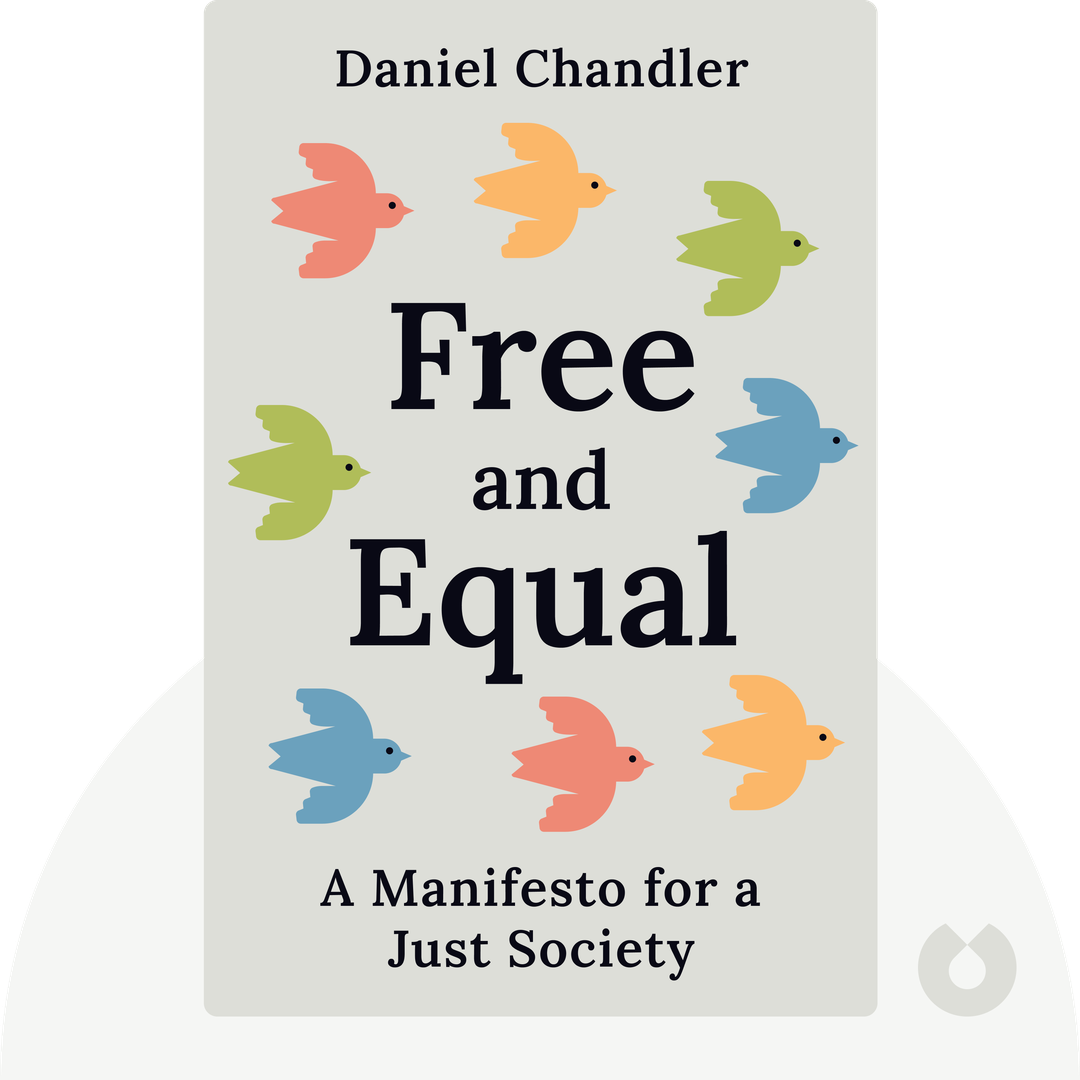
Free and Equal (2024) offers a progressive roadmap for building a fair society by reviving the compassionate ideas of philosopher John Rawls. It makes a compelling case for a society reimagined to safeguard free expression, eliminate the influence of money in politics, and build an economy where everyone can thrive.
Who Should Listen to Free and Equal?
- Progressives seeking a fresh perspective on addressing societal issues
- Political philosophers interested in the contemporary relevance of John Rawls’s ideas
- Policymakers searching for a framework to guide decision-making in the face of current crises
Books Similar to Free and Equal
Readers who enjoyed this also liked these titles.