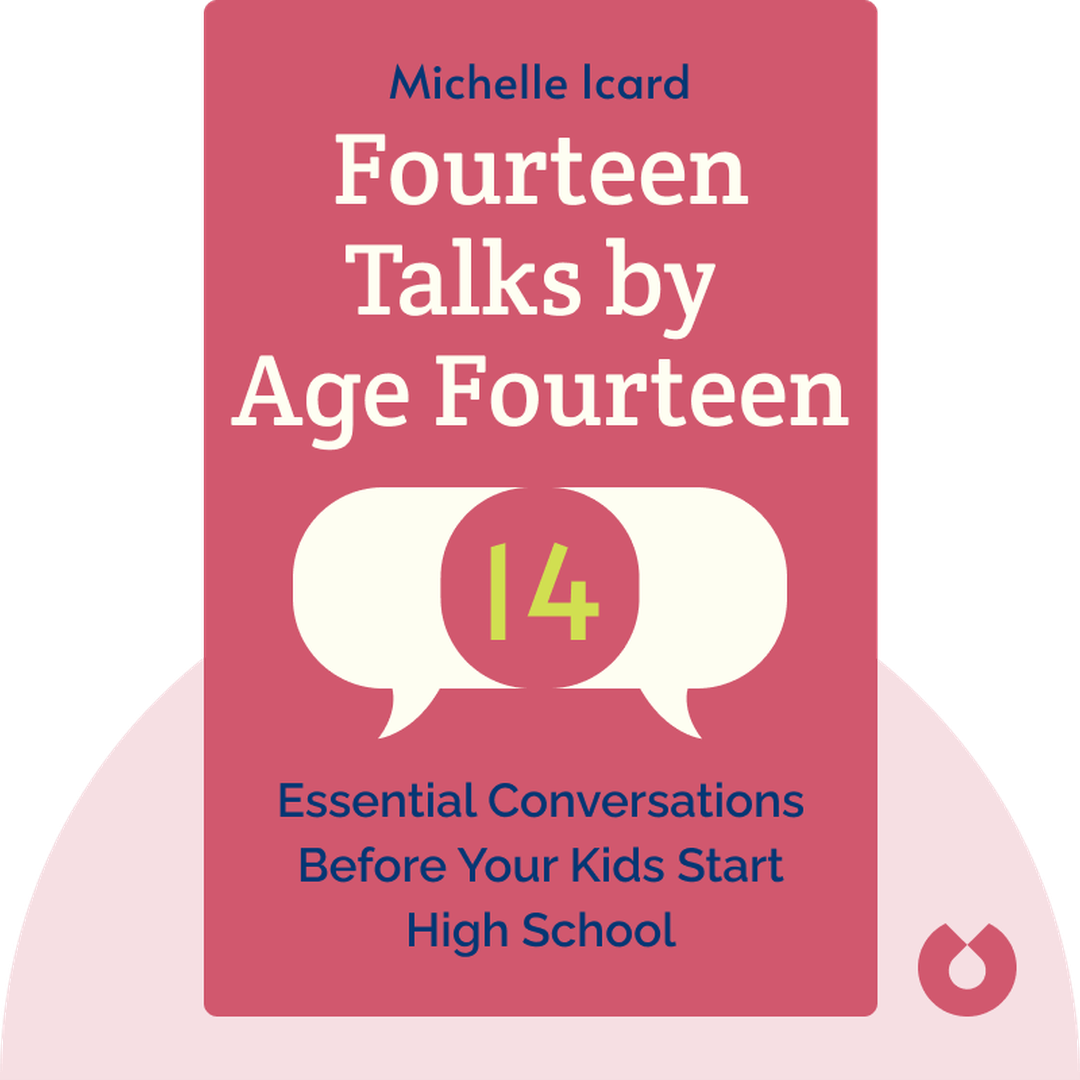
Fourteen Talks by Age Fourteen
Start ListeningDownload Try free on iPhoneScan to start in 5 seconds
Categories:
If You're Curious About These Questions...
You should listen to this audiobook
- Have you ever wondered why your once-talkative child suddenly shuts down the moment they hit double digits—and what it takes to reopen those lines of communication?
- What if you could transform your 'parental lectures' into engaging conversations that your tween actually wants to participate in?
- Are you curious about the 14 essential life topics you need to cover before your child reaches high school to ensure they are truly prepared for the world?
Listen to Fourteen Talks by Age Fourteen — Cinematic Audio Edition
Loading player...
Key Takeaways from Fourteen Talks by Age Fourteen
- Discover why you must learn a new communication lingo as your tween pulls away, allowing you to guide them through adolescence rather than resorting to angry lectures.
- Understand why the overly protective "shut it down" approach hinders development, and how letting your child make mistakes safely builds a healthy sense of autonomy.
- Learn how to apply the improv theater technique of "Yes, and" to avoid dead-end rejections and keep constructive dialogue flowing when your tween asks for more freedom.
- Find out how to create a "roadmap to independence" by establishing specific milestones that let your tween earn trust and prove they are ready for new responsibilities.
- Master the concept of financial "translucency" by discussing the broader context of money, hidden debt, and true value without oversharing sensitive family finances.
Learning Tools
Reinforce what you learned from Fourteen Talks by Age Fourteen
Mind Map
Fourteen Talks by Age Fourteen
Communication Dynamics+
Fostering Independence+
Financial Literacy+
Technology Management+
Delivering Criticism+
Understanding Impulsivity+
Consent & Boundaries+
Parental Self-Care+
Quiz — Test Your Understanding
Question 1 of 8
Why does the author advise against using the 'shut it down' approach to parenting tweens?
Question 2 of 8
How can parents apply a technique from improv theatre when their tween asks for more independence?
Question 3 of 8
What does the author mean by practicing 'translucency' rather than transparency when discussing money?
Question 4 of 8
What is a crucial principle for establishing technology ground rules in the home?
Question 5 of 8
According to the Harvard Business School paper cited in the book, how does the human brain typically respond to harsh criticism?
Question 6 of 8
Which of the following is an example of constructive feedback according to the author's guidelines?
Question 7 of 8
Why is impulsive behavior, such as sensation-seeking, considered a critical part of a tween's development?
Question 8 of 8
How does the author suggest parents introduce the concept of consent before tweens are ready to talk about sex?
Fourteen Talks by Age Fourteen — Full Chapter Overview
- 1Recommendation
- 2Learning a New Language Will Help You Talk to Your Tween
- 3Build Trust in Your Tween’s Autonomy with a Roadmap to Independence
- 4When Talking About Money, Context Matters
- 5Set Ground Rules to Help Your Kids Build a Healthier Relationship with Tech
- 6Help Your Child Mature by Choosing Your Criticism Carefully
- 7Impulsivity Drives Cognitive Growth
- 8Talking About Consent Early Makes Later Sex Conversations Easier
- 9Final summary
Fourteen Talks by Age Fourteen Summary & Overview
Fourteen Talks by Age Fourteen (2020) tackles the thorny subject of communicating with tweens – those adolescents between the ages of ten and fourteen who are beginning to pull away from their parents and close down lines of communication. This is the age at which “big” topics like sexuality, money, and life choices are more important than ever. But it’s also the age at which having a conversation with your child is harder than ever before. So what can parents do? Well, it’s time to learn a new way of talking with, and not at, your tween.
Who Should Listen to Fourteen Talks by Age Fourteen?
- Relationship-builders struggling to talk with their tweens
- Worriers who want the best for their kids
- Parents of younger children preparing for the next step
Books Similar to Fourteen Talks by Age Fourteen
Readers who enjoyed this also liked these titles.