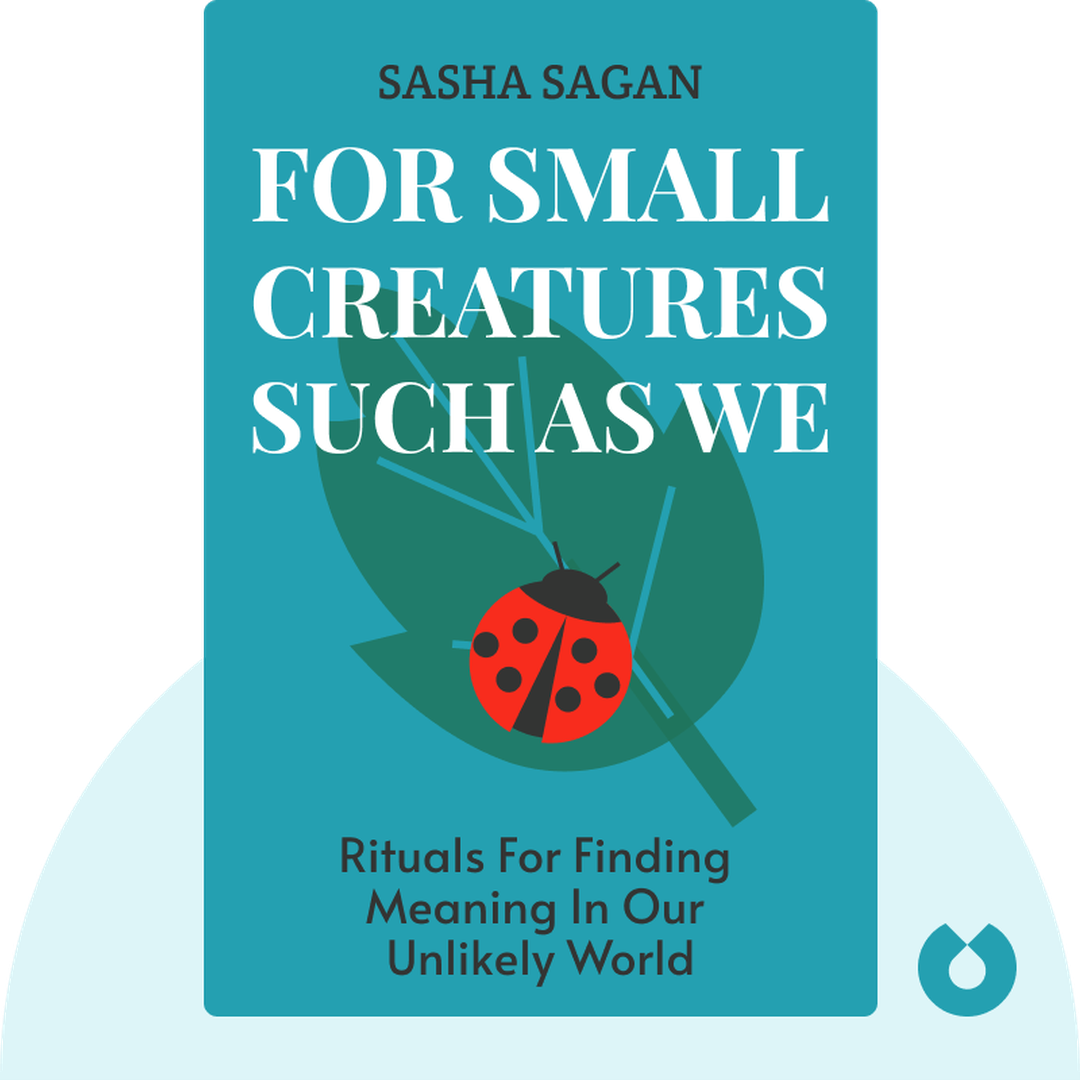
For Small Creatures Such as We
Start ListeningDownload Try free on iPhoneScan to start in 5 seconds
Categories:
If You're Curious About These Questions...
You should listen to this audiobook
- Have you ever wondered how to honor life’s most meaningful milestones—from births to goodbyes—without the framework of traditional religion?
- Did you know that many of our most ancient traditions are actually rooted in the rhythms of the natural world and the wonders of science?
- What if you could create your own powerful rituals that provide comfort and connection while staying true to a secular worldview?
Listen to For Small Creatures Such as We — Cinematic Audio Edition
Loading player...
Key Takeaways from For Small Creatures Such as We
- Discover how to create meaningful, nonreligious rituals that anchor you through life's joyful and heartbreaking transitions without relying on traditional dogma.
- Understand why celebrating birth is a profound way to acknowledge the remote, almost miraculous historical and astronomical odds of your unique existence.
- Learn how implementing simple, recurring rituals—like mindfully sharing a morning coffee or playfully singing a song—can help you navigate uncertainty and strengthen bonds with loved ones.
- Find out how to intentionally build a supportive community and replicate the communal benefits of a religious congregation by initiating regular secular social gatherings.
- Explore how marking the change of seasons and understanding Earth's slight axial tilt can help you deeply connect with the cyclical nature of life, from spring's rebirth to autumn's reflection.
Learning Tools
Reinforce what you learned from For Small Creatures Such as We
Mind Map
For Small Creatures Such as We
Secular Rituals+
Birth & Existence+
Social Connection+
Cycles of Nature+
Atonement & Growth+
Anniversaries & Birthdays+
Weddings & Partnerships+
Sex & Society+
Death & Grief+
Quiz — Test Your Understanding
Question 1 of 10
According to the book, what is the primary purpose of creating our own nonreligious rituals?
Question 2 of 10
How does the author view the event of a human birth?
Question 3 of 10
What whimsical weekly ritual did the author and her husband adopt based on a taxi driver's advice?
Question 4 of 10
What scientific phenomenon is responsible for the seasonal changes that inspire many religious and cultural festivals?
Question 5 of 10
According to the text, what evolutionary purpose does the feeling of guilt serve?
Question 6 of 10
The tradition of putting candles on a birthday cake is thought to trace back to the worship of which ancient figure?
Question 7 of 10
Why did the author wrap her late father's necktie around her wedding bouquet?
Question 8 of 10
What was the original purpose of the 'honeymoon' tradition when it was created in the 1500s?
Question 9 of 10
What does the Yiddish word 'yahrzeit' refer to, which brings the author great comfort?
Question 10 of 10
What is 'Blossom Day,' as described in the book's actionable advice?
For Small Creatures Such as We — Full Chapter Overview
- 1Recommendation
- 2Celebrating birth helps us recognize the unlikely odds of our existence.
- 3Bringing regular social rituals into your life connects you with loved ones and builds community.
- 4Honoring the changing seasons helps us accept life’s cyclical nature.
- 5Confession and atonement aren’t only religious experiences; they can also foster growth and connection.
- 6Yearly celebrations, like birthdays, reconnect us with loved ones and the universe.
- 7Seeing weddings as social rituals frees you to create traditions of your own.
- 8Many rituals around sex are shaped by religious and social norms.
- 9Creating rituals around death helps us process grief and express sorrow.
- 10Final summary
For Small Creatures Such as We Summary & Overview
For Small Creatures Such as We (2019) is a guidebook for those seeking to celebrate the milestones of life – both joyful and painful – in a nonreligious context. By exploring traditional ceremonies through a scientific lens, author Sasha Sagan invites secular individuals to develop their own meaningful rituals that create wonder and provide comfort.
Who Should Listen to For Small Creatures Such as We?
- Secular people wishing to participate in meaningful but nonreligious rituals
- Families looking for new ways to celebrate milestones
- Seekers of wonder wanting to connect more deeply with the natural world
Books Similar to For Small Creatures Such as We
Readers who enjoyed this also liked these titles.