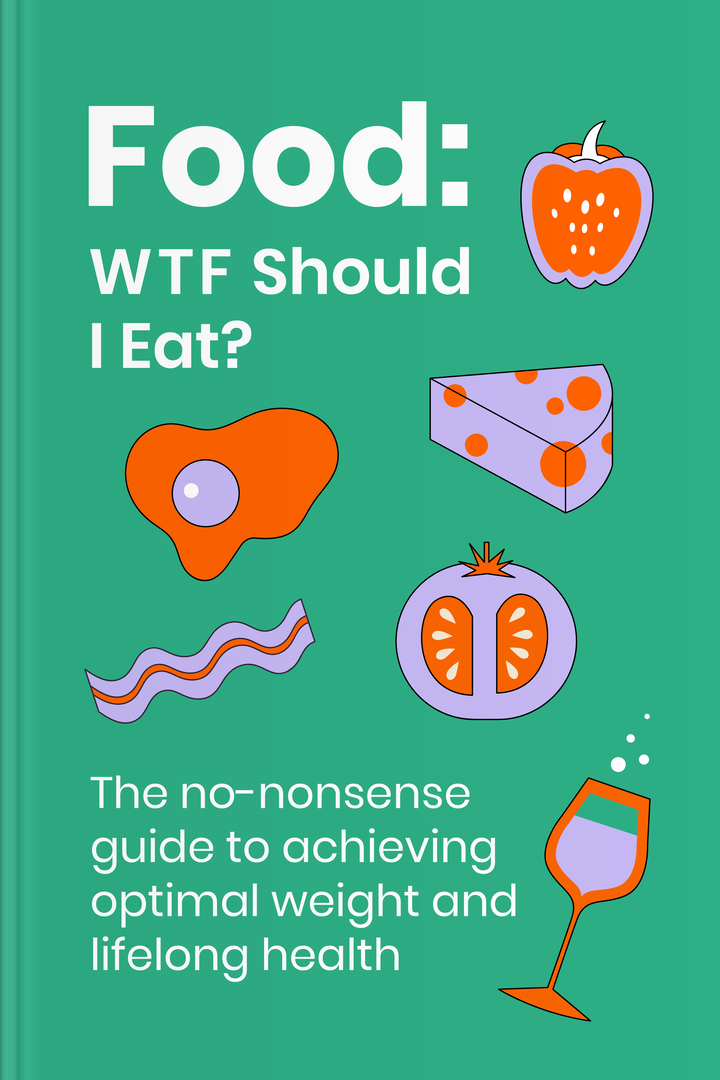
Food audiobook cover - This gentle guide untangles modern nutrition confusion—showing how real, minimally processed foods can support hormones, mood, metabolism, and long-term health, while helping listeners make calmer, more confident choices in a noisy food culture.

Food

This gentle guide untangles modern nutrition confusion—showing how real, minimally processed foods can support hormones, mood, metabolism, and long-term health, while helping listeners make calmer, more confident choices in a noisy food culture.

Based on ideas popularized by Mark Hyman

4.3 / 5(4 ratings)
Start ListeningDownloadQR code that opens AudiobookHub on the App StoreTry free on iPhoneScan to start in 5 seconds

If You're Curious About These Questions...

You should listen to this audiobook

Listen to Food — Free Audiobook

Loading player...

Key Takeaways from Food

Learning Tools

Reinforce what you learned from Food

Mind Map

Food
The Modern Diet Dilemma+
Rethinking Controversial Foods+
The Power of Plants and Fish+
Fats, Grains, and Protein Myths+
Hidden Risks in Modern Ingredients+
The 10-Day Detox Reset+
Sustainable Choices Without Fear+

Quiz — Test Your Understanding

Question 1 of 9
According to the book, what role does food play in the body aside from being a source of fuel?
  • A. It acts as information that can influence gene expression and normalize hormonal patterns.
  • B. It serves strictly as a calorie delivery system to maintain basic metabolic rate.
  • C. It replaces the need for the body to naturally produce anti-inflammatory cells.
  • D. It primarily functions to neutralize stomach acids and prevent digestive diseases.
Question 2 of 9
What simple rule of thumb does the book suggest when looking at the ingredient list of common snack foods?
  • A. The shorter the list, the more likely the food lacks essential nutrients.
  • B. The longer the list, the farther the product is from a naturally simple food.
  • C. Any list with more than two items is legally considered highly processed.
  • D. Ingredient lists are mostly marketing tools and do not reflect nutritional value.
Question 3 of 9
How does the book challenge the common assumption that low-fat milk is automatically a healthy choice?
  • A. It claims low-fat milk is heavily processed with artificial coloring.
  • B. It states that low-fat milk contains trans fats that cause heart disease.
  • C. It argues that low-fat milk may be just as harmful as whole milk and could contribute to childhood obesity.
  • D. It suggests that low-fat milk directly causes type 1 diabetes in adults.
Question 4 of 9
Why does the book emphasize the importance of dietary fat when discussing fish consumption?
  • A. Because fish fats help the body safely absorb mercury.
  • B. Because the human brain is more than 50 percent fat and requires omega-3s for optimal performance.
  • C. Because fat allows the body to digest fish protein faster than meat protein.
  • D. Because saturated fats in white fish help boost the metabolism.
Question 5 of 9
What clarification does the book make about getting Vitamin A from carrots?
  • A. Carrots provide pure Vitamin A, making them superior to animal products.
  • B. Carrots must be cooked to release any of their Vitamin A content.
  • C. Carrots are the only natural source of Vitamin A available to humans.
  • D. Carrots contain beta-carotene which the body converts, while beef liver actually contains more direct Vitamin A.
Question 6 of 9
According to the text, why might beans and grains not be a universally harmless source of protein for everyone?
  • A. They can be hard to digest, may contribute to inflammation, and can raise blood sugar levels.
  • B. They lack sufficient calories to provide lasting energy throughout the day.
  • C. They naturally contain trans fats that lead to cardiovascular disease.
  • D. They are completely devoid of any vitamins or minerals.
Question 7 of 9
Which of the following is recommended as a 'red flag' filter to help avoid unhealthy processed foods?
  • A. The food is naturally bitter and astringent.
  • B. The product comes in plastic packaging.
  • C. The ingredient list contains words you cannot pronounce or didn't exist a generation ago.
  • D. The food has a shelf life of less than one week.
Question 8 of 9
What metaphor does the book use to explain the importance of a detox phase before making major dietary changes?
  • A. It is like starving a fire of its oxygen before you can rebuild a house.
  • B. It is like attempting to download high-quality software onto a virus-damaged computer.
  • C. It is like trying to change the oil in a car while the engine is still running.
  • D. It is like running a marathon without stretching beforehand.
Question 9 of 9
What small, manageable exercise does the final chapter recommend for creating a sustainable shift in your food environment?
  • A. Throwing away all the food in your kitchen and starting fresh the next day.
  • B. Fasting for 24 hours to completely reset your taste buds to appreciate natural foods.
  • C. Memorizing the exact calorie count of every item you eat for two consecutive weeks.
  • D. Identifying five harmful products in your kitchen, finding healthier substitutes, and avoiding the harmful items during your next grocery trip.

Food — Full Chapter Overview

Food Summary & Overview

Nutrition advice can feel like a moving target. One decade fats are the enemy, the next they’re welcomed back, and many people are left wondering what’s actually safe, what’s truly nourishing, and why so many “normal” foods leave them feeling unwell.

This audio-friendly summary offers a steady, supportive path through common diet myths and modern food traps—from processed snacks and hidden additives to confusing debates about meat, dairy, grains, and fats. Along the way, it encourages practical, realistic choices—like reading ingredient lists, prioritizing food quality, and using a short “reset” phase to help the body recalibrate.

Who Should Listen to Food?

  • Anyone who feels overwhelmed or confused by conflicting nutrition advice and wants a calmer, clearer framework for choosing food.
  • Listeners who rely heavily on packaged or ready-to-eat foods and want gentle guidance toward more whole, minimally processed meals.
  • People interested in how food can influence inflammation, energy, mood, blood sugar, and overall wellbeing—without extreme rules.

About the Author: Based on ideas popularized by Mark Hyman

This narration is a warm rewrite of summary material that includes quotes and perspectives associated with physician and functional medicine educator Mark Hyman, known for emphasizing whole foods, reducing ultra-processed ingredients, and using nutrition to support overall health.

🎧
Listen in the AppOffline playback & background play
Get App