If You're Curious About These Questions...
You should listen to this audiobook
- What if you could transform your deepest anxieties about the future into a powerful source of hope and clarity?
- Have you ever wondered why some people seem to thrive in chaos while others feel paralyzed by it?
- What’s the secret to developing a 'Flux Mindset' that turns constant change into your greatest personal and professional advantage?
Listen to Flux — Free Audiobook
Loading player...
Key Takeaways from Flux
- Understand why following an outdated societal script hinders your growth, and discover how adopting a Flux mindset helps you embrace continuous change instead of fearing it.
- Learn how slowing down in a fast-paced world can actually bring more success, reduce burnout, and provide the clarity needed to focus on your true goals.
- Discover the importance of looking beyond your own privilege to see the complete picture, especially the marginalized periphery where real change and fresh ideas are born.
- Embrace the concept of getting lost not as a loss of control, but as a vital opportunity to spark creativity, discover new paths, and adapt to the unknown.
- Master the power of vulnerability by letting go of default mistrust, allowing you to build stronger relationships and expand your potential in a constantly shifting world.
Learning Tools
Reinforce what you learned from Flux
Mind Map
Flux
The Flux Mindset+
1. Run Slower+
2. See the Invisible+
3. Get Lost+
4. Value Trustworthiness+
5. Know Your Enough+
6. Build a Portfolio Career+
7. Prioritize Humanity+
8. Let Go of the Future+
Actionable Advice+
Quiz — Test Your Understanding
Question 1 of 8
Why does the author argue that we should 'run slower' in a fast-paced world?
Question 2 of 8
How does checking your privilege help you develop a 'flux mindset'?
Question 3 of 8
What does the word 'coddiwomple' illustrate about the flux mindset?
Question 4 of 8
According to the text, what is a practical way an organization can build a system based on trust?
Question 5 of 8
How does the author differentiate 'contentment' from 'happiness' when defining your 'enough'?
Question 6 of 8
Why does the author suggest building a 'portfolio career' rather than following a single career path?
Question 7 of 8
What does it mean to have high 'digital intelligence' in a world of flux?
Question 8 of 8
To let go of the future, the author recommends shifting your mindset from predicting the future to doing what?
Flux — Full Chapter Overview
- 1Recommendation
- 2Slow down to thrive in our fast-paced world.
- 3When the future feels uncertain, look for what’s invisible.
- 4Find your direction by getting lost.
- 5Place value on trustworthiness.
- 6In a world of excess, understand your “enough.”
- 7View your career as a portfolio, not a single path.
- 8Put your humanity first when navigating technology.
- 9Release your expectations to let a brighter future emerge.
- 10Final summary
Flux Summary & Overview
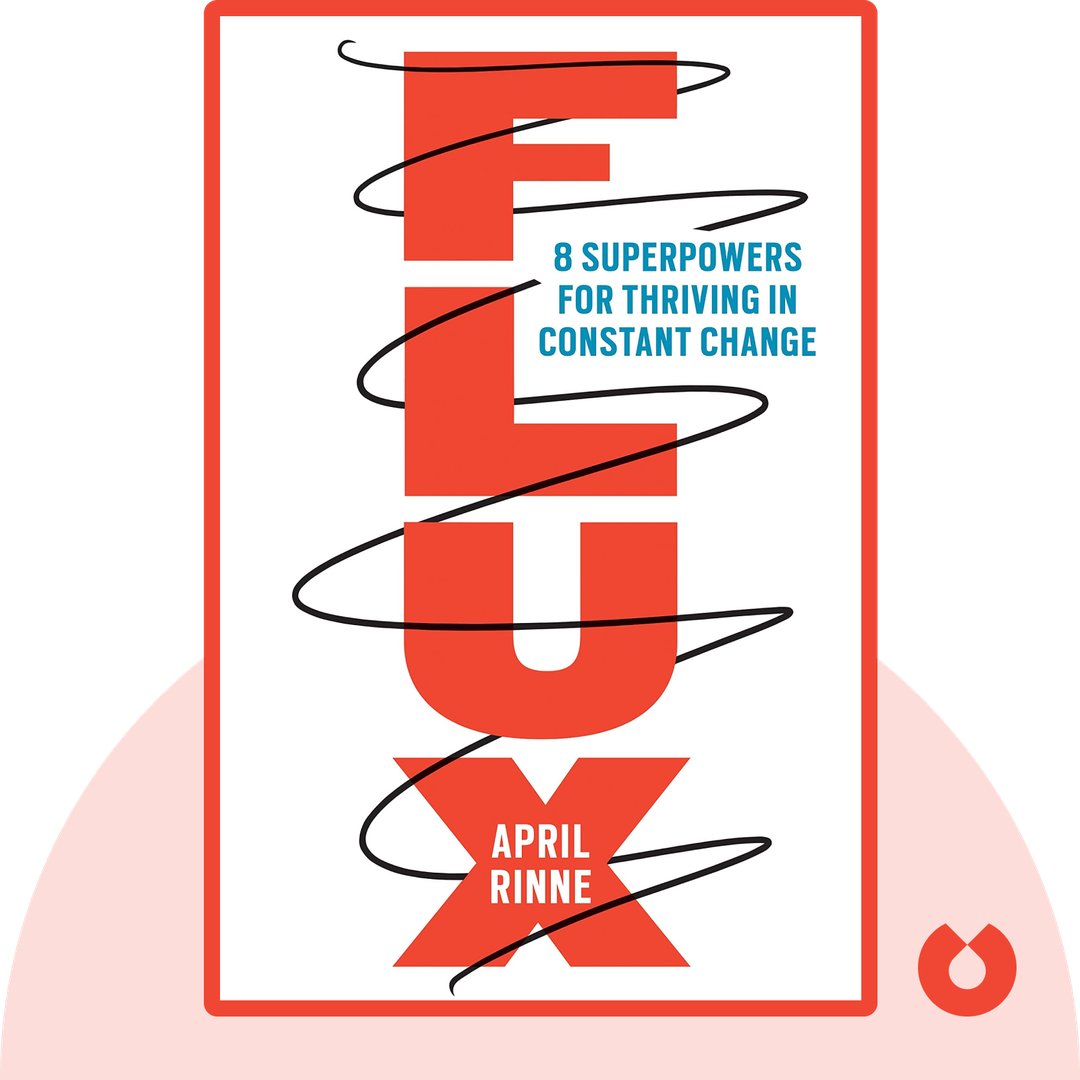
Flux (2021) offers a mindset to transform your relationship with change from fear to hope. Whether you’re overwhelmed by the pandemic, facing the end of a relationship, or anxious about climate change, these blinks detail eight essential practices for navigating change both personally and professionally.
Who Should Listen to Flux?
- People whose lives have been upended by the pandemic
- Anyone who struggles with anxiety
- Professionals who want to learn flexibility
Books Similar to Flux
Readers who enjoyed this also liked these titles.