Theme Song
If You're Curious About These Questions...
You should listen to this audiobook
- Did you know that a single day-trader working from his childhood bedroom managed to trigger a trillion-dollar global stock market collapse?
- Have you ever wondered how a lone math genius could outsmart Wall Street’s most sophisticated high-frequency trading algorithms?
- Are you curious about the high-stakes game of cat and mouse that unfolded after $1 trillion vanished from the markets in just 36 minutes?
Listen to Flash Crash — Free Audiobook
Loading player...
Key Takeaways from Flash Crash
- Discover how the S&P 500 dropped 5 percent in just four minutes during the 2010 Flash Crash, leaving seasoned economists baffled and costing ordinary investors thousands.
- Learn how a lone, brilliant math prodigy named Navinder Singh Sarao managed to single-handedly disrupt the global financial markets from his childhood bedroom.
- Understand the essential mechanics of the futures market, distinguishing between businesses using contracts to hedge against real-world risks and speculators treating assets like pure bets.
- Explore the pivotal shift from human-driven trading pits to automated systems, and see how high-frequency trading algorithms began to outpace even the fastest human minds.
- Find out how a frustrated human trader devised a controversial program to outsmart high-frequency algorithms, inadvertently triggering a historic and devastating financial meltdown.
Learning Tools
Reinforce what you learned from Flash Crash
Mind Map
Flash Crash
The Event (May 6, 2010)+
Navinder Sarao+
High-Frequency Trading (HFT)+
The Spoofing Strategy+
Investigation & Arrest+
Aftermath & Legacy+
Quiz — Test Your Understanding
Question 1 of 7
What was the defining characteristic of the 'Flash Crash' of May 6, 2010?
Question 2 of 7
Who was Navinder Singh Sarao, the primary suspect in the Flash Crash?
Question 3 of 7
Why did Navinder Sarao feel the need to change his trading strategy around 2007?
Question 4 of 7
What is 'spoofing,' the tactic Navinder Sarao used to outsmart high-frequency trading algorithms?
Question 5 of 7
How was Navinder Sarao eventually tracked down as a suspect in the Flash Crash?
Question 6 of 7
Why did the Chicago judge give Navinder Sarao a relatively lenient sentence of one year under house arrest?
Question 7 of 7
According to hedge fund manager John Arnold, why might spoofing actually have been a necessary practice at the time?
Flash Crash — Full Chapter Overview
- 1Recommendation
- 2Fastest-ever global market plunge leaves experts baffled.
- 3Gifted but obscure trader Navinder Sarao sits at the center of the mystery.
- 4Brilliant futures-market speculator is challenged by new technology.
- 5Feeling cheated out of the futures market, Nav devises a way to game the system.
- 6Authorities are slow to trace the program creator suspected of crashing the market.
- 7Navinder Sarao’s case raises searching questions for global finance.
- 8Final summary
Flash Crash Summary & Overview
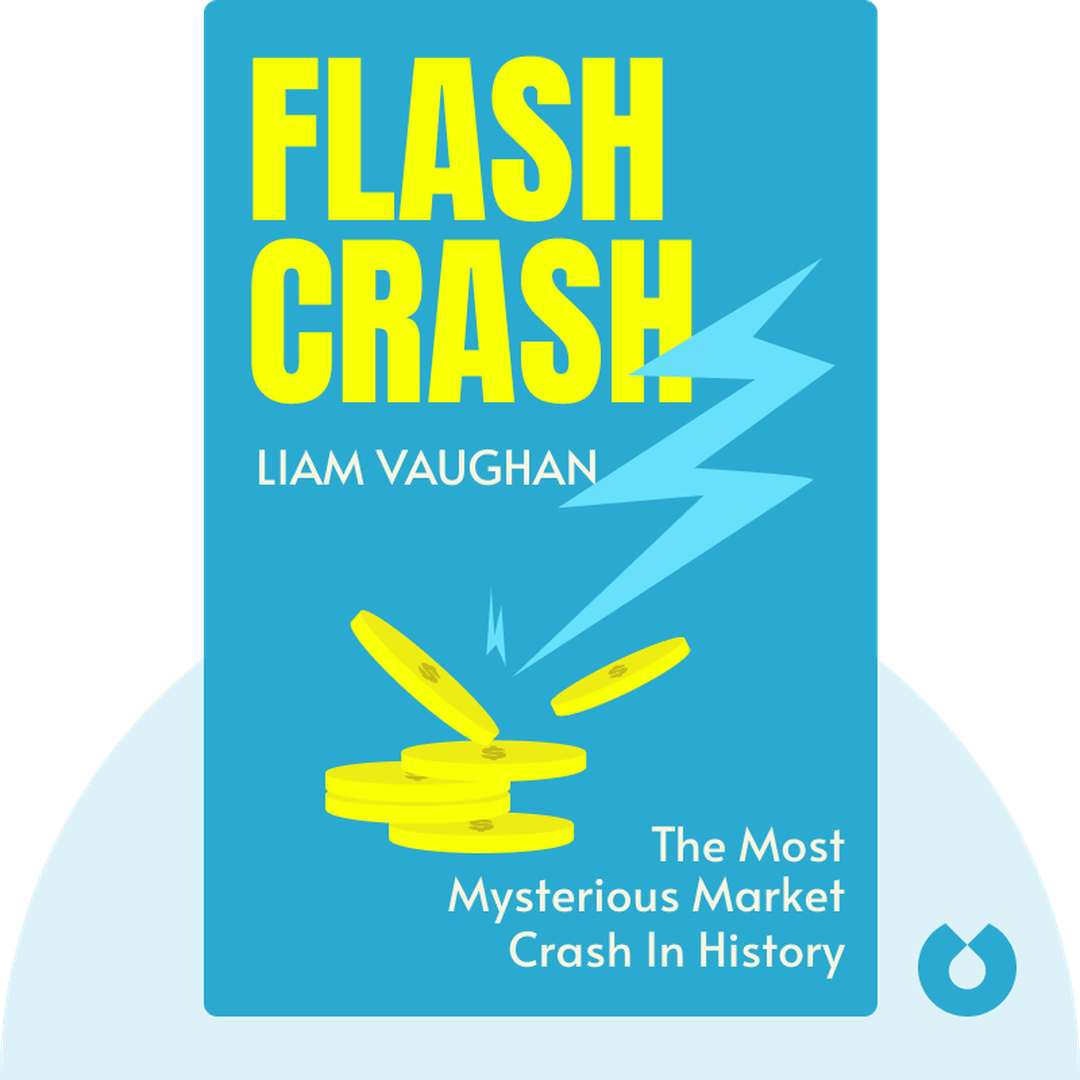
Flash Crash (2020) tells the story of the “Hound of Hounslow,” Navinder Singh Sarao, a British man accused of triggering the sudden and dramatic stock market crash of 2010. This is a detailed and fast-paced tale of global fraud and quixotic dreams.
Who Should Listen to Flash Crash?
- Those with an interest in financial fraud and daring swindles
- Fans of gripping investigative journalism
- Anyone who follows global finance
Books Similar to Flash Crash
Readers who enjoyed this also liked these titles.