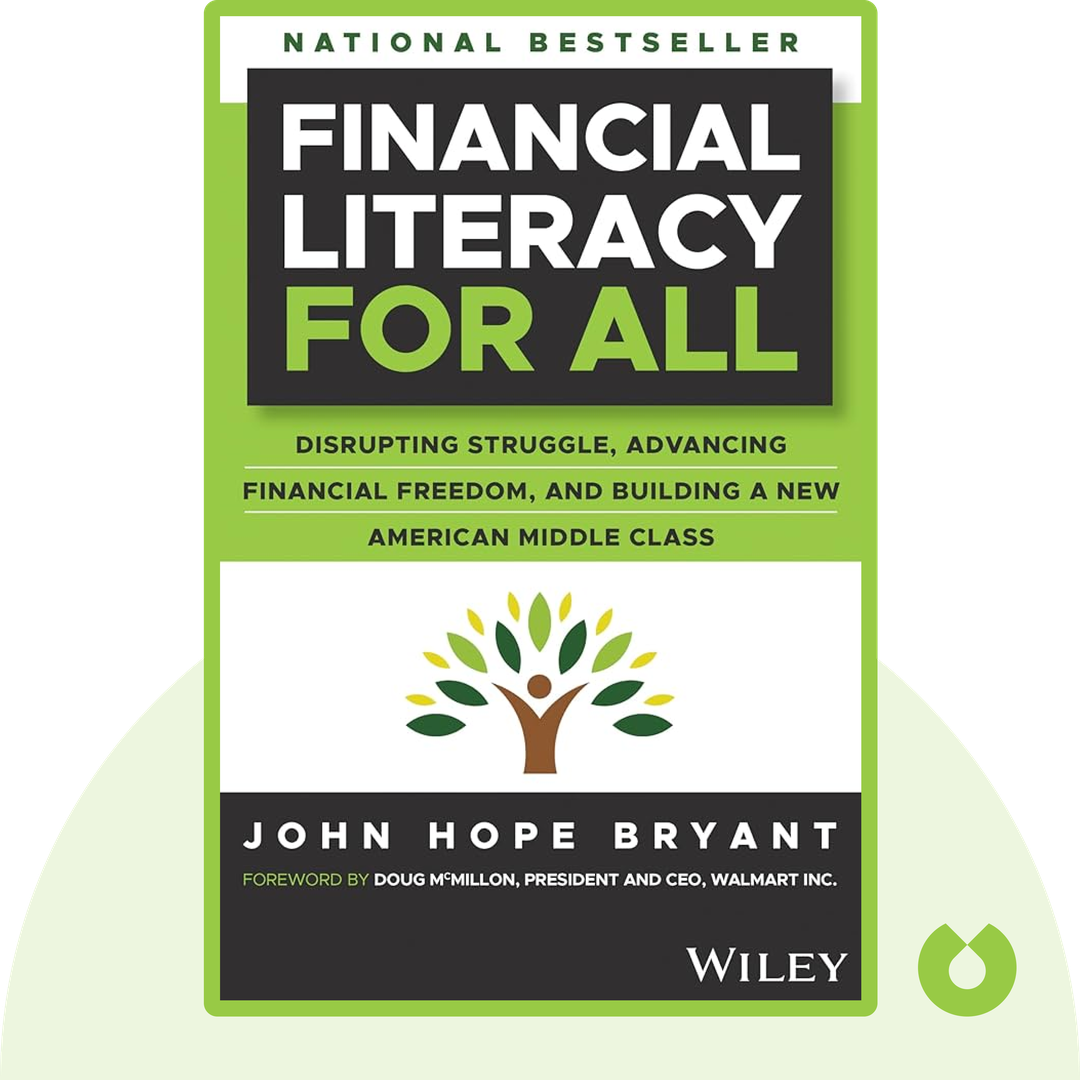
Financial Literacy for All
Start ListeningDownload Try free on iPhoneScan to start in 5 seconds
Categories:
If You're Curious About These Questions...
You should listen to this audiobook
- Did you know that mastering your credit could be the single most powerful tool for transforming your economic status from surviving to thriving?
- Have you ever wondered why hard work alone isn't enough to achieve financial security, and what the missing ingredient is for building lasting communal wealth?
- What if you could decode the complex 'language of money' to not only secure your own future but also open doors of opportunity for everyone around you?
Listen to Financial Literacy for All — Cinematic Audio Edition
Loading player...
Key Takeaways from Financial Literacy for All
- Master the complexities of credit management to transform your personal finances from a source of stress into a powerful tool for economic liberation and stability.
- Discover how the convenience of credit cards can quickly become a high-interest debt trap, and learn how financial literacy protects you from crippling fees.
- Recognize that widespread financial ignorance is a systemic societal crisis, highlighting the urgent need to embed practical money skills into our schools and workplaces.
- Explore the historical roots of broken capitalism to understand how systemic discrimination and excluded access have fueled today's massive racial wealth gap.
- Learn how democratizing financial knowledge serves as a modern tool for equality, equipping marginalized communities to successfully navigate and overcome a rigged economic system.
Learning Tools
Reinforce what you learned from Financial Literacy for All
Mind Map
Financial Literacy for All
The Necessity of Financial Education+
Unraveling Broken Capitalism+
Cultivating & Achieving Literacy+
The Power of Credit Scores+
Action & Results+
Quiz — Test Your Understanding
Question 1 of 7
How does the text characterize the role of credit in modern society?
Question 2 of 7
Which historical event is cited in the text as an egregious example of 'broken capitalism' that shattered the savings of over 60,000 Black depositors?
Question 3 of 7
What broad systemic solution does the author propose to address the racial wealth gap and make the American Dream accessible to all?
Question 4 of 7
Why does the author argue that widespread financial literacy benefits society as a whole, rather than just individuals?
Question 5 of 7
What primary metric does the HOPE Financial Wellness Index use to provide a snapshot of a community's overall financial health?
Question 6 of 7
According to the HOPE Financial Wellness Index data, what is a striking difference between communities with an average credit score of 580 versus those with a 700 score?
Question 7 of 7
What significant hurdle regarding credit scores in Black America does the text highlight as a barrier to prime lending opportunities?
Financial Literacy for All — Full Chapter Overview
- 1Recommendation
- 2The need for financial literacy
- 3Understanding broken capitalism
- 4Building financial literacy
- 5Attaining financial literacy
- 6Why credit scores matter
- 7The impact of raising credit scores
- 8Final summary
Financial Literacy for All Summary & Overview
Financial Literacy for All (2024) equips you to navigate the complexities of personal and community finances with greater proficiency and understanding. It reveals how financial education can transform your economic stability and unlock opportunities by managing credit more effectively. This guide is essential for anyone looking to enhance their financial literacy and make informed decisions that pave the way to personal and communal prosperity.
Who Should Listen to Financial Literacy for All?
- Young adults entering the workforce
- Educators and financial advisors
- Policymakers in education and finance
Books Similar to Financial Literacy for All
Readers who enjoyed this also liked these titles.