If You're Curious About These Questions...
You should listen to this audiobook
- What if you could stop trading your time for a paycheck and start living entirely off the interest of your investments?
- Did you know that achieving financial independence has less to do with your current salary and more to do with a specific strategy you can start today?
- Have you ever wondered what the secret 'magic number' is that would allow you to quit your 9-to-5 forever?
Listen to Financial Freedom — Free Audiobook
Loading player...
Key Takeaways from Financial Freedom
- Discover why escaping the nine-to-five grind requires defying social norms and treating money as a powerful tool to generate wealth, rather than a finite resource.
- Learn how to calculate your ultimate savings target by simply dividing your estimated annual living expenses by 4 percent.
- Understand how to harness compound interest to generate free money, allowing your investment to keep growing while protecting your principal from inflation.
- Master the crucial first step of your wealth journey by accurately calculating your true net worth and committing just five minutes a day to track your progress.
- Find out how a rewarding strategy of combining full-time work, side businesses, and stock investments can transform minimal savings into massive wealth in just five years.
Learning Tools
Reinforce what you learned from Financial Freedom
Mind Map
Financial Freedom
Mindset Shifts+
The Financial Roadmap+
Expense Optimization+
Income Acceleration+
Execution & Accountability+
Quiz — Test Your Understanding
Question 1 of 8
How did Grant Sabatier change his perception of money in order to achieve financial freedom?
Question 2 of 8
According to the book, how should you calculate the principal amount needed to live comfortably off compound interest?
Question 3 of 8
Why does the author recommend spending five minutes every day tracking your net worth?
Question 4 of 8
When calculating your true hourly income rate to evaluate the cost of purchases, what crucial factor must you include?
Question 5 of 8
Why does the author argue that traditional budgets are largely ineffective for creating wealth?
Question 6 of 8
What strategy does the book recommend when asking your boss for a raise to optimize your nine-to-five paycheck?
Question 7 of 8
What is the primary reason the author strongly advocates for setting up a side business?
Question 8 of 8
What actionable advice does the book offer to help you stay focused and accountable on your financial journey?
Financial Freedom — Full Chapter Overview
- 1Recommendation
- 2Achieving financial freedom means going against social norms.
- 3The first step to financial freedom is calculating your annual spending.
- 4Before putting your financial plan in motion, understand where you’re starting from.
- 5Guide your spending by calculating how much of your life each purchase costs.
- 6Reducing housing, transportation, and food costs can significantly boost your savings.
- 7Actively optimize your nine-to-five paycheck to reach financial independence faster.
- 8Diversify your income by launching side businesses.
- 9Even the strongest financial strategy works only if you put it into action.
- 10Final summary
Financial Freedom Summary & Overview
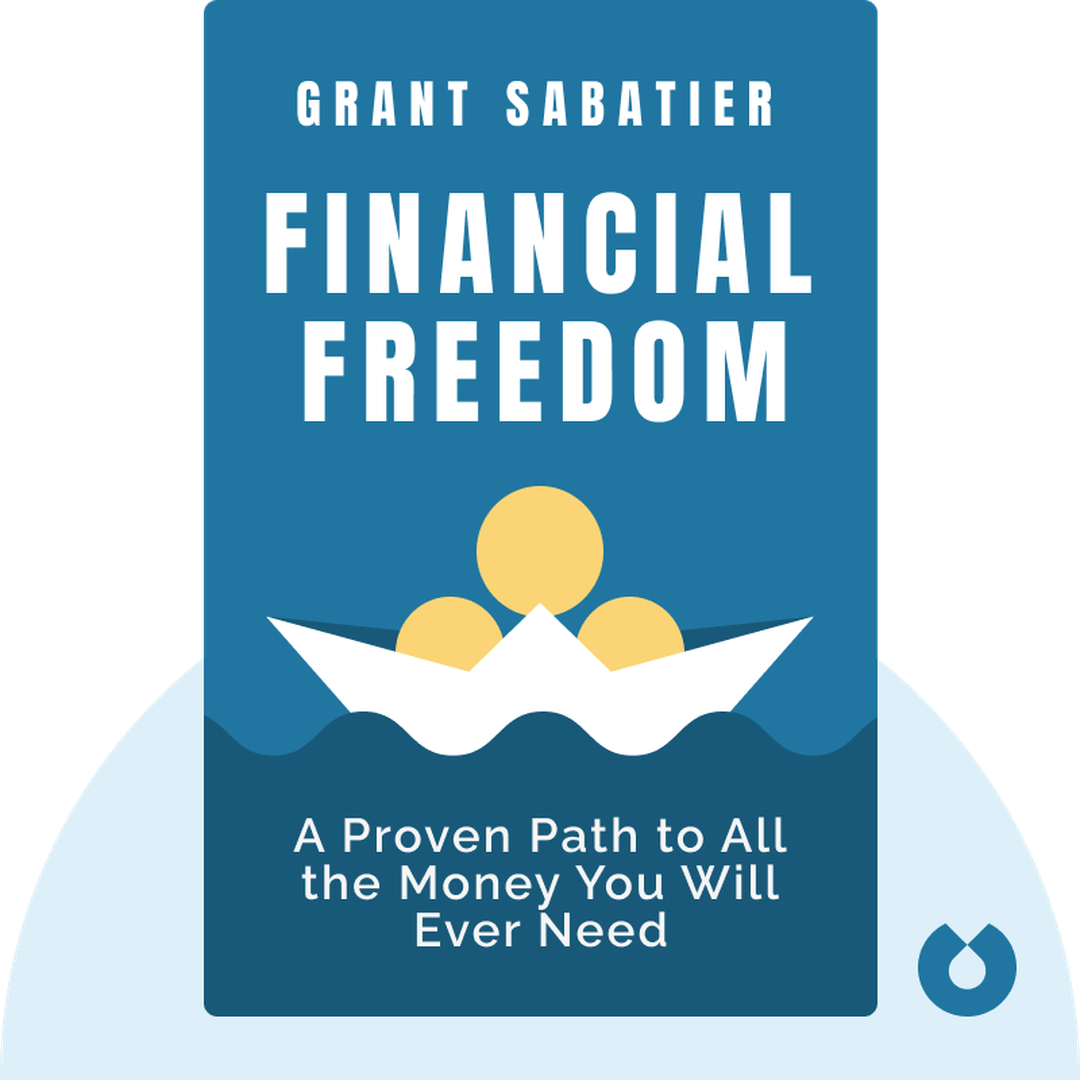
Financial Freedom (2019) offers a financial strategy that will help you generate enough wealth to live off the interest of your investments, freeing you from the need to work. Irrespective of your present financial situation or income level, you can use this strategy to achieve financial independence so you can retire sooner, and happier.
Who Should Listen to Financial Freedom?
- Nine-to-fivers longing to escape their cubicles
- Millennials wanting to retire long before their sixties
- Sufferers of financial anxiety
Books Similar to Financial Freedom
Readers who enjoyed this also liked these titles.