If You're Curious About These Questions...
You should listen to this audiobook
- Have you ever wondered why modern life often feels so unfulfilling, and what 'wildness' we are subconsciously missing from our daily existence?
- What if you could revitalize the planet’s most damaged landscapes not through more management, but by simply stepping back and letting nature take the lead?
- Did you know that reintroducing just a few key species could completely transform an entire ecosystem—even changing the physical shape of the land itself?
Listen to Feral — Free Audiobook
Loading player...
Key Takeaways from Feral
- Discover why the curated green spaces you visit aren't true wilderness and how interacting with feral nature can fulfill a deeply ingrained psychological need.
- Learn how invasive industries like gold mining devastate rainforest ecosystems and threaten the survival of indigenous tribes through disease and violence.
- Uncover the spontaneous, deeply connected aspects of indigenous cultures that historically enticed Westerners and highlight the environmental boredom of modern life.
- Understand the true concept of rewilding, which involves setting aside natural areas to let nature freely run its course rather than artificially managing landscapes.
- Realize how humanity can successfully reconcile modern life with a deep affinity for nature without having to sacrifice civilization or urban comforts.
Learning Tools
Reinforce what you learned from Feral
Mind Map
Feral
The Human Need for Wilderness+
The Problem with Current Environments+
The Concept of Rewilding+
The Role of Fauna+
Steps to Achieve Rewilding+
Quiz — Test Your Understanding
Question 1 of 10
What is George Monbiot's primary definition of 'rewilding'?
Question 2 of 10
Why does the author argue against humanity returning to a hunter-gatherer lifestyle?
Question 3 of 10
According to the author, why is a thick, beautiful carpet of bluebells in a woodland actually a negative sign?
Question 4 of 10
What vital ecological role do wild boars play in a forest environment?
Question 5 of 10
What is the author's main criticism of modern conservation efforts?
Question 6 of 10
What does the author believe is the most likely reason for the frequent sightings of 'big cats' in Britain?
Question 7 of 10
Why does the author consider the sheep-filled hills of England an ecological aberration?
Question 8 of 10
What does the European Environmental Agency's 2011 declaration about the mackerel population demonstrate to the author?
Question 9 of 10
Where does Monbiot suggest rewilding efforts should be primarily concentrated?
Question 10 of 10
After spending time with the Maasai warrior Toronkei, what did Monbiot feel was lacking in his own Western life?
Feral — Full Chapter Overview
- 1Recommendation
- 2Gold mining in the Brazilian rainforest threatens the environment and harms indigenous tribes.
- 3The indigenous way of life can be alluring to people raised in the West.
- 4Rewilding can reconcile modern life with humanity’s connection to nature.
- 5Rewilding doesn’t mean giving up civilization; it means making wild spaces accessible to everyone.
- 6Although overfishing is destroying the ocean’s wilderness, the sea still offers real thrills.
- 7Archaeological digs reveal past ecologies and show which animals are best suited for reintroduction.
- 8In Britain, frequent sightings of large predatory cats show that humans long for wilder times.
- 9Large animals are vital to rewilding, and governments should do more to protect them.
- 10Conservationists should step back and allow nature to rewild itself.
- 11Final summary
Feral Summary & Overview
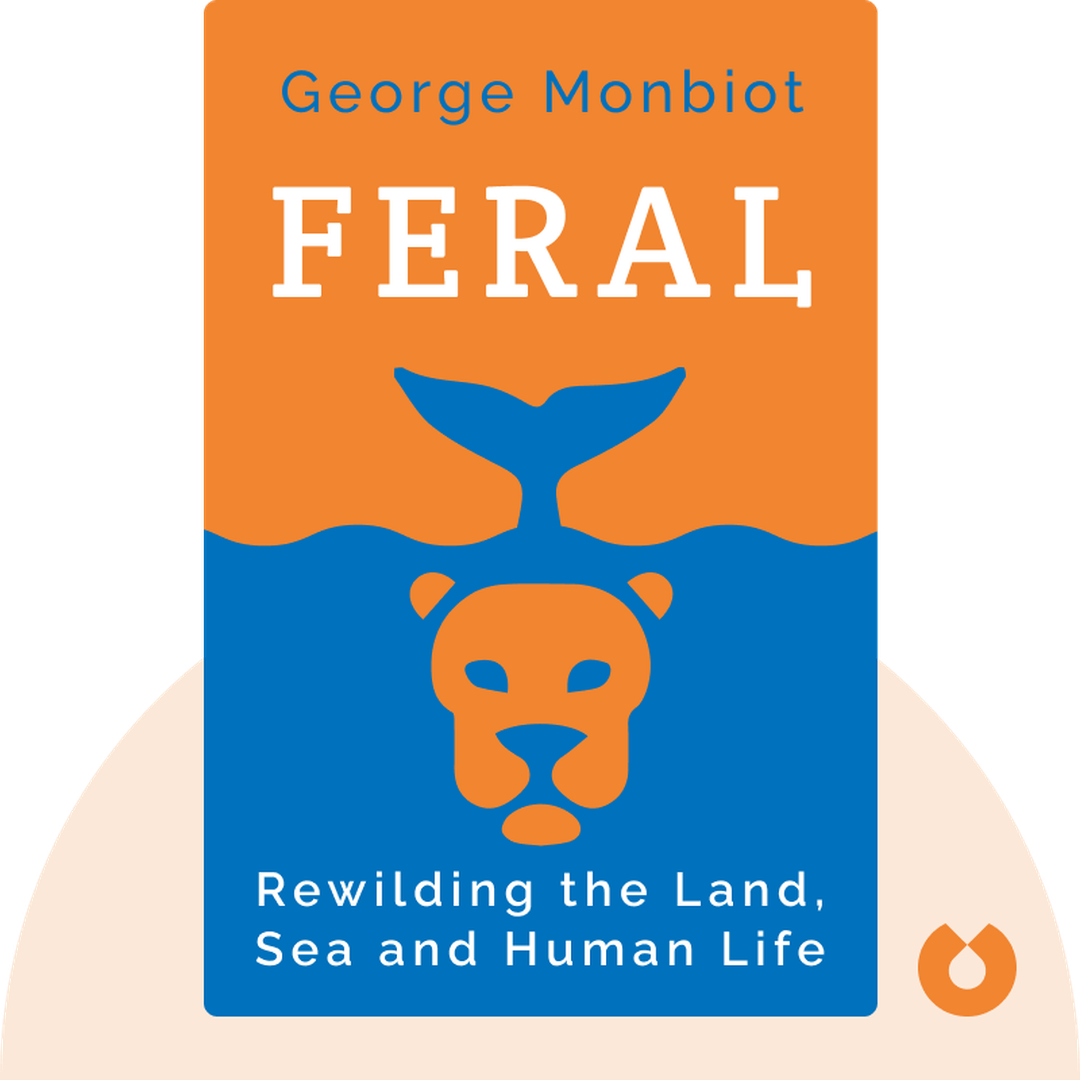
Feral (2013) is both an analysis and a manifesto. Author George Monbiot addresses what people are lacking in their day-to-day lives: nature and true wilderness. The book argues that certain areas should be left to nature and rewilded, and that the benefits of doing so – to both the planet and people – will soon follow.
Who Should Listen to Feral?
- Environmentalists looking for different perspectives
- Anyone interested in human interactions with nature
- Land and property administrators looking to broaden their horizons
Books Similar to Feral
Readers who enjoyed this also liked these titles.