If You're Curious About These Questions...
You should listen to this audiobook
- Have you ever wondered how historical anxieties about war and sickness have silently dictated the way we design our cities and public buildings today?
- Did you know that our modern approach to parenting and cultural norms is actually a reflection of centuries-old fears that have evolved over time?
- Are you curious about how the shift from nineteenth-century threats to modern nuclear power has fundamentally transformed the psychological landscape of contemporary society?
Listen to Fear — Free Audiobook
Loading player...
Key Takeaways from Fear
- Discover how almost all common human phobias, from spiders to job loss, are fundamentally rooted in our greatest universal fear of mortality.
- Understand how nineteenth-century poverty and the gruesome threat of bodysnatchers stripped away traditional comforts, severely exacerbating the societal fear of dying.
- Learn how tragic historical stampedes and the human tendency to panic directly shaped modern public engineering, leading to life-saving architectural standards like panic bars.
- Find out how twentieth-century society handled fearful children and why educators consistently, and unfairly, blamed mothers for their children's anxieties.
- Trace the evolving medical understanding of nightmares to see how diagnoses shifted from physical ailments like poor blood flow to Freudian theories of repressed desires.
Learning Tools
Reinforce what you learned from Fear
Mind Map
Fear
Root Cause: Mortality+
Architecture & Mass Panic+
Childhood Fear & Parenting+
The Science of Nightmares+
Societal Instability+
Combat & Warfare+
The Nuclear Threat+
Evolving Health Fears+
Quiz — Test Your Understanding
Question 1 of 8
According to the book, what fundamentally underlies nearly all human fears, and why did this fear worsen for the 19th-century lower class?
Question 2 of 8
How did the human tendency to panic directly influence modern public architecture and engineering?
Question 3 of 8
In the mid-twentieth century, how did psychological and educational authorities typically explain fearfulness in children?
Question 4 of 8
Before Sigmund Freud's psychoanalytic theories, what did nineteenth-century physicians primarily believe caused fearsome nightmares?
Question 5 of 8
What does the 1926 BBC satirical radio broadcast incident in Great Britain illustrate about human fear?
Question 6 of 8
What dual effect does intense fear have on soldiers in combat, according to the provided text?
Question 7 of 8
How did Cold War government initiatives, such as simulated attacks and "duck and cover" drills, affect the public?
Question 8 of 8
How did societal fears regarding life-threatening illnesses shift from the nineteenth century to the twentieth century?
Fear — Full Chapter Overview
- 1Recommendation
- 2Death is our deepest fear, and poverty makes it worse.
- 3The human tendency to panic helped shape modern public architecture and engineering.
- 4Society frowns on fearful children and usually blames mothers.
- 5Terrifying nightmares were once blamed on poor blood flow to the brain, until Freud argued they came from within the psyche.
- 6Unstable societies create fertile ground for fear and panic.
- 7Extreme fear in combat can cause lasting illness as well as adrenaline-fueled courage.
- 8The threat of nuclear war frightened entire nations.
- 9Fears of deadly diseases shift as medicine advances.
- 10Final summary
Fear Summary & Overview
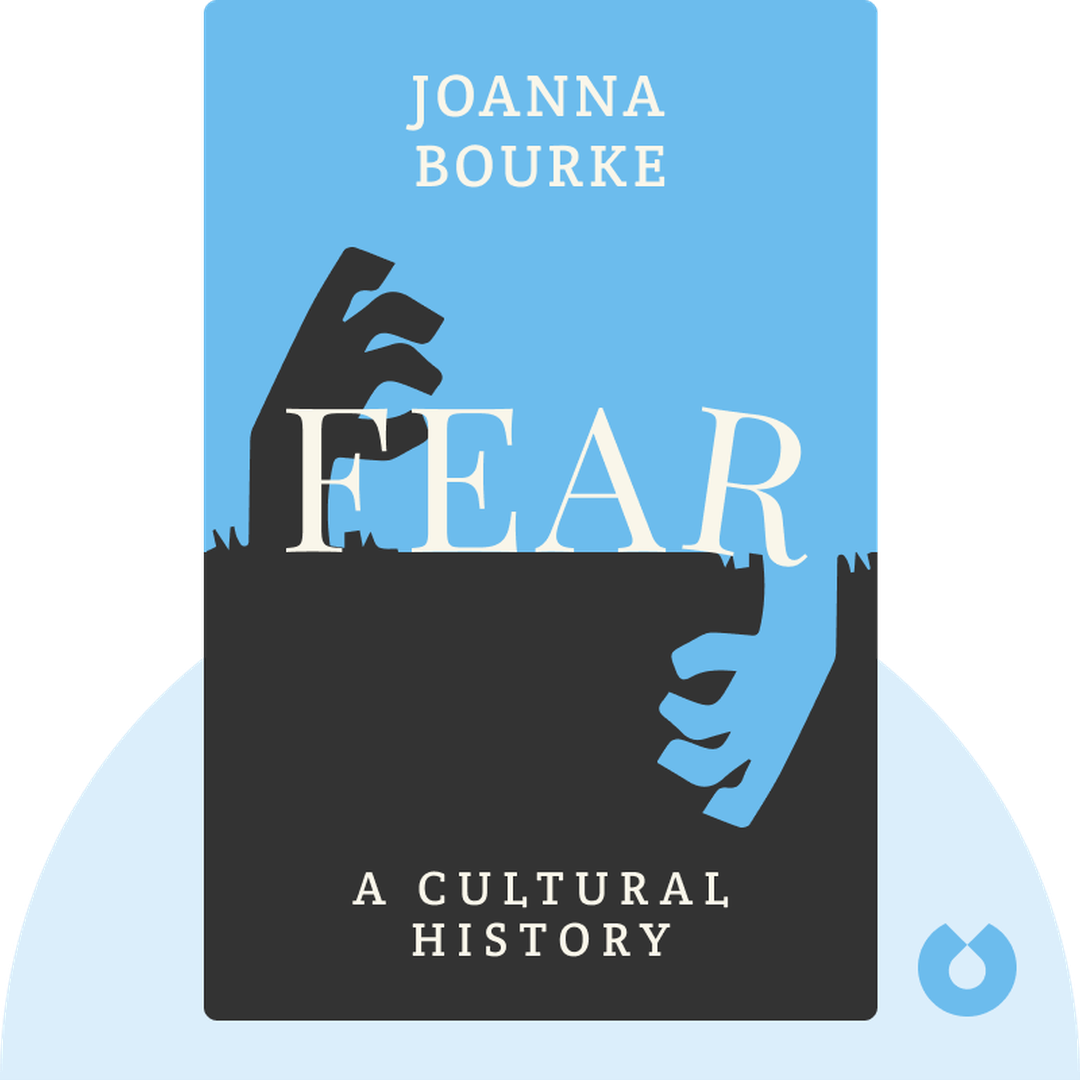
Fear (2005) explores how fear has shaped cities, parenting, and culture over the past centuries. From the role of fear in war and sickness, to the design of public buildings and the response to the threat of nuclear power, these blinks give us the historical context we need to understand the nature of fear in contemporary society.
Who Should Listen to Fear?
- History buffs
- Students of sociology and psychology
- Readers curious about life in the nineteenth century
Books Similar to Fear
Readers who enjoyed this also liked these titles.