If You're Curious About These Questions...
You should listen to this audiobook
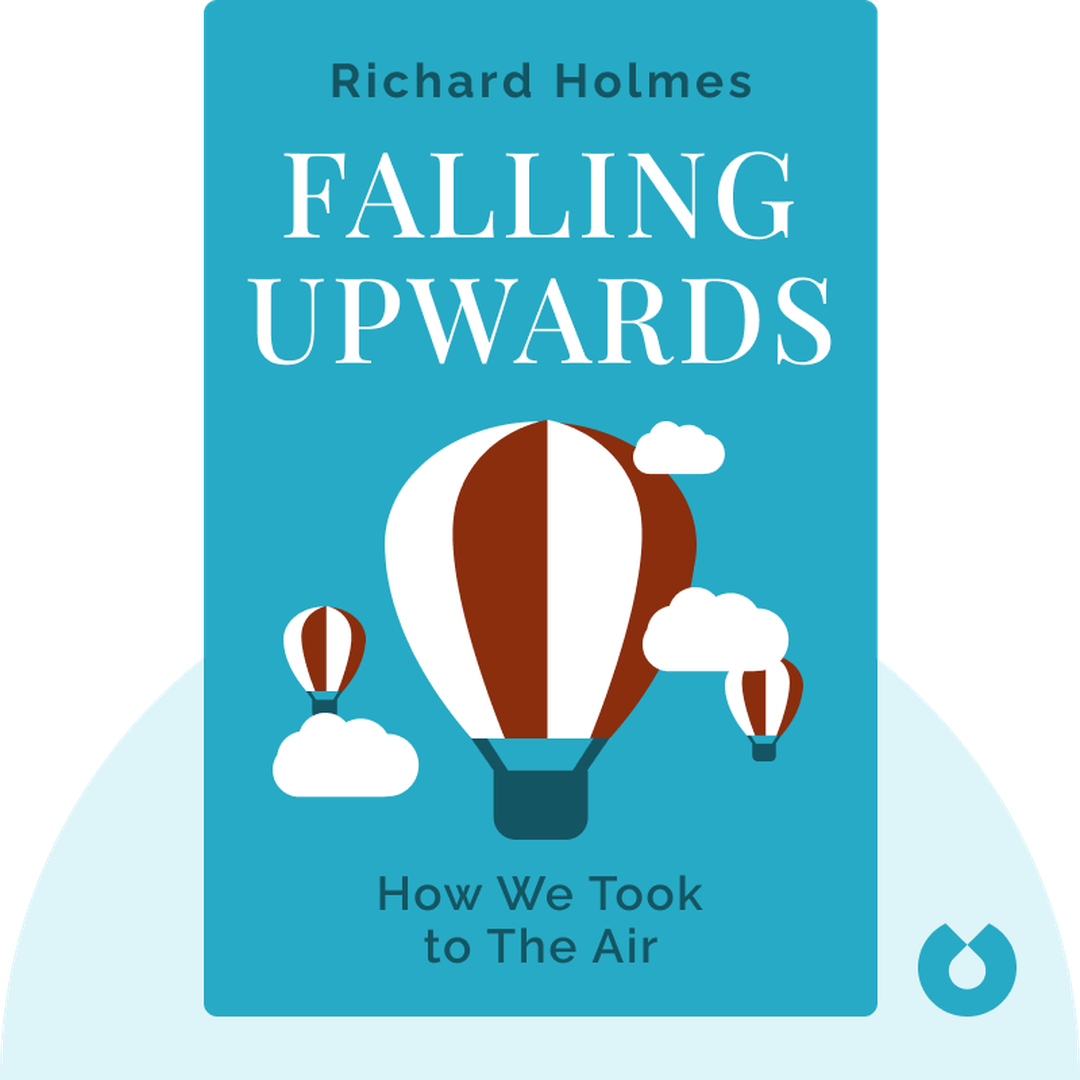
- Did you know that long before the invention of the airplane, daring pioneers were already conquering the skies in unpredictable, giant silk bubbles?
- Have you ever wondered how the whimsical spectacle of hot-air balloons transformed into a high-stakes tool for military espionage and desperate wartime escapes?
- Are you curious about the 'golden age' of ballooning and how these early explorers risked everything to change our perspective of the Earth forever?
Listen to Falling Upwards — Cinematic Audio Edition
Loading player...
Key Takeaways from Falling Upwards
- Discover how early ballooning was more than just a quirky hobby, acting as a life-threatening scientific frontier that profoundly impacted world history.
- Understand the extreme and enduring risks of flight by exploring the daring, and sometimes fatal, charity missions of historical and modern balloonists.
- Learn how the simplicity of hot-air balloon design enabled determined civilians to construct makeshift aircraft and execute daring escapes from totalitarian regimes.
- Find out how late-eighteenth-century militaries utilized hot-air balloons as strategic vantage points and psychological weapons to dominate the battlefield.
- Explore the thrilling era of nineteenth-century aerial entertainment, where early flight transformed timid individuals into fearless, celebrated sky acrobats.
Learning Tools
Reinforce what you learned from Falling Upwards
Mind Map
Falling Upwards
Inherent Dangers & Eccentricity+
Military & Political Applications+
Cultural Impact & Entertainment+
Decline & Transition to Recreation+
Quiz — Test Your Understanding
Question 1 of 8
Why does the author recount the stories of Father Adelir Antonio de Carli and Major John Money?
Question 2 of 8
What key characteristic of hot-air balloons enabled families like the Strelzyks and Wetzels to escape East Germany?
Question 3 of 8
Despite providing valuable strategic intelligence and acting as a psychological weapon, what was a major drawback of using balloons in 18th-century warfare?
Question 4 of 8
How did Sophie Blanchard deliberately cultivate her public image as a balloonist?
Question 5 of 8
According to the text, how did the rise of the railway industry paradoxically aid commercial recreational ballooning?
Question 6 of 8
How did the romance and prowess of 19th-century ballooning influence literature?
Question 7 of 8
During the Prussian siege of Paris in 1870-1871, what was the primary function of the balloons dispatched from the city?
Question 8 of 8
What fundamental aerodynamic discovery allowed airplanes to eventually replace balloons as the future of powered flight?
Falling Upwards — Full Chapter Overview
- 1Recommendation
- 2Ballooning isn’t for the faint of heart.
- 3Balloons can enable daring escapes, though it may take more than one attempt.
- 4Soon after their invention, hot-air balloons had a short-lived moment of military glory.
- 5Sophie Blanchard thrilled early nineteenth-century crowds with her ballooning stunts.
- 6The rise of the railways reduced ballooning to a purely recreational pursuit.
- 7The romance of ballooning helped inspire the first modern science fiction.
- 8In 1871, as Prussian forces surrounded Paris, balloons brought hope to the besieged French.
- 9As technology advanced rapidly, ballooning’s coming decline became clear.
- 10Final summary
Falling Upwards Summary & Overview
Falling Upwards (2014) details the surprisingly rich history of hot-air balloons. It begins with the first successful human attempts to take to the air using balloons and goes on to chronicle their clandestine role in escape attempts and military ventures. From daring balloonists from the golden age of ballooning to the literature they inspired, it’s all covered here.
Who Should Listen to Falling Upwards?
- Anyone with a taste for exploration and invention
- Science enthusiasts
- Historians of science
Books Similar to Falling Upwards
Readers who enjoyed this also liked these titles.