If You're Curious About These Questions...
You should listen to this audiobook
- Did you know that the secret to managing a busy life isn’t finding more time to relax, but cultivating a specific kind of internal 'vitality'?
- Have you ever wondered why some people seem to thrive under pressure while others are drained by the smallest daily stresses?
- What if you could transform your most hectic days into a source of strength through three simple shifts in your daily habits?
Listen to Everyday Vitality — Free Audiobook
Loading player...
Key Takeaways from Everyday Vitality
- Discover the difference between 'Teflon' and 'Velcro' personalities, and learn how taking proactive, daily action helps you build the vitality needed to handle everyday stressors.
- Understand the concept of 'desirable difficulty' and why completely eliminating stress actually deprives you of the deep satisfaction that comes from overcoming challenges.
- Learn how channeling a confident alter ego—like an outgoing relative or even a superhero—can help you intentionally choose vitality and conquer situations that normally trigger anxiety.
- Master the habit of creating an 'uplift spiral' by consciously reflecting on the small, positive moments of your day to build a lasting reserve of resilience.
- Find out why cultivating autonomy, competence, and strong social connections are the ultimate keys to transforming daily roadblocks into sources of personal strength.
Learning Tools
Reinforce what you learned from Everyday Vitality
Mind Map
Everyday Vitality
The Concept of Vitality+
Embracing Challenge+
Intentional Mindset+
Social Connection+
Personal Growth & Health+
Meaning & Context+
Quiz — Test Your Understanding
Question 1 of 7
According to professor David Almeida, how do 'Velcro' people typically respond to difficult situations?
Question 2 of 7
What lesson about stress and vitality is illustrated by the General Mills cake mix example from the 1950s?
Question 3 of 7
Why does the author suggest that you sometimes shouldn't 'be yourself' when facing a tough situation like public speaking?
Question 4 of 7
What is 'Active Constructive Responding' (ACR) in the context of romantic partnerships?
Question 5 of 7
How does the author suggest we should handle negative emotions like sadness or disappointment?
Question 6 of 7
In the electric shock study mentioned in the book, which group of participants reported feeling the least amount of pain?
Question 7 of 7
According to the book's final actionable advice, what is the best way to help someone who is stuck in a difficult situation?
Everyday Vitality — Full Chapter Overview
- 1Recommendation
- 2What separates people who handle stress well from those who don’t is vitality.
- 3Cultivating vitality doesn’t mean removing stressors; it means working within them.
- 4The first step to cultivating vitality is choosing it on purpose.
- 5Building and sustaining connections with others is a powerful source of vitality.
- 6Another way to cultivate vitality is to challenge yourself.
- 7Context matters when you’re cultivating vitality.
- 8Final summary
Everyday Vitality Summary & Overview
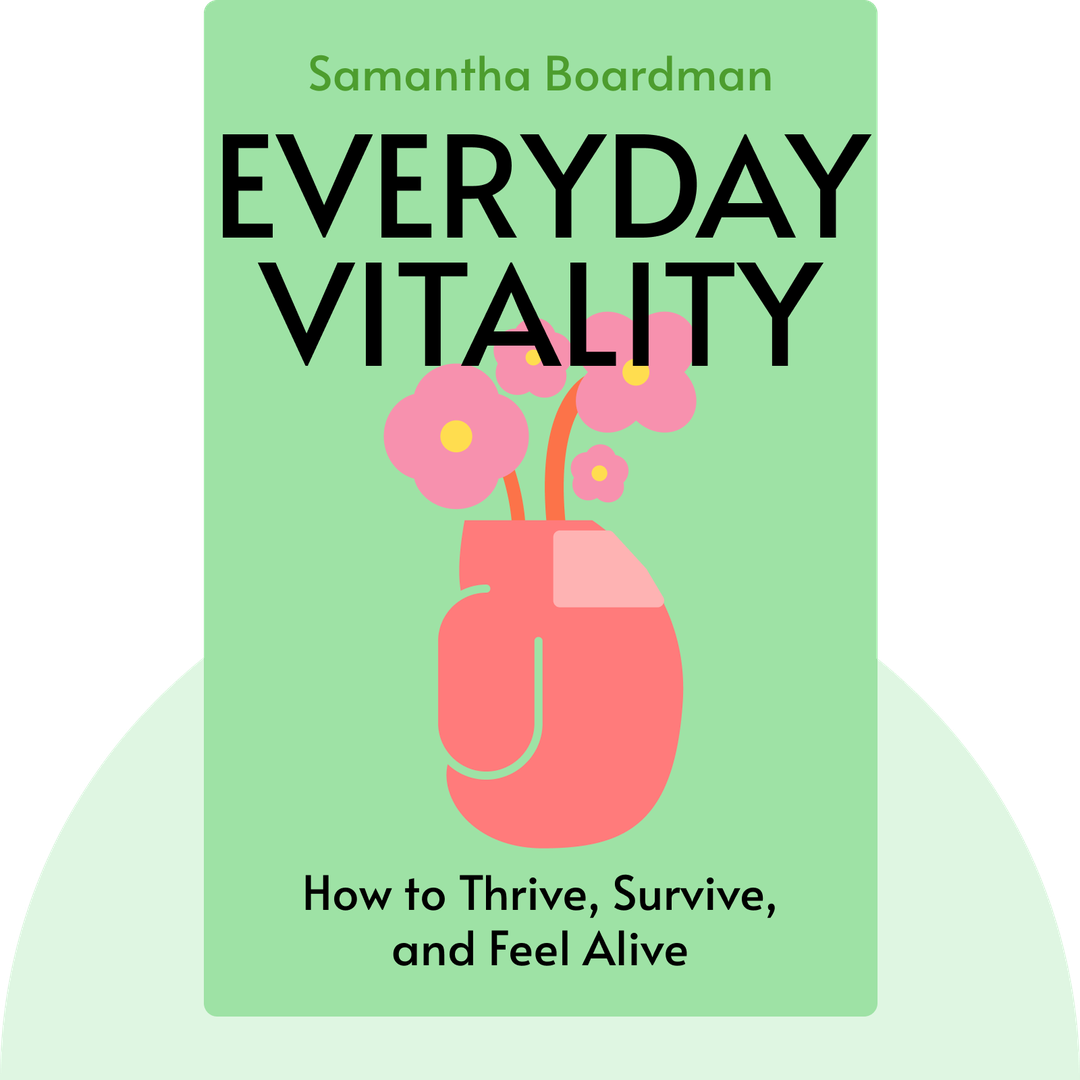
Everyday Vitality (2021) explores how we can cultivate resilience while juggling the small, nonstop stresses of everyday life. Those who thrive do so because they build vitality, a force of power and flexibility that allows them to handle difficulties. The people who cope best are the ones who find ways to turn their stress into strength through intentionality, purpose, and connection.
Who Should Listen to Everyday Vitality?
- Anyone looking to alleviate stress in their daily lives
- People interested in improving their quality of life
- Those who are interested in achieving peace amid busyness
Books Similar to Everyday Vitality
Readers who enjoyed this also liked these titles.