If You're Curious About These Questions...
You should listen to this audiobook
- Have you ever wondered why a legendary economist predicted we’d only be working 15 hours a week by now, and what he believed was actually standing in our way?
- What if the traditional 'common sense' approach to saving money during a recession is actually the one thing that makes the crisis even worse?
- Are you curious about the radical economic ideas from a century ago that predicted the collapse of Europe and continue to shape how modern governments spend your money today?
Listen to Essays In Persuasion — Free Audiobook
Loading player...
Key Takeaways from Essays In Persuasion
- Discover why John Maynard Keynes' century-old economic predictions remain surprisingly relevant for understanding today's global financial challenges.
- Understand how punitive economic policies and harsh international sanctions can spark political instability, proving that true peace requires economic justice.
- Learn how the revolutionary concept of countercyclical spending dictates that governments should increase spending during economic downturns rather than tightening their belts.
- Find out why the economic phenomenon of 'sticky wages' makes deflation so devastating and prevents free markets from easily self-correcting.
- Explore the historical shift away from laissez-faire capitalism and see how Keynes laid the groundwork for modern central banks to actively manage inflation.
Learning Tools
Reinforce what you learned from Essays In Persuasion
Mind Map
Essays In Persuasion
The Consequences of Peace+
Managing Inflation & Deflation+
The End of Laissez-Faire+
Public Works & Employment+
Vision for Future Generations+
Quiz — Test Your Understanding
Question 1 of 5
According to Keynes's 'The Economic Consequences of the Peace', what was the primary danger of the Treaty of Versailles?
Question 2 of 5
How did Keynes explain the devastating effects of deflation on employment?
Question 3 of 5
What alternative did Keynes propose to the prevailing doctrine of laissez-faire capitalism?
Question 4 of 5
What counterintuitive strategy did Keynes advocate for governments during an economic depression?
Question 5 of 5
In his essay 'Economic Possibilities for our Grandchildren', what did Keynes predict would be a major challenge for humanity in the future?
Essays In Persuasion — Full Chapter Overview
- 1Recommendation
- 2In the Shadow of the First World War
- 3The Economic Consequences of Peace
- 4Inflation and Deflation
- 5The Decline of Laissez-Faire
- 6Public Works and Jobs
- 7A Vision for Future Generations
- 8Final summary
Essays In Persuasion Summary & Overview
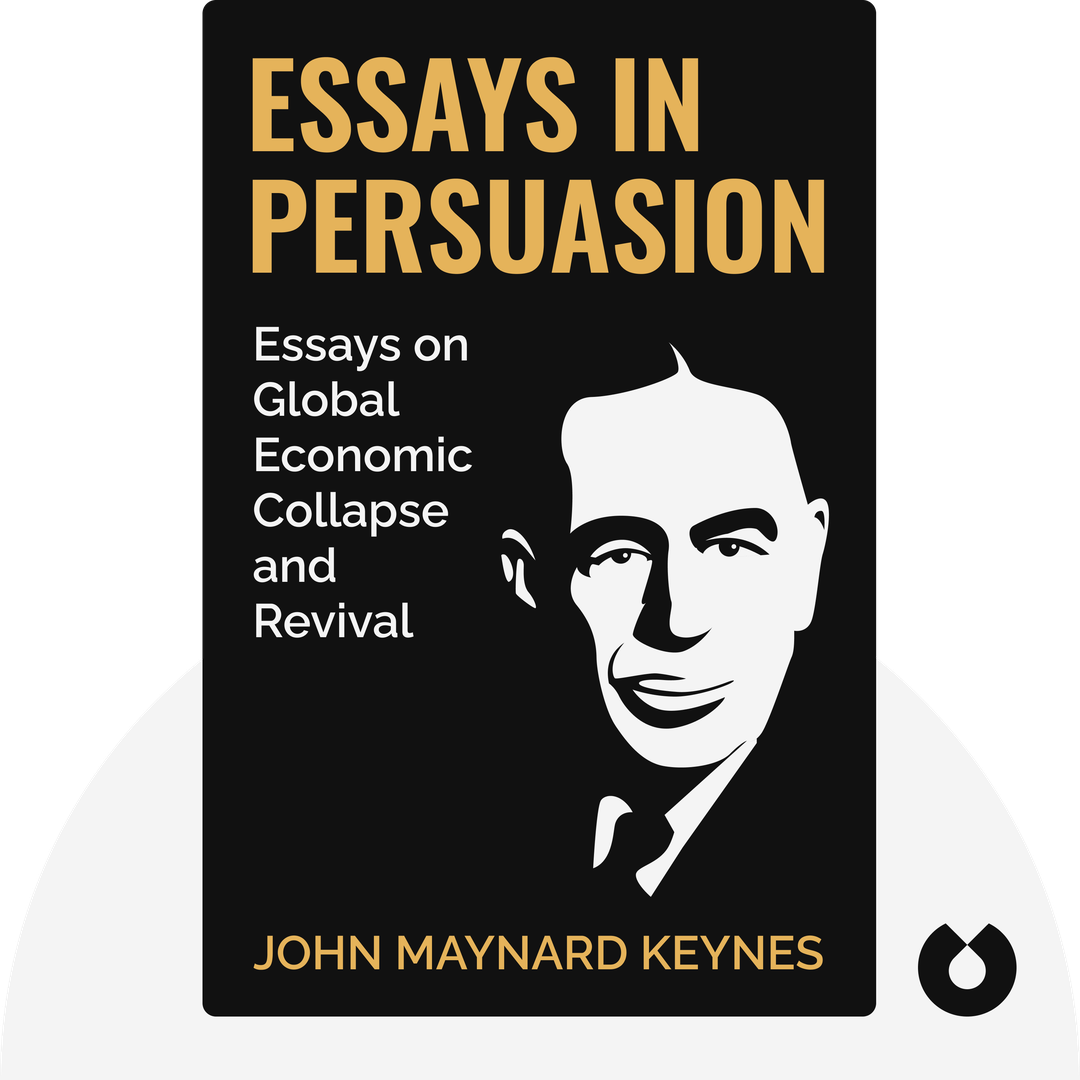
Essays in Persuasion (1931) is a collection of pivotal economic writings that shaped modern economic thought and policy. It challenges the conventional wisdom of its time, offering innovative approaches to economic crises, international relations, and social welfare, while also presenting a hopeful vision for humanity’s economic future that continues to spark debate and inspiration nearly a century later.
Who Should Listen to Essays In Persuasion?
- Economics enthusiasts looking to understand the foundations of modern economic policies
- History buffs curious about the economic factors that shaped the twentieth century
- Anyone seeking to better understand current debates about government intervention in the economy
Books Similar to Essays In Persuasion
Readers who enjoyed this also liked these titles.