Theme Song
If You're Curious About These Questions...
You should listen to this audiobook
- Did you know how one elusive family managed to convince the medical world that a highly addictive drug was actually safe for everyday use?
- Have you ever wondered why some of the world’s most prestigious museums and universities were named after a family central to a global health catastrophe?
- What’s the secret behind how a billionaire dynasty used a fortress of lawyers and political connections to shield themselves from accountability for decades?
Listen to Empire of Pain — Cinematic Audio Edition
Loading player...
Key Takeaways from Empire of Pain
- Discover how Arthur Sackler revolutionized modern pharmaceutical advertising by marketing directly to physicians and using dubious tactics to push drugs like Valium.
- Understand the origins of the Purdue Pharma dynasty, tracing its growth from selling unglamorous drugstore products to developing revolutionary time-release opiates.
- Learn why the Sackler family aggressively donated millions to brand prestigious global institutions with their name while intentionally obscuring their ties to the businesses funding their wealth.
- Find out how Purdue Pharma catalyzed the devastating opioid crisis by falsely marketing OxyContin as safe and pushing doctors to prescribe it for mild pain.
- Uncover the secretive, integrated network of medical advertising, research institutes, and sales data collection that the Sacklers built to silently manipulate physician prescribing habits.
Learning Tools
Reinforce what you learned from Empire of Pain
Mind Map
Empire of Pain
Foundation of the Empire+
The Sackler Paradox+
The OxyContin Strategy+
Denying the Crisis+
The Reckoning and Escape+
Quiz — Test Your Understanding
Question 1 of 8
How did Arthur Sackler revolutionize pharmaceutical advertising during his career?
Question 2 of 8
What was the revolutionary aspect of MS Contin, the drug developed by Purdue Frederick prior to OxyContin?
Question 3 of 8
Which of the following best describes the Sackler family's approach to their public image and business ownership?
Question 4 of 8
What crucial strategy did Purdue Pharma use to ensure OxyContin would be far more lucrative than MS Contin?
Question 5 of 8
What was the basis for Purdue Pharma's claim that less than one percent of opioid patients became addicted to OxyContin?
Question 6 of 8
How did Purdue Pharma initially respond to reports that patients were experiencing withdrawal and that the drug was wearing off before 12 hours?
Question 7 of 8
What was the true impact and context of Purdue releasing a new, tamper-proof formula of OxyContin?
Question 8 of 8
What was the ultimate result of the massive 2019 litigation against Purdue Pharma and the Sackler family?
Empire of Pain — Full Chapter Overview
- 1Recommendation
- 2Chapter 1: Arthur and His Younger Brothers
- 3Chapter 2: The Sacklers Create a Dynasty
- 4Chapter 3: What Does a Name Mean?
- 5Chapter 4: The Next Generation Takes Up the Mantle
- 6Chapter 5: The Painkiller to Begin With and Keep Using
- 7Chapter 6: How a Crisis Was Made
- 8Chapter 7: The Billionaires’ Tarnished Reputation
- 9Final summary
Empire of Pain Summary & Overview
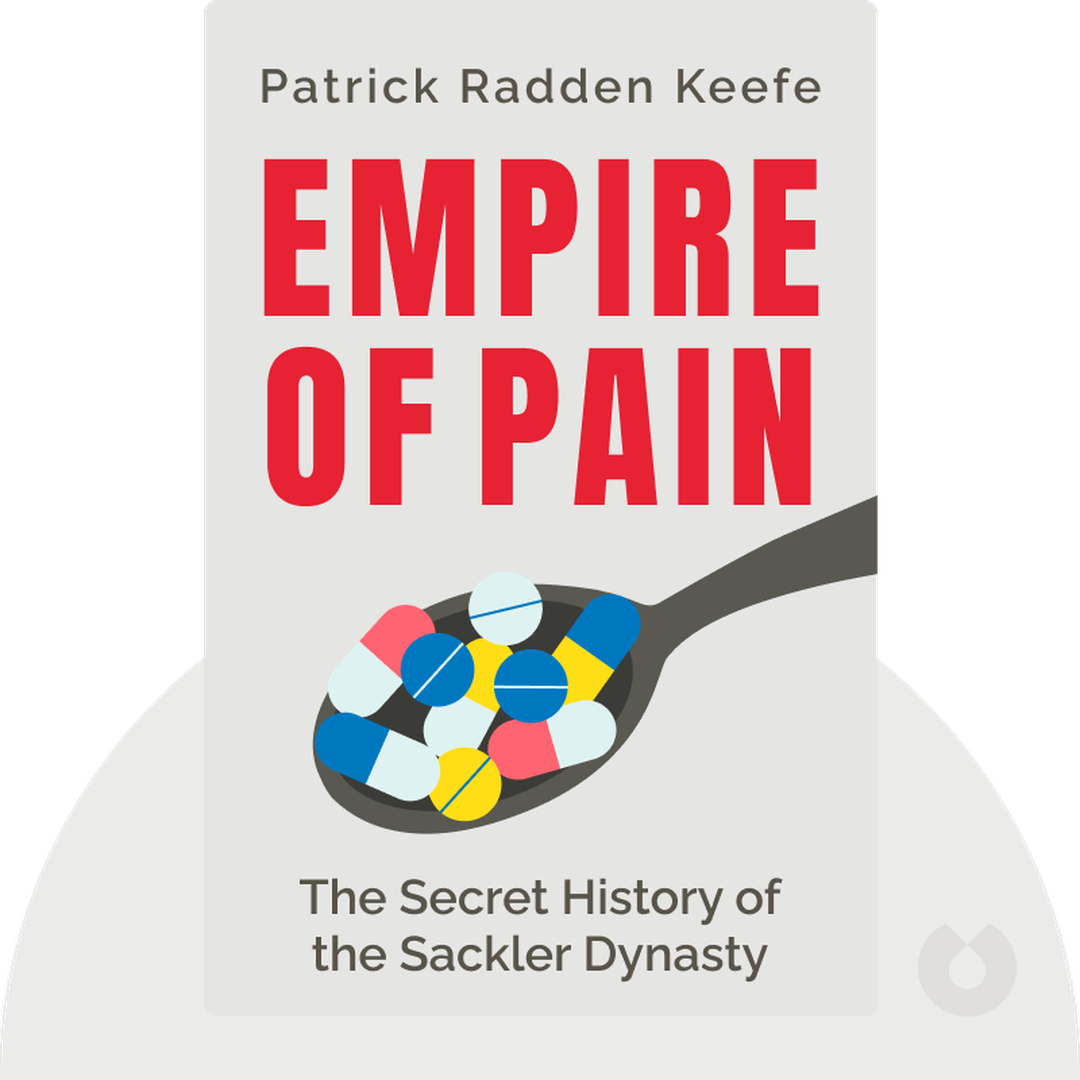
Empire of Pain (2021) follows the rise and fall of the elusive Sacklers, the billionaire family behind Purdue Pharma. Its blockbuster drug, OxyContin, was aggressively marketed as safe, but would go on to spur a devastating opioid crisis that claimed hundreds of thousands of lives. Yet the Sacklers’ fortress of lawyers, political connections and a philanthropic name would, time and again, protect them from responsibility.
Who Should Listen to Empire of Pain?
- Current affairs enthusiasts
- Lovers of family dynasty dramas
- Anyone wanting to understand the opioid crisis
Books Similar to Empire of Pain
Readers who enjoyed this also liked these titles.