If You're Curious About These Questions...
You should listen to this audiobook
- Did you know that your smallest, most mundane choices throughout the day have a bigger impact on your long-term health than your last intense workout?
- Have you ever wondered why spending hours at your desk might be sabotaging your health, even if you exercise regularly?
- What if you could unlock a massive surge in energy and productivity just by rethinking the relationship between how you eat, move, and sleep?
Listen to Eat, Move, Sleep — Cinematic Audio Edition
Loading player...
Key Takeaways from Eat, Move, Sleep
- Discover why simply exercising isn't enough and how reducing prolonged daily sitting is the true key to lowering your mortality risk.
- Learn to evaluate the true nutritional impact of your meals by aiming for a one-to-one ratio of carbohydrates to protein, rather than just counting calories.
- Understand the addictive, toxic nature of sugar and why eliminating both natural and artificial sweeteners is crucial for preventing chronic diseases.
- Realize how your daily lifestyle choices, such as tracking 10,000 steps, can actually override a bad genetic lottery and drastically reduce your risk for obesity.
- Find out why the variety and specific ingredients of your food, especially natural fruits and vegetables, matter far more for your longevity than the total amount of calories you consume.
Learning Tools
Reinforce what you learned from Eat, Move, Sleep
Mind Map
Eat, Move, Sleep
Core Philosophy+
Eat+
Move+
Sleep+
Quiz — Test Your Understanding
Question 1 of 7
According to the text, how does lifestyle interact with a person's genetic makeup?
Question 2 of 7
What is the recommended approach for evaluating the nutritional value of your food?
Question 3 of 7
Why does the author argue that limiting inactivity is more important than going to the gym?
Question 4 of 7
What does the book reveal about the relationship between sleep and high performance?
Question 5 of 7
How does the author suggest we should view and treat sugar?
Question 6 of 7
Which of the following is a strategy recommended in the text to improve sleep efficiency?
Question 7 of 7
What simple rule of thumb does the author provide for quickly identifying healthy fruits and vegetables?
Eat, Move, Sleep — Full Chapter Overview
- 1Recommendation
- 2Small lifestyle changes can make a big difference and help you live longer.
- 3Be mindful of every bite: eat more protein and fewer empty carbs.
- 4Reducing inactive time matters even more than exercise.
- 5Getting enough sleep is essential for health and productivity.
- 6Sugar is a major health risk and should be treated like a controlled substance.
- 7For a good night’s sleep, quality matters as much as quantity.
- 8Final summary
Eat, Move, Sleep Summary & Overview
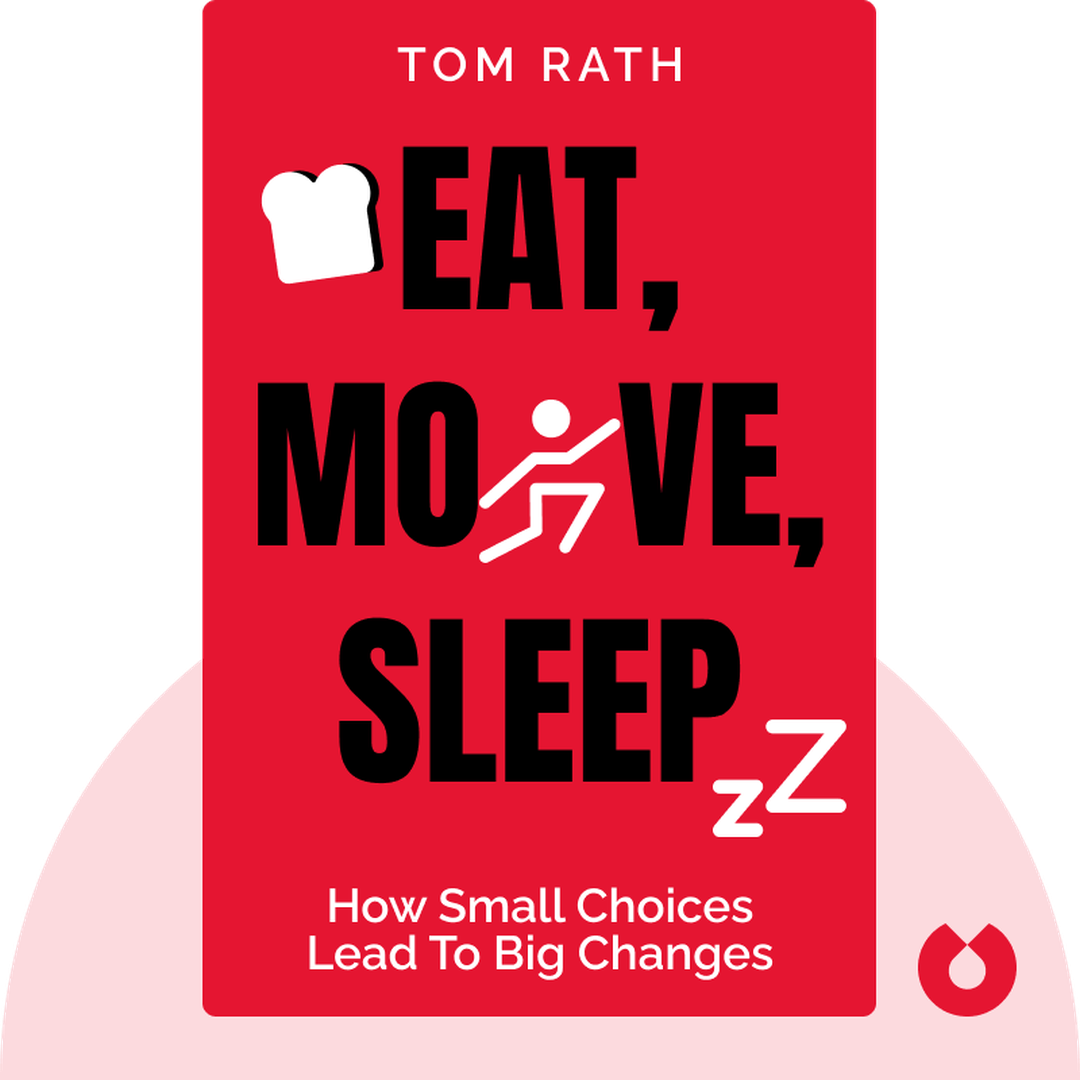
Eat, Move, Sleep (2013) offers simple tips for improving your health and well-being in some very important ways. You don’t have to revolutionize your lifestyle to get in shape and increase your energy levels – little changes can make a big difference, and these blinks will show you how.
Who Should Listen to Eat, Move, Sleep?
- Anyone hoping to lead a healthier lifestyle
- Workaholics struggling to improve their work-life balance
- People with stressful jobs and packed daily routines
Books Similar to Eat, Move, Sleep
Readers who enjoyed this also liked these titles.