If You're Curious About These Questions...
You should listen to this audiobook
- Have you ever wondered what surprising thread connects figures as different as Aristotle, Benjamin Franklin, and the biblical figure of Job?
- Did you know that some of history’s most world-changing ideas didn't come from believers, but from those who risked everything to doubt the status quo?
- Are you curious about how a secret history of skeptics—from Ancient India to the modern era—quietly shaped the way you think and live today?
Listen to Doubt: A History — Free Audiobook
Loading player...
Key Takeaways from Doubt: A History
- Discover why the rich history of doubt has been systematically erased from official records by religious and political authorities seeking to protect their power.
- Understand how doubt is an ancient, universal practice that connects brilliant minds across continents and eras, from Confucius and Socrates to Marie Curie and Albert Einstein.
- Learn how challenging the status quo often led to severe persecution, evidenced by the Inquisition's execution of astronomers and the systemic destruction of ancient philosophical texts.
- Recognize doubt not just as simple skepticism, but as a potent, hidden force that has actively driven human progress and sparked vital scientific innovations.
- Explore how historical doubters consistently stood up to organized religion by exposing logical fallacies in official doctrines and proposing alternative explanations for the universe.
Learning Tools
Reinforce what you learned from Doubt: A History
Mind Map
Doubt: A History
The Hidden History of Doubt+
Universal and Ancient Roots+
Persecution and Oppression+
Relationship with Religion+
Catalyst for Science+
The Dual Nature of Doubt+
Quiz — Test Your Understanding
Question 1 of 8
Why has the concept of doubt often been omitted from historical records?
Question 2 of 8
Which of the following best describes the historical and geographical presence of doubt according to the text?
Question 3 of 8
What happened to the texts of the Carvaka philosophical movement in seventh-century BCE India?
Question 4 of 8
How did Martin Luther's expression of doubt impact the Catholic Church?
Question 5 of 8
Why do religious texts, such as the Book of Job, include stories about profound doubt?
Question 6 of 8
How did doubt influence Charles Darwin's scientific work?
Question 7 of 8
What is described in the text as a major negative consequence of extreme doubt?
Question 8 of 8
How did the ancient Greek philosopher Socrates handle the uncertainty of death?
Doubt: A History — Full Chapter Overview
- 1Recommendation
- 2Doubt, a powerful force across history, has often been left out of history books.
- 3Doubt is an ancient, universal human practice.
- 4Doubters have often faced persecution and oppression.
- 5Many attacks on religion came from major doubters.
- 6Religions have sometimes absorbed doubt in order to respond to it.
- 7In rare cases, doubt has even formed the basis of new religions.
- 8Doubt and science have always worked hand in hand.
- 9Doubt can drive people to desperation.
- 10Doubt has great potential to positively shape your life.
- 11Final summary
Doubt: A History Summary & Overview
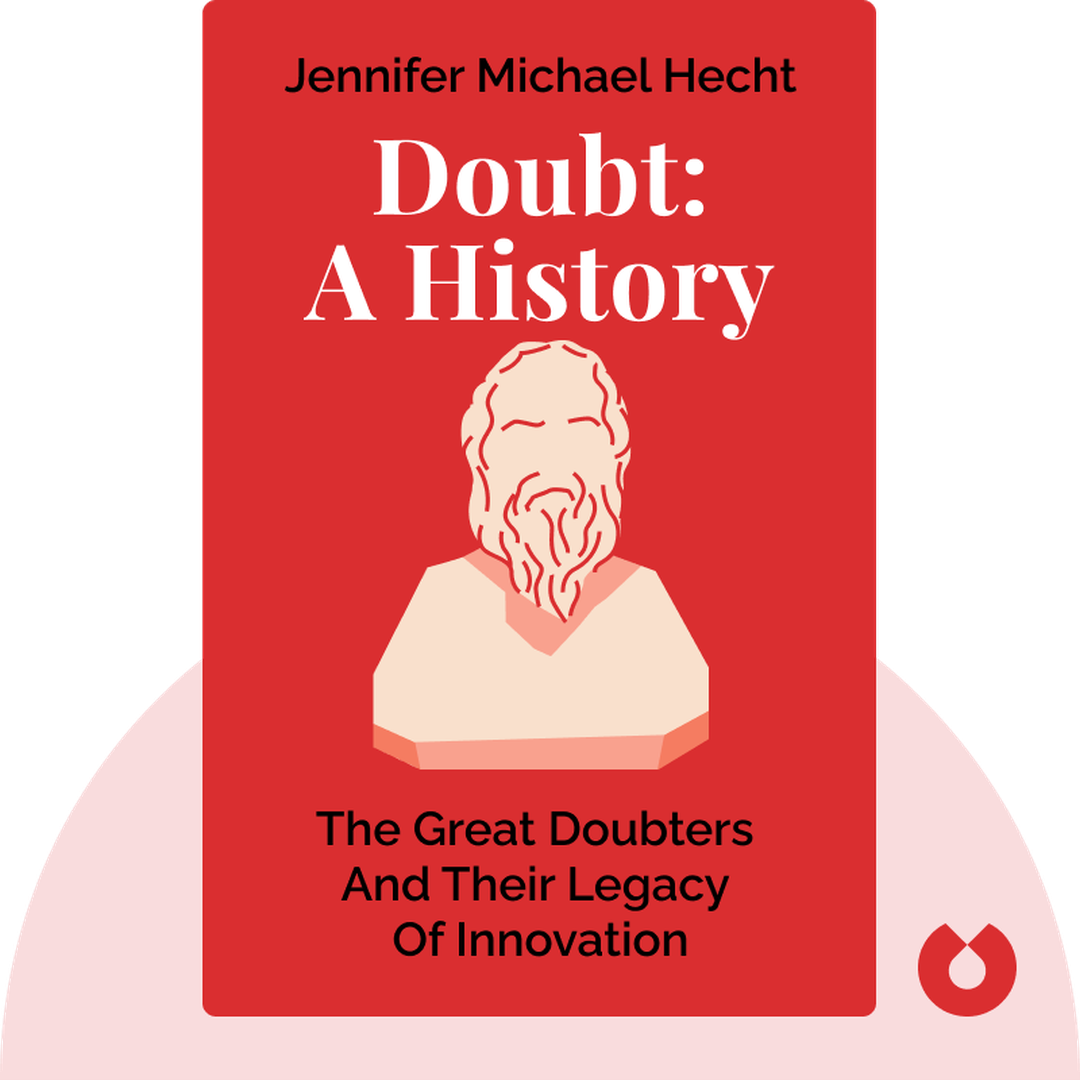
Doubt: A History (2004) is a journey through one of time’s best kept secrets: the people who have stood up to accepted truths, even when it cost them their lives. These blinks share the stories of doubters with conviction from Ancient Greece and India to the modern era, and how they have shaped the way we live and think today.
Who Should Listen to Doubt: A History?
- Anyone wanting to learn about the history of doubters and their observations
- People who want to know what connects seemingly unrelated figures like Aristotle, Benjamin Franklin and Job
- Anyone interested in religion and its critics
Books Similar to Doubt: A History
Readers who enjoyed this also liked these titles.