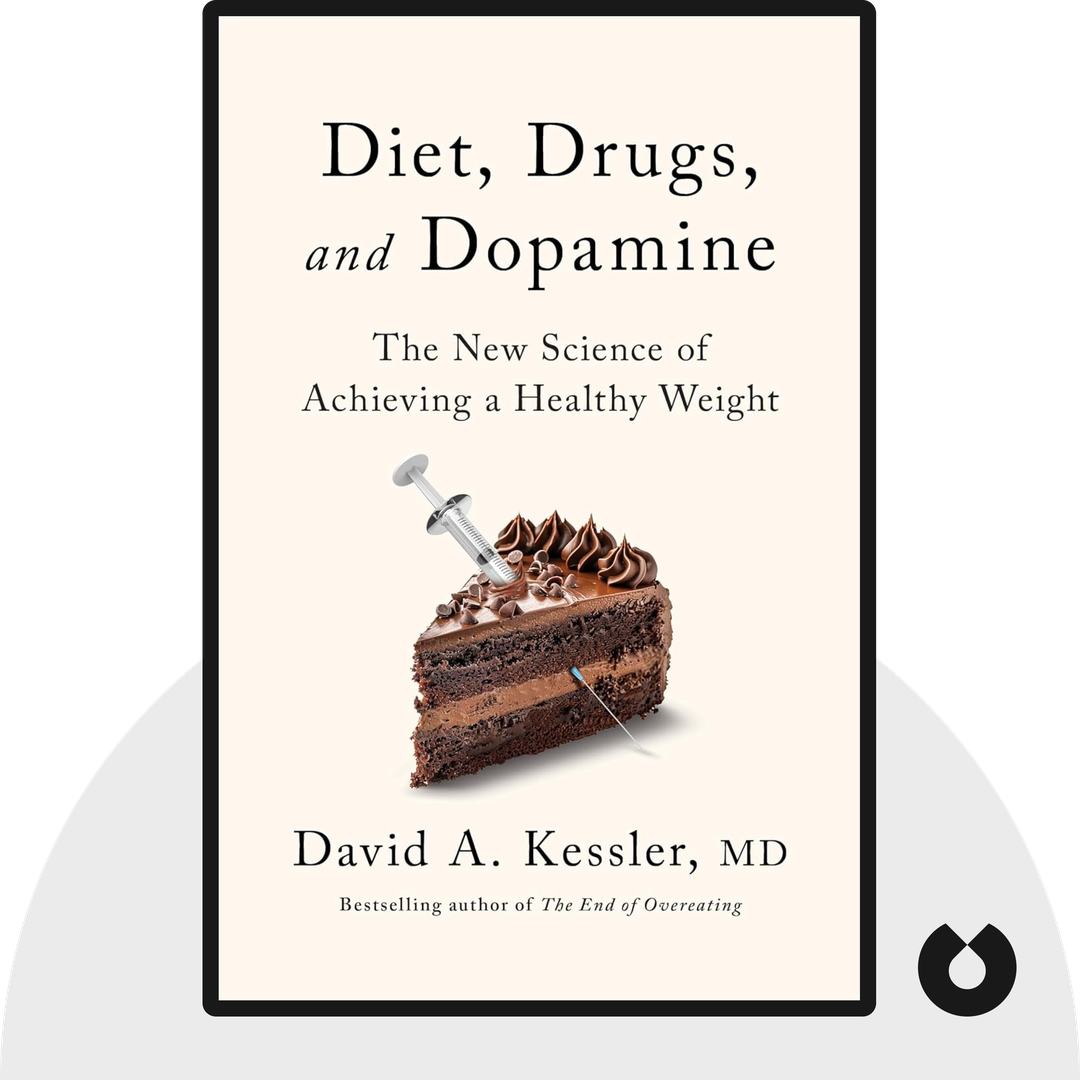
Diet, Drugs, and Dopamine
Start ListeningDownload Try free on iPhoneScan to start in 5 seconds
Categories:
If You're Curious About These Questions...
You should listen to this audiobook
- Have you ever wondered why weight loss feels like an impossible battle of willpower, even when you’re doing everything right?
- Are you curious about how the latest weight-loss drugs like Ozempic actually work within your brain to silence food cravings?
- Did you know that the secret to lasting weight management might lie in your brain’s dopamine pathways rather than just the calories on your plate?
Listen to Diet, Drugs, and Dopamine — Free Audiobook
Loading player...
Key Takeaways from Diet, Drugs, and Dopamine
- Discover why obesity is a biological condition driven by hormones and brain chemistry, and how combining GLP-1 agonist drugs with traditional therapies offers a highly effective path to weight loss.
- Understand the fatal flaw in the 'calories in, calories out' myth by learning how your body's homeostatic mechanisms create a metabolic penalty to resist dramatic weight loss.
- Learn how ultra-formulated foods flood your gut receptors with glucose, hijacking your brain's dopamine reward centers to create an environment-driven food addiction.
- Find out why excess carbohydrates, rather than dietary fats, are the true culprits behind the buildup of dangerous, disease-causing visceral fat.
- Master the real science of weight management by uncovering how hidden visceral fat actively disrupts the brain neurons responsible for your natural hunger and satiety signals.
Learning Tools
Reinforce what you learned from Diet, Drugs, and Dopamine
Mind Map
Diet, Drugs, and Dopamine
Biological Reality of Obesity+
The Role of Toxic Food+
Visceral Fat Dangers+
GLP-1 Agonist Drugs+
Nutrition and Diet+
Mental and Behavioral Strategies+
Quiz — Test Your Understanding
Question 1 of 8
According to the research on 'The Biggest Loser' contestants, what happens to the body after extreme weight loss?
Question 2 of 8
Why does the author argue that the Body Mass Index (BMI) is an inadequate tool for setting healthy weight goals?
Question 3 of 8
How do ultra-formulated foods mimic the neurological pathways of drug addiction?
Question 4 of 8
What is the primary dietary culprit behind the accumulation of dangerous visceral fat in insulin-resistant individuals?
Question 5 of 8
Aside from causing chronic inflammation, what makes visceral fat particularly detrimental to weight management?
Question 6 of 8
Why are synthetic GLP-1 agonist drugs much more effective at suppressing appetite than the body's naturally produced GLP-1 hormone?
Question 7 of 8
To combat food addiction and maintain weight loss, the author recommends eating 'whole foods with intact cellular structures,' such as steel-cut oats. What is the primary benefit of these foods?
Question 8 of 8
In the context of the psychology of weight management, what does the concept of 'delay discounting' explain?
Diet, Drugs, and Dopamine — Full Chapter Overview
- 1Recommendation
- 2Weight Loss Is Anything but Simple
- 3Toxic Foods Program Our Bodies for Obesity
- 4It’s About More Than Calories In and Out
- 5The Miracle Treatment
- 6Don’t Dismiss Diet
- 7Weight Management Has a Mental Side
- 8Final summary
Diet, Drugs, and Dopamine Summary & Overview
Diet, Drugs, and Dopamine (2025) methodically deconstructs the harmful ideas that obesity is a personal failing and that weight loss is a matter of willpower. It offers an up-to-date precis of how science understands weight loss, touching on neuroscience and nutrition, and a thorough analysis of how the latest GLP-1 weight loss drugs can be folded into a holistic weight management approach.
Who Should Listen to Diet, Drugs, and Dopamine?
- Obese and overweight people who want to understand their body's biology
- Health-care professionals who want a scientific grounding in how weight loss works
- Anyone considering GLP-1 drugs like Ozempic or Mounjaro for weight management
Books Similar to Diet, Drugs, and Dopamine
Readers who enjoyed this also liked these titles.