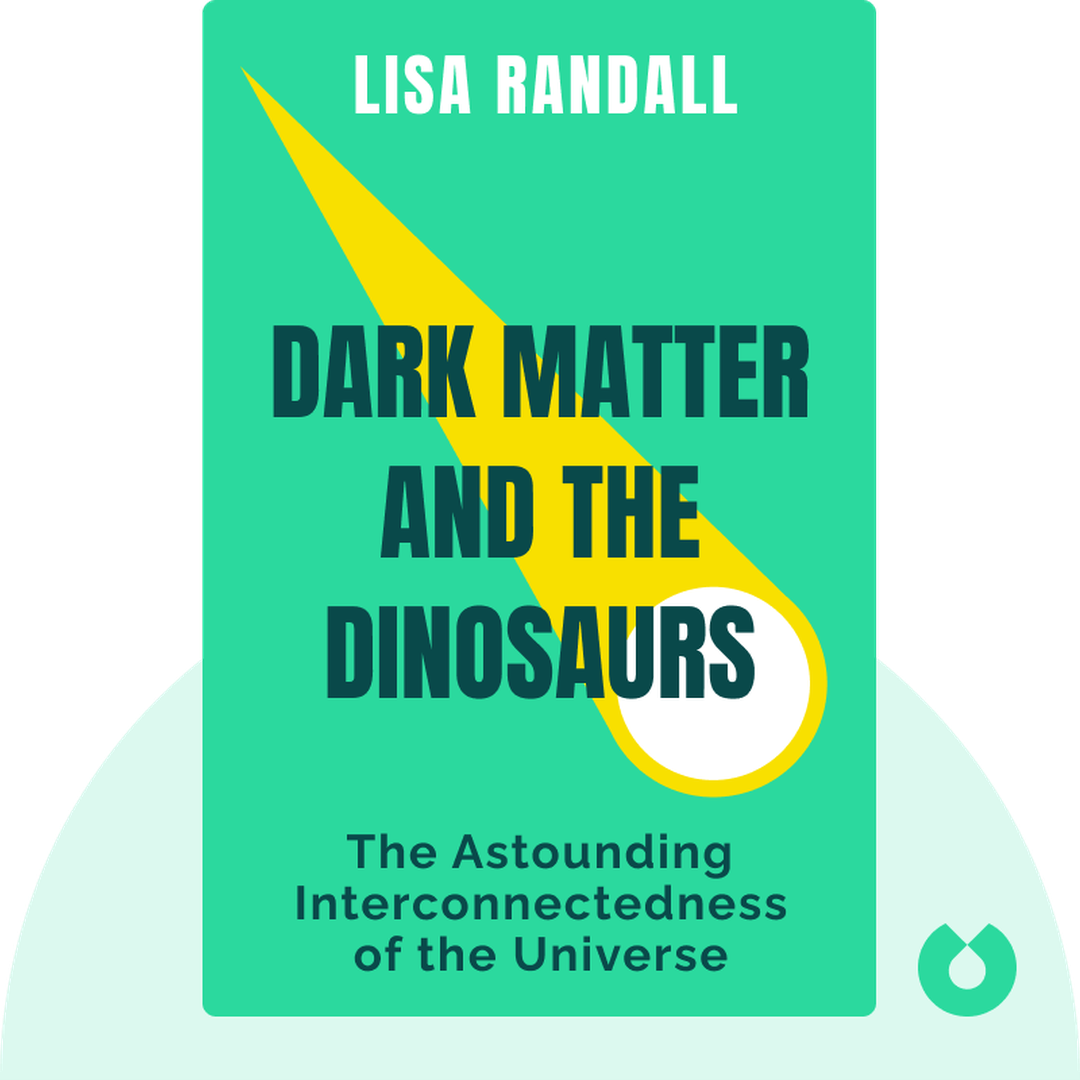
Dark Matter and the Dinosaurs
Start ListeningDownload Try free on iPhoneScan to start in 5 seconds
Categories:
If You're Curious About These Questions...
You should listen to this audiobook
- Did you know that an invisible substance making up most of our universe might have been the real culprit behind the extinction of the dinosaurs?
- Have you ever wondered if there's a predictable cosmic rhythm that sends deadly comets hurtling toward Earth every few million years?
- Are you curious about how the solar system's journey through the Milky Way directly shapes the history of life on our planet?
Listen to Dark Matter and the Dinosaurs — Free Audiobook
Loading player...
Key Takeaways from Dark Matter and the Dinosaurs
- Understand why dark matter is invisible yet comprises 85 percent of the universe, and learn how scientists detect it through its immense gravitational pull.
- Discover how dark matter acted as the gravitational blueprint for our universe, clumping together after the Big Bang to lay the foundation for galaxies to form.
- Learn how ancient meteoroid strikes deposited essential resources like iron, water, and amino acids onto Earth, playing a central role in the emergence of complex life.
- Find out how the Sun dictated planetary formation, leaving inner planets like Earth composed of heat-resistant metals while distant giants collected the remaining gaseous mass.
- Explore the crucial differences between everyday space debris and magnificent comets, distinguishing the 50 tons of meteoroids that safely burn up daily from the distant, icy bodies that form brilliant tails.
Learning Tools
Reinforce what you learned from Dark Matter and the Dinosaurs
Mind Map
Dark Matter and the Dinosaurs
Dark Matter Fundamentals+
Cosmic & Planetary Formation+
Meteoroids, Comets & Life+
Mass Extinctions & K-Pg Event+
The Dark Matter Comet Cycle+
Quiz — Test Your Understanding
Question 1 of 9
How are scientists able to detect the presence of dark matter if it is completely invisible?
Question 2 of 9
What crucial role did dark matter play in the early formation of the universe?
Question 3 of 9
According to the text, how might meteoroids have contributed to the development of complex life on Earth?
Question 4 of 9
Where do long-period comets, which have the potential to cause mass extinctions on Earth, originate?
Question 5 of 9
What is particularly notable about the devastating 1908 Tunguska meteoroid event in Russia?
Question 6 of 9
Which extremely rare mineral did geologist Walter Alvarez find in the K-Pg boundary, helping prove a massive meteoroid wiped out the dinosaurs?
Question 7 of 9
What initial clue helped scientists locate the K-Pg impact crater (Chicxulub) off the Yucatan peninsula?
Question 8 of 9
Studies of fossil records and impact craters suggest that mass extinctions occur on Earth with what approximate regularity?
Question 9 of 9
According to the author's theory, how is dark matter directly responsible for periodic mass extinctions on Earth?
Dark Matter and the Dinosaurs — Full Chapter Overview
- 1Recommendation
- 2We may not be able to see dark matter, but we can still understand it.
- 3Dark matter played an important role in shaping the universe.
- 4Meteoroids have struck Earth for billions of years and may have helped life develop.
- 5Comets are different from the meteoroids that enter Earth’s atmosphere every day.
- 6Destructive meteoroids rarely hit Earth, but recent impacts show their potential power.
- 7The meteorite impact that wiped out the dinosaurs was one of five major extinction events.
- 8Even though ancient meteorites caused enormous damage, evidence of their impacts is hard to find.
- 9A set of very specific clues led scientists to the K-Pg crater.
- 10Evidence suggests mass extinctions caused by comets may follow a pattern.
- 11The Milky Way’s galactic tide and our solar system’s orbit may explain why comets leave the Oort cloud.
- 12Time will tell whether dark matter causes the massive meteoroid impacts that occur every 32 million years.
- 13Final summary
Dark Matter and the Dinosaurs Summary & Overview
Dark Matter and the Dinosaurs (2015) takes a close look at the remarkable interconnections between Earth and the universe around it. These blinks explain how dark matter, the invisible stuff that makes up most of the universe, relates to the mass extinctions of the past and to the comets that might one day bring about another.
Who Should Listen to Dark Matter and the Dinosaurs?
- Scientists and students of science
- Anyone interested in how the dinosaurs became extinct
- People curious about Earth’s early history
Books Similar to Dark Matter and the Dinosaurs
Readers who enjoyed this also liked these titles.