If You're Curious About These Questions...
You should listen to this audiobook
- Did you know that the office cubicle was originally designed to liberate workers, not trap them in a 'beige box'?
- Have you ever wondered how the layout of your workspace was shaped by a century of radical management theories and architectural experiments?
- Are you curious about the secret history of the office and why this relatively recent invention has such a profound impact on our modern culture?
Listen to Cubed — Free Audiobook
Loading player...
Key Takeaways from Cubed
- Discover how mid-nineteenth-century industrialization birthed the role of the clerk and created a permanent physical divide between non-manual office staff and manual workers.
- Explore how rapid technological advancements like the telegraph and railroads expanded businesses, forcing early administrative workers into massive, factory-like rows of desks.
- Learn how engineer Frederick Taylor tamed chaotic early office spaces by introducing 'Taylorism,' a scientific management system that revolutionized administrative efficiency.
- Understand why early skyscrapers were packed with amenities like barbershops and libraries to socially elevate office workers and distance them from working-class labor movements.
- Find out how the architectural destruction of World War II gave rise to the 'Bürolandschaft,' a radically new and human-centric organic office landscape originating in post-war Germany.
Learning Tools
Reinforce what you learned from Cubed
Mind Map
Cubed
Early Industrial Era+
1860-1920: Expansion & Efficiency+
The Skyscraper Era+
Post-War Organic Design+
Birth of the Cubicle+
Quiz — Test Your Understanding
Question 1 of 5
Why did the distinct role of the 'clerk' and separate office spaces first become a requirement in the workplace?
Question 2 of 5
How did Frederick Taylor's concept of 'Taylorism' address the confusion of rapidly expanding early 20th-century offices?
Question 3 of 5
What was the primary motivation for business leaders to include amenities like barbershops and libraries in early skyscraper offices?
Question 4 of 5
What was the core philosophy behind the Bürolandschaft ('office landscape') designed by the Schnelle brothers in post-war Germany?
Question 5 of 5
Robert Propst's original 'Action Office' was designed to promote worker health and movement. Why did this concept ultimately evolve into the modern, enclosed cubicle?
Cubed — Full Chapter Overview
- 1Recommendation
- 2Industrialization led to the rise of clerks and a separate workplace apart from manual laborers.
- 3As business evolved, office space grew and the science of work efficiency emerged.
- 4Skyscrapers were created to stack offices vertically and provide amenities for workers.
- 5In the postwar years, a new office design emerged: the organic office landscape.
- 6The noise of the office landscape eventually led to cubicle-filled open offices.
- 7Final summary
Cubed Summary & Overview
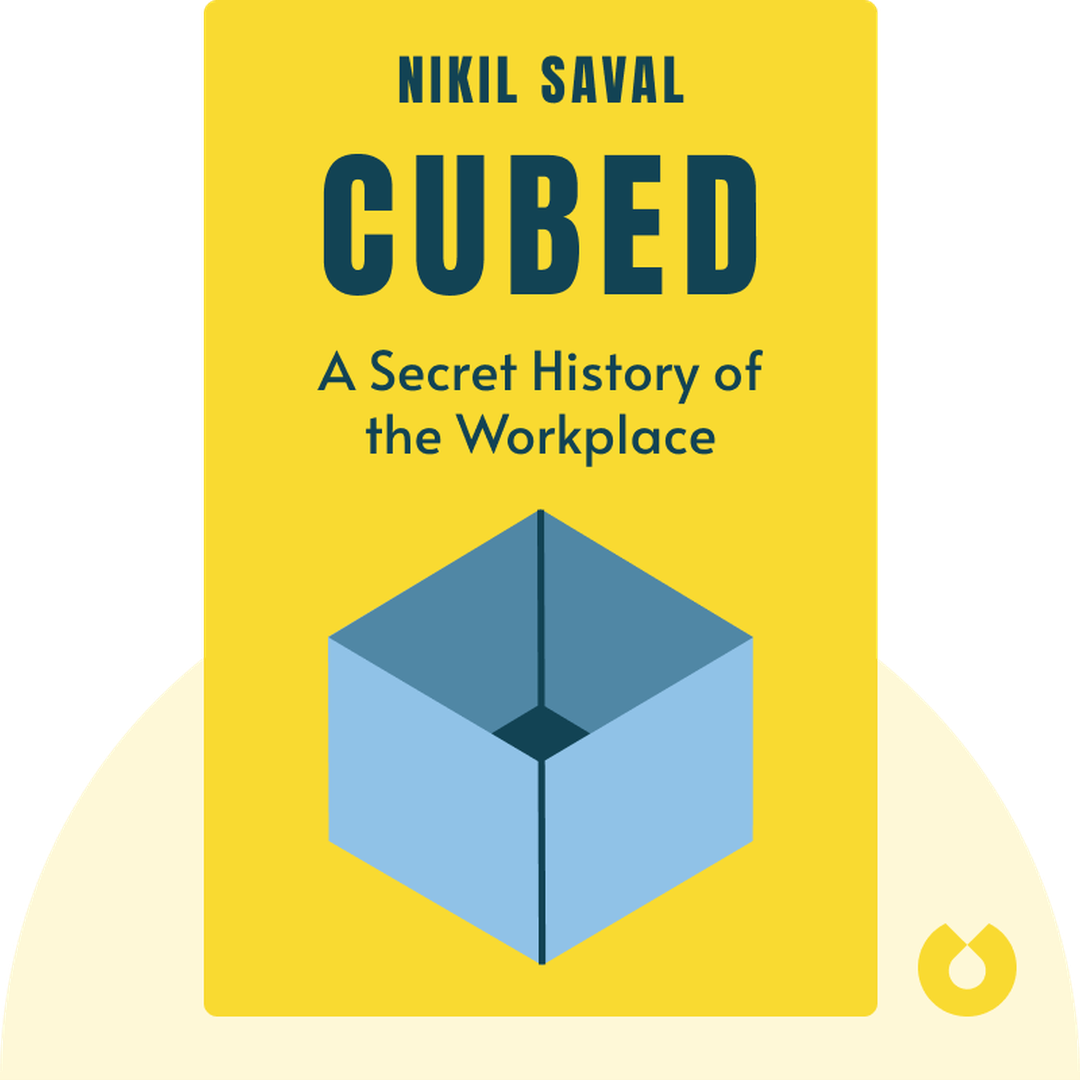
In Cubed (2014), you’ll discover that what you know as your office cubicle – that beige box so many workers worldwide toil in each day – is a fairly recent invention, despite its long history of development. These blinks will explain how the modern office came to be through a detailed account of the evolution of the workplace.
Who Should Listen to Cubed?
- Historians or sociologists interested in the evolution of the office-worker
- Employees and employers interested in management and workplace science
Books Similar to Cubed
Readers who enjoyed this also liked these titles.