If You're Curious About These Questions...
You should listen to this audiobook
- Have you ever wondered why work has become our primary source of identity, and what your life could look like if you finally de-centered it?
- What if the key to a more productive career isn't working from a specific location, but dismantling the 'always-on' culture that follows us home?
- Are you curious about the hidden reasons why managers struggle with remote teams, and how the future of leadership is being completely rewritten?
Listen to Out of Office — Free Audiobook
Loading player...
Key Takeaways from Out of Office
- Discover why the shift to remote work often backfires by letting work creep into your personal life, and why work itself needs to change to fit your lifestyle.
- Understand why corporate 'flexibility' usually benefits the employer's bottom line, and how real freedom requires structured changes like a well-planned four-day workweek.
- Learn how to implement firm workplace 'guardrails' instead of easily broken boundaries, such as completely diverting emails out of your inbox while you are on vacation.
- Find out why achieving genuine work-life balance requires companies to hire slightly more staff, ensuring employees can fully unplug without overburdening their peers.
- Recognize why companies shouldn't describe themselves as a 'family,' as this workplace dynamic demands heavy emotional labor and inappropriate loyalty.
Learning Tools
Reinforce what you learned from Out of Office
Mind Map
Out of Office
The Remote Work Reality+
True Workplace Flexibility+
Work Culture & Priorities+
Office Innovation vs. Asynchronous Work+
Community & Zoom Towns+
Mindset Shift & Actionable Advice+
Quiz — Test Your Understanding
Question 1 of 7
What did the authors discover about remote work after they moved to Montana to escape the New York commute?
Question 2 of 7
According to the text, how can companies provide true workplace flexibility that actually benefits the employee rather than just the employer?
Question 3 of 7
Why do the authors argue that a company should NOT describe its workplace as being 'like a family'?
Question 4 of 7
How does the fully remote software platform GitLab successfully manage its asynchronous workforce?
Question 5 of 7
What is the primary goal of the 'Tulsa Remote' program mentioned in the text?
Question 6 of 7
What fundamental mindset shift do the authors suggest workers need to make in the era of remote work?
Question 7 of 7
What actionable advice do the authors offer at the end of the text to help individuals reclaim their time?
Out of Office — Full Chapter Overview
- 1Recommendation
- 2When your flexibility serves the company – not you.
- 3Remote work isn’t easy to perfect, yet it could help workers put their priorities in better order.
- 4Office design innovations haven’t always truly kept workers’ interests at heart.
- 5Remote work doesn’t have to mean isolation – in fact, it could mean reconnecting with the community.
- 6We need to change our mindsets so that our lives truly matter more than our work.
Out of Office Summary & Overview
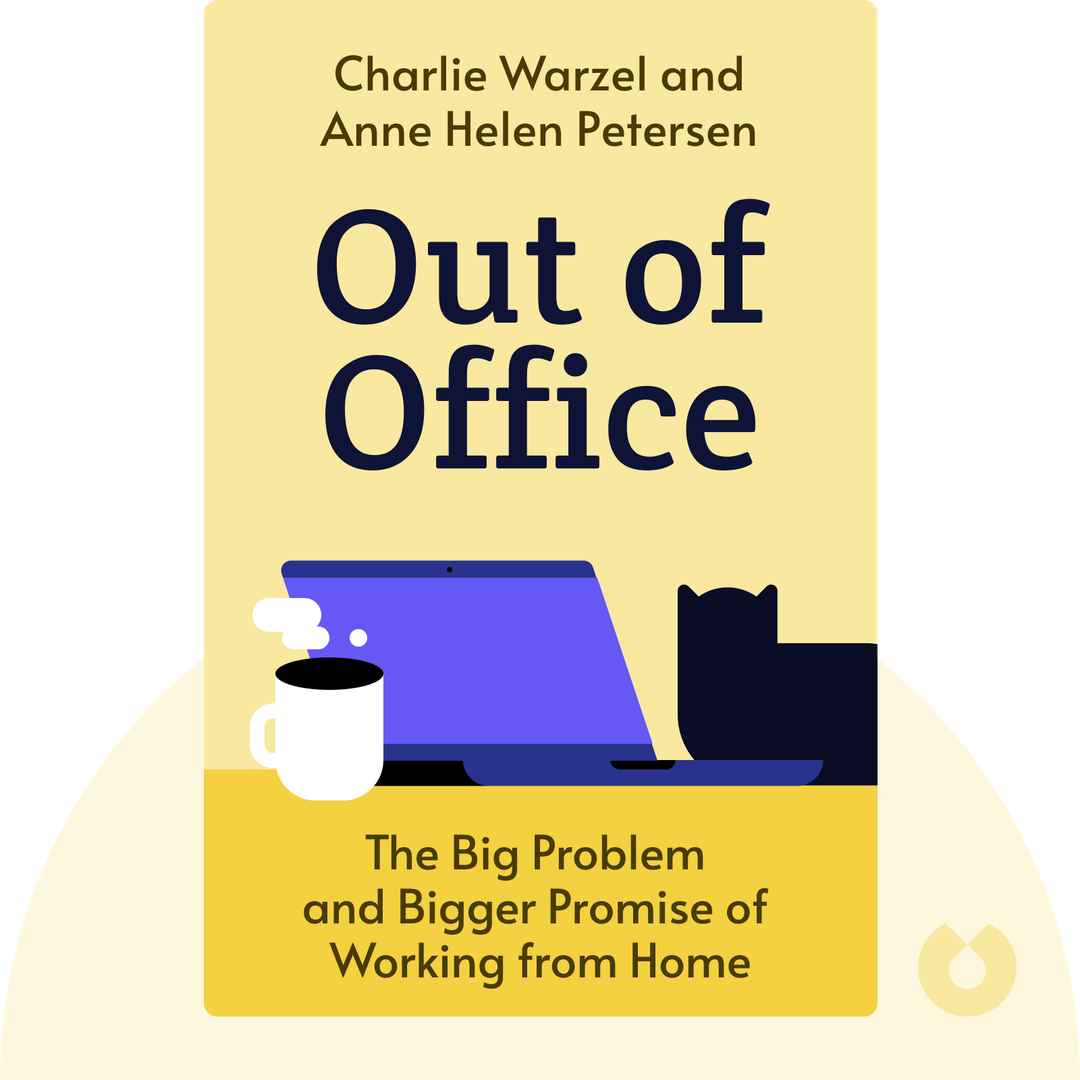
Out of Office (2021) is about working from home, and the bigger, more fundamental questions about contemporary work culture that remote work illuminates. How can we reimagine work to make our lives more meaningful?
Who Should Listen to Out of Office?
- Workers curious about fleeing the office
- Managers looking to rethink working practices
- Anyone interested in the future of work
Books Similar to Out of Office
Readers who enjoyed this also liked these titles.