If You're Curious About These Questions...
You should listen to this audiobook
- Have you ever wondered how experts actually determine the value of a digital asset that doesn't have traditional earnings or cash flow?
- Did you know that cryptoassets are far more than just 'digital money,' and understanding their three distinct categories is the key to building a resilient portfolio?
- What if you could navigate the high-stakes world of blockchain technology with the same rigor and framework as a seasoned Wall Street investor?
Listen to Cryptoassets — Free Audiobook
Loading player...
Key Takeaways from Cryptoassets
- Understand how cryptoassets function as an entirely new asset class that uniquely combines the utility of software with the store-of-value traits of precious metals like gold.
- Discover the revolutionary mechanics of blockchain technology, a decentralized, immutable, and cryptographic digital database that secures transactions without the need for traditional banks.
- Learn about the mysterious 2008 origins of Bitcoin, created as a decentralized, math-based alternative to the traditional financial systems that failed during the global economic crisis.
- Find out how different cryptoassets serve distinct functions, such as Ethereum's unique public blockchain designed to collaboratively create open-source software rather than just process financial transactions.
- Grasp the critical differences between public and private blockchains, and discover why financial services favor private networks like Monero and Zcash to enhance privacy and efficiency.
Learning Tools
Reinforce what you learned from Cryptoassets
Mind Map
Cryptoassets
Definition & Nature+
Blockchain Technology+
Market Evolution+
Investment Strategy+
Investment Risks+
Buying & Storing+
Evaluating New Assets+
Actionable Advice+
Quiz — Test Your Understanding
Question 1 of 9
What defines a 'cryptoasset' according to the text?
Question 2 of 9
How does Bitcoin fit into traditional asset classifications?
Question 3 of 9
Which of the following is NOT one of the four key properties of a public blockchain mentioned in the text?
Question 4 of 9
What primary feature distinguishes Ethereum from Bitcoin, according to the text?
Question 5 of 9
What does the 'speculation of crowds' problem refer to in the context of cryptoasset investing?
Question 6 of 9
Why does the author argue that adding cryptoassets to a traditional stocks-and-bonds portfolio is a wise diversification strategy?
Question 7 of 9
How can an investor gauge the robustness and reliability of a cryptocurrency before buying it?
Question 8 of 9
What is the primary trade-off between using a 'hot wallet' versus 'cold storage' for cryptoassets?
Question 9 of 9
When evaluating a new cryptoasset, what is a major red flag to watch out for in its white paper and issuance model?
Cryptoassets — Full Chapter Overview
- 1Recommendation
- 2“Cryptoasset” is a broad term for a new asset class made up of software and currency.
- 3Cryptoassets rely on blockchain technology, which is genuinely revolutionary.
- 4Bitcoin was the first cryptoasset on the market, but many others have followed.
- 5Investment and finance are changing, and bold, well-informed investors may have much to gain.
- 6Investing in cryptoassets carries risks, and you could lose your money.
- 7Diversify your assets to create no correlation or negative correlation.
- 8You can buy cryptocurrencies in several ways, but pay attention to differences in trading pair diversity.
- 9Once you invest in a cryptoasset, you can store it in two different ways.
- 10There are a few other things truly innovative investors should watch closely.
- 11Final summary
Cryptoassets Summary & Overview
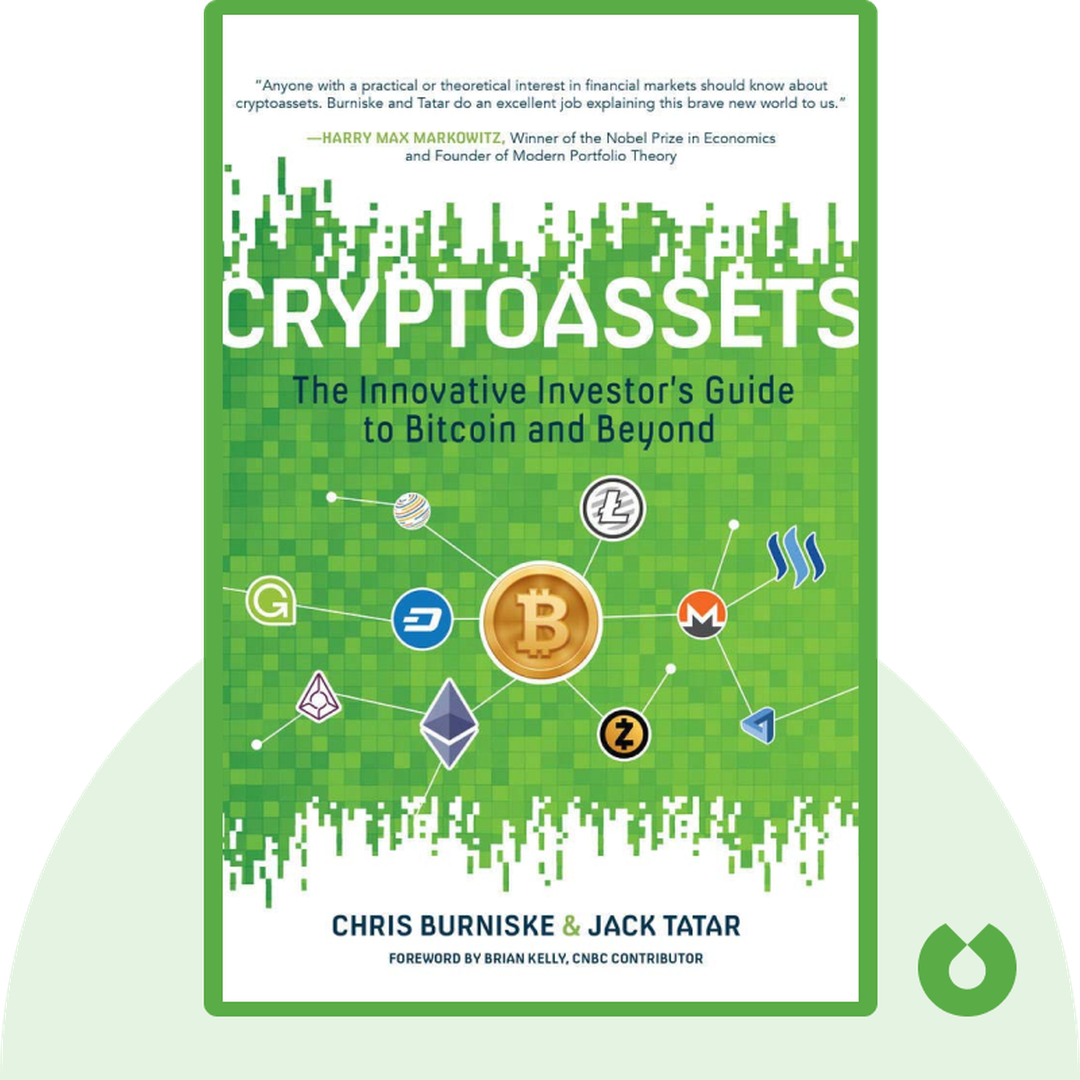
Cryptoassets (2017) is both a brief history of Bitcoin and a detailed guide to investing in cryptoassets. It explains how blockchain technology came into existence and will help potential investors get their bearings in the world of cryptoassets.
Who Should Listen to Cryptoassets?
- Innovative investors
- Students of information technology
- People interested in the world of finance
Books Similar to Cryptoassets
Readers who enjoyed this also liked these titles.