If You're Curious About These Questions...
You should listen to this audiobook
- Have you ever wondered how a fringe experiment created by anonymous programmers grew from a value of zero to a billion-dollar global phenomenon?
- What if you could participate in a financial system that operates entirely without the need for banks, governments, or traditional middlemen?
- Are you curious about the secret history of the hackers, gamblers, and visionaries who risked everything to turn an abstract digital idea into 'digital gold'?
Listen to Digital Gold — Free Audiobook
Loading player...
Key Takeaways from Digital Gold
- Understand how Bitcoin operates as a decentralized, open-source currency that replaces traditional banking with a communal public ledger called the blockchain.
- Discover why Bitcoin is incredibly hard to hack thanks to robust public-key cryptography that allows users to securely bypass centralized banking systems.
- Learn how the cryptocurrency protects itself and manages system updates communally, requiring majority user approval to prevent any individual from manipulating the protocol.
- Find out how Bitcoin gained its first major surge in value and popularity by serving as a secure, irreversible payment method for the underground Silk Road marketplace.
- Explore Bitcoin's capacity to subvert traditional financial institutions by learning how dissident groups like WikiLeaks used the currency to bypass government-enforced banking blockades.
Learning Tools
Reinforce what you learned from Digital Gold
Mind Map
Digital Gold
Core Nature of Bitcoin+
Communal Management+
Early Growth: Silk Road+
Political Resistance+
Economic Refuge: Argentina+
Technological Advantages+
Quiz — Test Your Understanding
Question 1 of 7
How does Bitcoin differ from traditional banking systems in how it stores transaction records?
Question 2 of 7
According to the text, what would happen if a hacker managed to take control of 51 percent of the entire Bitcoin network?
Question 3 of 7
Why did Bitcoin become the principal currency for the underground marketplace Silk Road?
Question 4 of 7
How did the Bitcoin community initially react to the suggestion that WikiLeaks use Bitcoin to bypass government financial blockades?
Question 5 of 7
What primary benefit did Bitcoin offer to the citizens of Argentina during their financial crises?
Question 6 of 7
How does Bitcoin's digital structure make it uniquely suited for the modern internet economy compared to traditional banks?
Question 7 of 7
According to the text, how could the core technology of Bitcoin (the blockchain protocol) be used outside of finance?
Digital Gold — Full Chapter Overview
- 1Recommendation
- 2Bitcoin is a new form of money created, stored, and transferred by its users.
- 3Bitcoin represents a new communal way to manage money.
- 4Bitcoin’s first wave of popularity came through the drug trade on the underground site Silk Road.
- 5Wikileaks and Occupy Wall Street showed Bitcoin’s potential to shift power away from financial institutions.
- 6Argentina’s financial crises reveal how Bitcoin can move power from governments to the poor.
- 7The Bitcoin protocol offers many advantages over traditional currencies, beyond simply storing and transferring money.
- 8Final summary
Digital Gold Summary & Overview
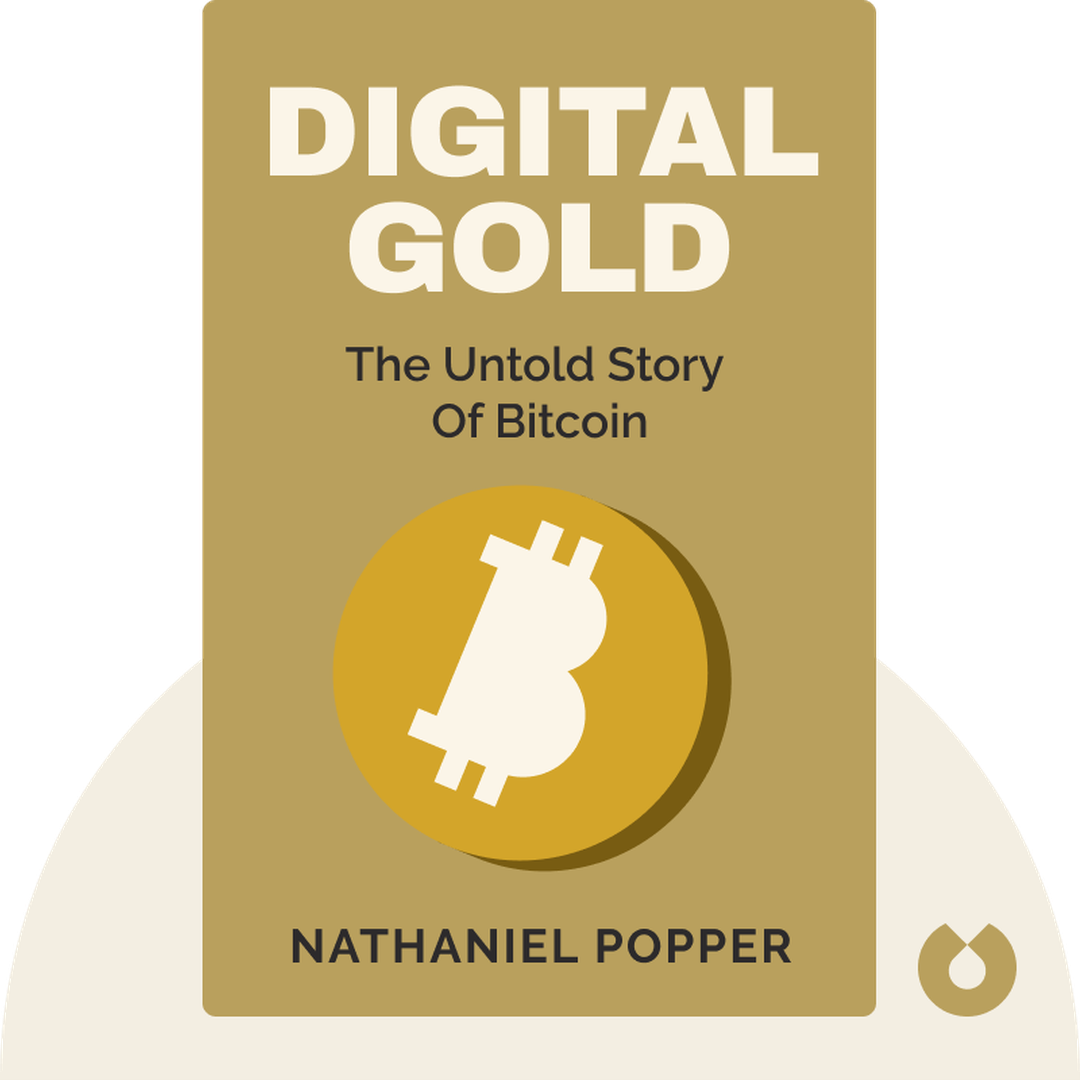
Digital Gold (2015) tells the story of the many different individuals – including cypherpunks, nerds, investors, gamblers and visionaries – that contributed to the rise of the world’s most successful cryptocurrency, Bitcoin. The book gives an overview of the way Bitcoin developed, showing how its value rose from nothing to over $1 billion, and telling the story of its troubled early stages.
Who Should Listen to Digital Gold?
- People curious about the future of money
- Concerned citizens who don’t trust banks
- Anyone selling goods on the internet
Books Similar to Digital Gold
Readers who enjoyed this also liked these titles.