If You're Curious About These Questions...
You should listen to this audiobook
- Have you ever wondered how top-tier sommeliers can identify a wine’s origin, grape variety, and even vintage after just one tiny sip?
- What’s the secret behind why some bottles of wine cost ten dollars while others fetch thousands—and can your palate actually tell the difference?
- Are you curious about the extreme, often bizarre training methods experts use to sharpen their senses and decode the hidden language of wine?
Listen to Cork Dork — Free Audiobook
Loading player...
Key Takeaways from Cork Dork
- Discover the obsessive lengths elite sommeliers go to in order to perfect their craft, from high-stakes blind tastings to protecting their palates with consistent toothpaste brands.
- Learn how to dramatically expand your mental catalog of flavors by intensely sampling every part of a fruit or even licking rocks to understand complex mineral profiles.
- Understand the crucial difference between taste and flavor, and realize why the classic tongue-taste map we learned in school is actually a complete scientific myth.
- Find out why smell is the true driving force behind experiencing food, and how holding your nose while drinking coffee proves that what we think of as taste is mostly aroma.
- Master your own sensory abilities by applying the scientifically proven method of daily smell-training to systematically improve your nose and better appreciate wine.
Learning Tools
Reinforce what you learned from Cork Dork
Mind Map
Cork Dork
The Sommelier Obsession+
The Science of Flavor+
Practical Wine Tasting+
The Art of Service+
Defining Good Wine+
Decoding Tasting Notes+
Actionable Takeaways+
Quiz — Test Your Understanding
Question 1 of 8
According to the text, what is a common misconception about how humans experience taste?
Question 2 of 8
Why did a top New York sommelier advise the author to stock up on her favorite toothpaste brand?
Question 3 of 8
When evaluating a glass of wine visually, what do slow, thick 'tears' rolling down the side of the glass indicate?
Question 4 of 8
How does the author suggest a beginner learn to identify the 'body' of a wine?
Question 5 of 8
According to wine economist Karl Storchmann, what happens to the quality of wine once the price exceeds roughly $60 a bottle?
Question 6 of 8
How do many producers of inexpensive, mass-market wines achieve specific flavor profiles or colors?
Question 7 of 8
Why did sensory chemist Ann Noble create the Wine Aroma Wheel?
Question 8 of 8
According to sommelier Victoria James, successfully choosing the right wine for a guest often involves:
Cork Dork — Full Chapter Overview
- 1Recommendation
- 2Becoming a top sommelier is an intense, even obsessive pursuit.
- 3Sommeliers take smell and taste very seriously.
- 4Most of us still understand little about how we experience flavor in food and drink.
- 5Simple methods can help detect a wine’s characteristics, with basic terms to describe them.
- 6For professional sommeliers, service matters just as much as wine knowledge.
- 7A good wine is one you want to keep drinking.
- 8Tasting notes are more likely to confuse than clarify.
- 9Bosker eventually passed her sommelier exam, showing wine can be mastered with dedication.
- 10Final summary
Cork Dork Summary & Overview
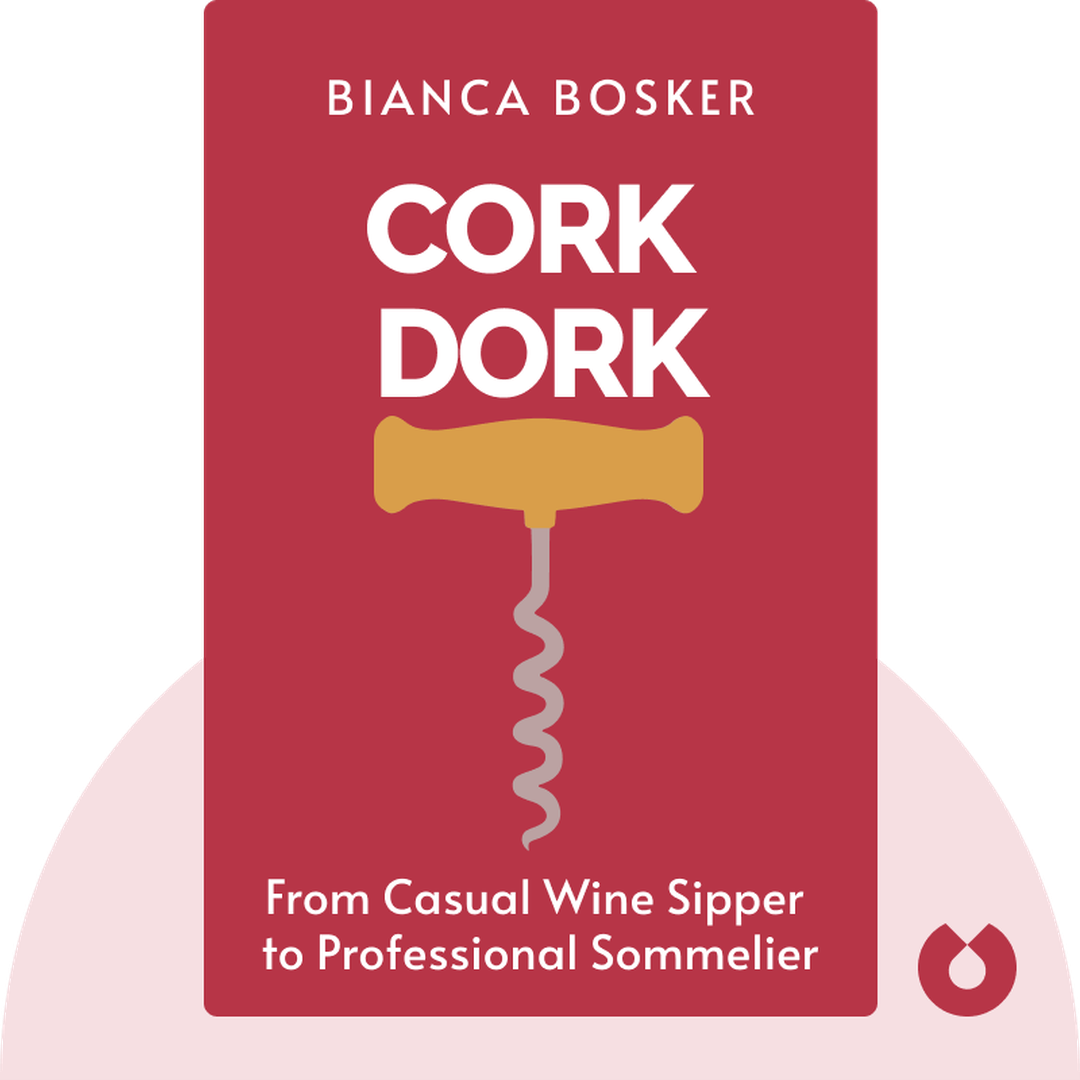
Cork Dork (2019) explores the world of wine through the eyes of one aspiring wine-expert. Bianca Bosker quit her job in journalism and set herself an ambitious goal: to become an expert sommelier. Despite having little prior knowledge of wine, she achieved this in just eighteen months. Along the way, she learned everything there is to know about wine – making it, serving it, tasting it, and talking about it.
Who Should Listen to Cork Dork?
- Drinkers curious about wine
- Aspiring sommeliers
- Diners unsure of what to drink
Books Similar to Cork Dork
Readers who enjoyed this also liked these titles.