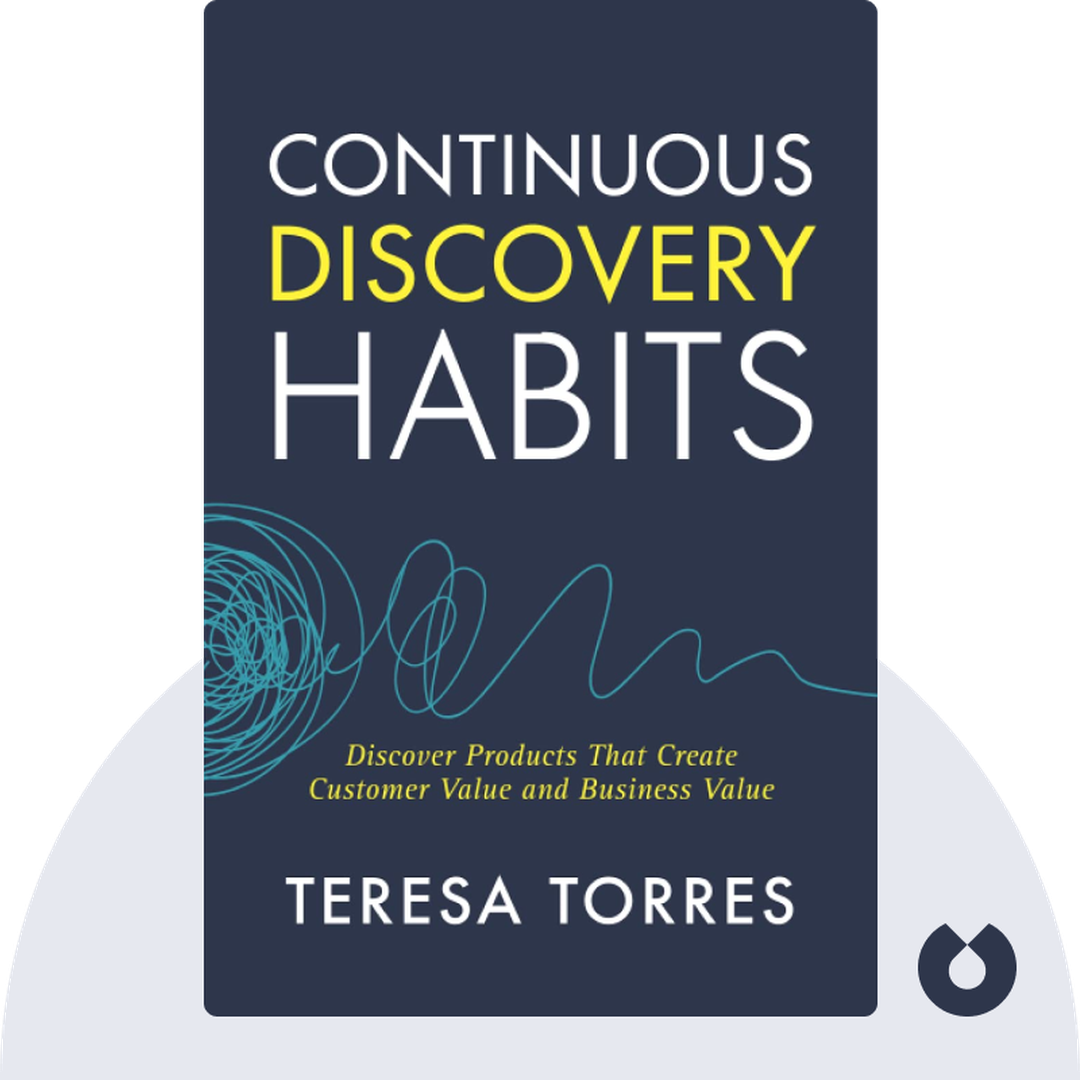
Continuous Discovery Habits
Start ListeningDownload Try free on iPhoneScan to start in 5 seconds
Categories:
If You're Curious About These Questions...
You should listen to this audiobook
- What’s the secret to building products that consistently hit the mark without wasting months on features that nobody actually wants?
- What if you could eliminate the guesswork from your product roadmap and make high-impact decisions with total confidence every single week?
- Have you ever wondered why some product teams seem to innovate effortlessly while others get stuck in a never-ending cycle of building features that don't move the needle?
Listen to Continuous Discovery Habits — Cinematic Audio Edition
Loading player...
Key Takeaways from Continuous Discovery Habits
- Understand the critical difference between business outputs and customer outcomes, and discover why focusing on driving changes in behavior rather than just building features will transform your product.
- Learn why patience is essential in continuous discovery by dedicating six to nine months to a few specific outcomes instead of constantly abandoning projects to put out fires.
- Discover the power of asking 'What impact will this change have?' to ensure your team stays focused on creating genuine value rather than disguising simple outputs as true outcomes.
- Shift your mindset from strictly solving problems to mapping opportunity spaces by viewing your customers' evolving needs, desires, and pain points as chances to positively impact their lives.
- Master a customer-centric approach to product development by identifying a desired outcome first, and then experimenting with solutions to make that outcome a reality.
Learning Tools
Reinforce what you learned from Continuous Discovery Habits
Mind Map
Continuous Discovery Habits
Outcomes vs. Outputs+
Mapping Opportunities+
Effective Market Research+
Ideation & Prioritization+
Quiz — Test Your Understanding
Question 1 of 7
According to the book, what is the fundamental difference between a business output and a business outcome?
Question 2 of 7
Why does the author advise against jumping from one outcome to the next every few months?
Question 3 of 7
What does the 'ice cream' example in the book illustrate about a product team's core focus?
Question 4 of 7
To avoid getting inaccurate answers during customer interviews due to the gap between people's 'ideal selves' and 'actual selves,' what should interviewers do?
Question 5 of 7
Why might customers give very brief answers during an interview, and how can a researcher counteract this?
Question 6 of 7
When a product team maps out a vast number of opportunities, how should they decide which one to focus on?
Question 7 of 7
What is the recommended approach for generating innovative and original ideas within a product team?
Continuous Discovery Habits — Full Chapter Overview
- 1Recommendation
- 2Focus on outcomes rather than outputs to build the right products for your customers.
- 3Pick the right outcome, then give it enough time to succeed.
- 4Strong product teams map their opportunities with care.
- 5Good market research depends on asking the right questions.
- 6Product teams should generate plenty of ideas — from customers and from within the team.
- 7Final summary
Continuous Discovery Habits Summary & Overview
Continuous Discovery Habits (2021) explores how product managers and designers can keep making a positive impact on their customers’ lives. It explores an optimal decision-making process for product teams, so that they can continue to improve their offerings.
Who Should Listen to Continuous Discovery Habits ?
- Product managers looking for a new way of working
- Entrepreneurs seeking a fresh perspective on creativity
- Product designers
Books Similar to Continuous Discovery Habits
Readers who enjoyed this also liked these titles.