If You're Curious About These Questions...
You should listen to this audiobook
- Have you ever wondered why your confidence fluctuates so easily, and how the ancient concept of the ‘Eight Worldly Winds’ could be the secret to your stability?
- What if true confidence isn’t something you need to build from scratch, but rather an innate wisdom that’s already waiting inside you?
- Are you curious about how ancient Buddhist teachings can help you navigate the chaos of the modern world and transform your relationship with yourself?
Listen to Confidence — Free Audiobook
Loading player...
Key Takeaways from Confidence
- Discover how to cultivate upekkha, or mindful resilience, so you can respond intentionally to life's ups and downs instead of reacting on autopilot.
- Understand why modern technology exploits our evolutionary drive to seek pleasure and avoid pain, and how to escape this anxious dopamine dystopia.
- Master the simple mindfulness practice of noting your feeling tone to separate inevitable physical pain from the mental suffering caused by resisting it.
- Learn why embracing the impermanence of praise, criticism, and fame can liberate you from the exhaustion of seeking constant external validation.
- Find out how contemplating your aloneness—when no one is watching or tracking you—can help you refocus on genuine relationships, integrity, and compassion.
Learning Tools
Reinforce what you learned from Confidence
Mind Map
Confidence
Core Concept: Mindful Resilience+
The 8 Worldly Winds+
Foundations of True Confidence+
Quiz — Test Your Understanding
Question 1 of 6
What does the Buddhist concept of 'upekkha' entail in the context of building confidence?
Question 2 of 6
According to the text, how do experienced meditators process pain differently than others?
Question 3 of 6
What liberating realization can be drawn from the concept of human transience and the 'second death'?
Question 4 of 6
What is the primary purpose of cultivating 'mudita' (sympathetic joy)?
Question 5 of 6
How does the text reframe the experience of a wandering mind during meditation?
Question 6 of 6
According to the final section, what three interconnected elements form the foundation of true confidence?
Confidence — Full Chapter Overview
- 1Recommendation
- 2Life’s ups and downs
- 3Pleasure and pain
- 4Praise and criticism, fame and obscurity
- 5Success and failure
- 6The foundations of confidence
- 7Final summary
Confidence Summary & Overview
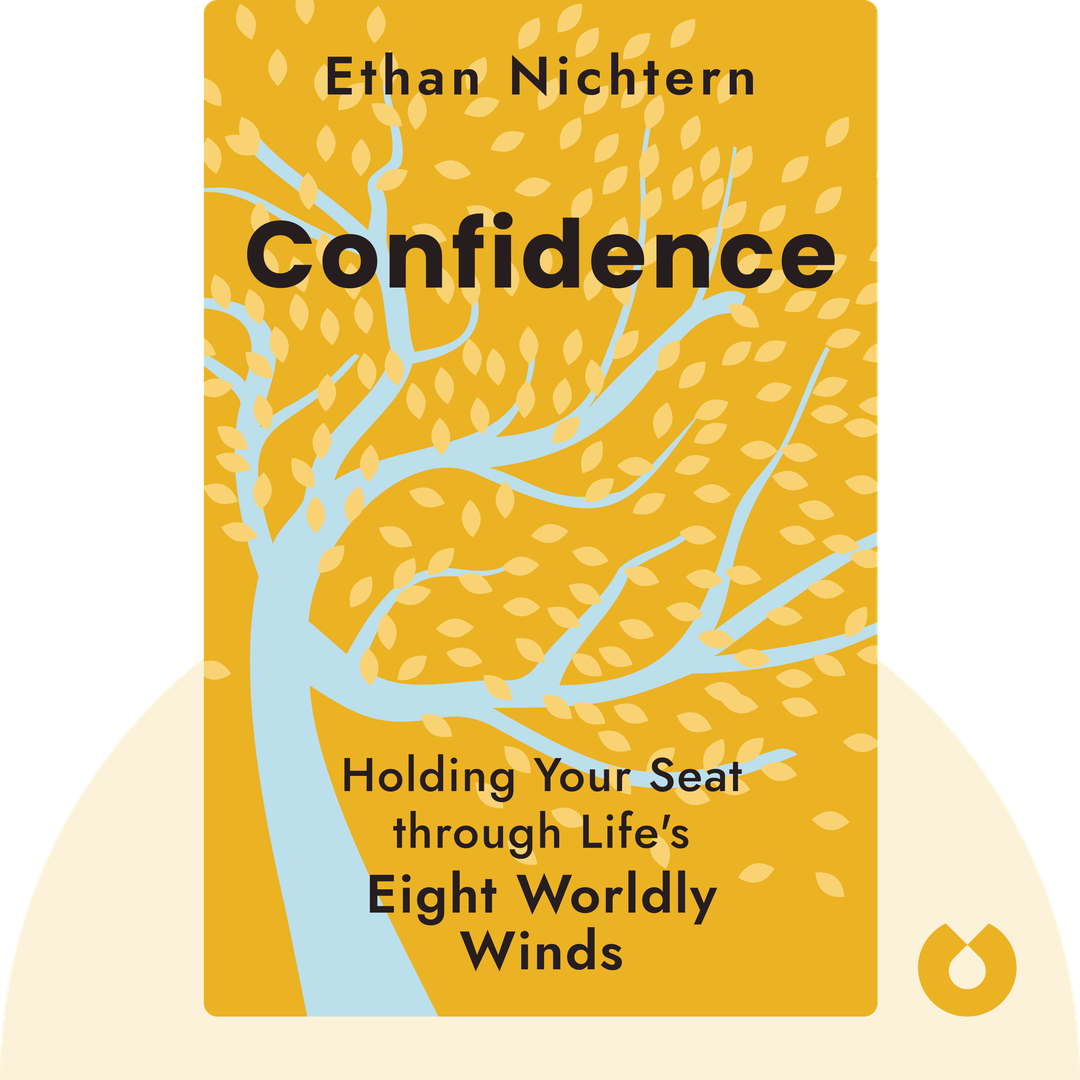
Confidence (2024) explores how to navigate today’s tumultuous world through the lens of Buddhist teachings. It examines the concept of the Eight Worldly Winds, offering insights into your relationships with yourself and others, and includes meditation exercises to help you access your innate wisdom and cultivate confidence.
Who Should Listen to Confidence?
- People struggling with confidence and self-doubt
- Mindfulness enthusiasts looking to deepen their practice
- Anyone interested in personal growth and self-improvement
Books Similar to Confidence
Readers who enjoyed this also liked these titles.