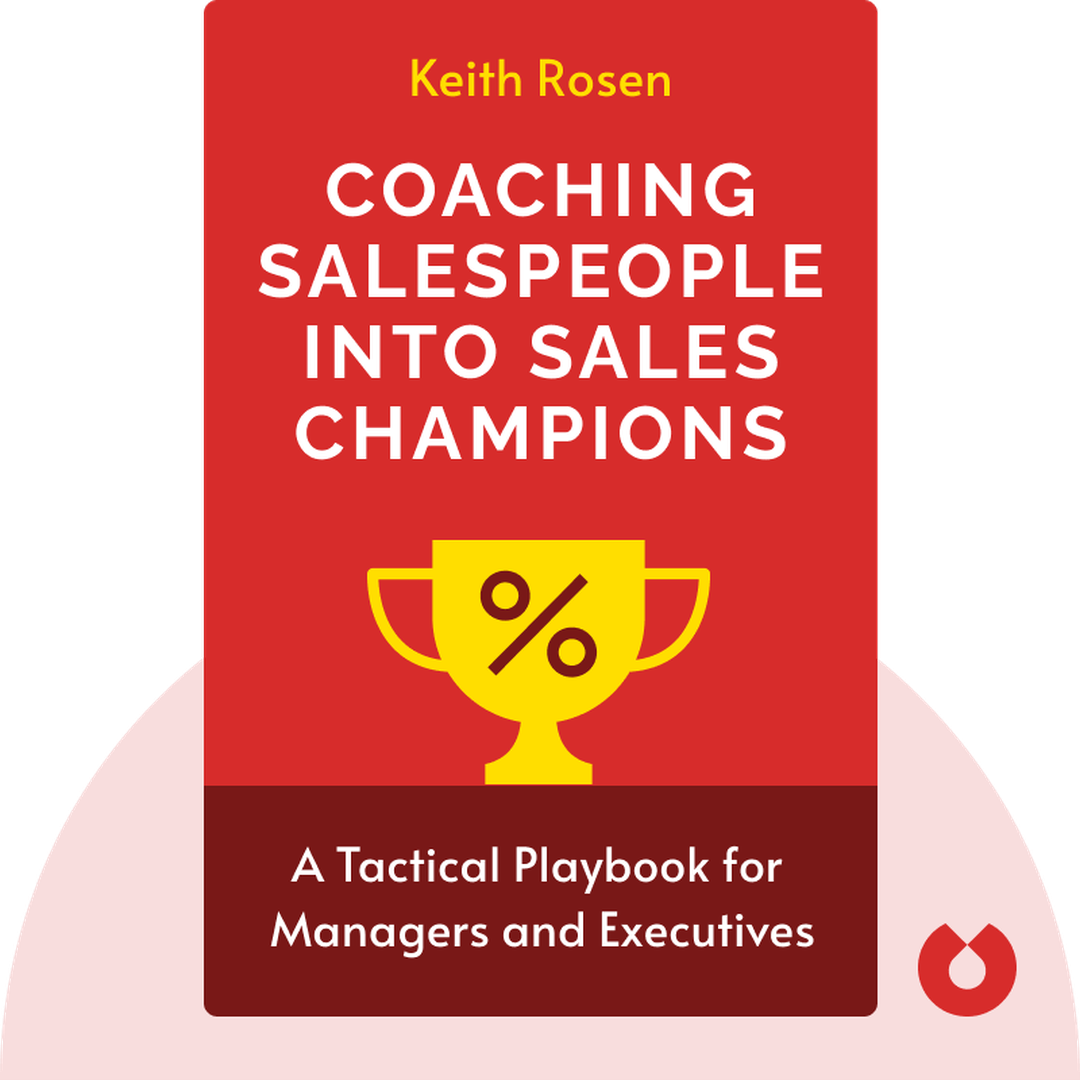
Coaching Salespeople into Sales Champions
Start ListeningDownload Try free on iPhoneScan to start in 5 seconds
Categories:
If You're Curious About These Questions...
You should listen to this audiobook
- Have you ever wondered why traditional management often stunts a salesperson's growth instead of fueling it?
- What if you could transform your role from a constant problem-solver into a coach who empowers your team to find their own winning strategies?
- What’s the secret to letting go of the fear of losing control while simultaneously building a more accountable and high-performing sales force?
Listen to Coaching Salespeople into Sales Champions — Cinematic Audio Edition
Loading player...
Key Takeaways from Coaching Salespeople into Sales Champions
- Understand the crucial differences between a consultant, a trainer, and a coach, and discover why daily or weekly coaching is the essential step to ensure your team actually applies their training.
- Discover why obsessing over future sales targets creates a paralyzing culture of fear, and learn how focusing on the present moment can drastically improve your team's performance.
- Master the strategy of prioritizing process over outcomes by letting go of rigid expectations and focusing instead on how your team's daily sales process is functioning.
- Learn how to customize your coaching approach to align with the unique personal and professional desires of each salesperson, rather than pushing them toward your own definition of success.
- Find out why you must stop solving every problem for your sales force and instead establish dedicated coaching sessions that empower them to assume more responsibility.
Learning Tools
Reinforce what you learned from Coaching Salespeople into Sales Champions
Mind Map
Coaching Salespeople into Sales Champions
Defining the Coach's Role+
Mindset: Conquering Fear+
Customizing the Strategy+
Empowering Salespeople+
The Enrolling Process+
Delivering Feedback+
Quiz — Test Your Understanding
Question 1 of 8
What is the primary difference between a trainer and a coach in the context of developing a sales team?
Question 2 of 8
According to the text, what is the most effective way for a sales manager to banish the fear of missing targets?
Question 3 of 8
How should a great sales coach view the relationship between expectations and possibilities?
Question 4 of 8
What key coaching mistake did Jack, the sales manager, make when working with his team?
Question 5 of 8
Why does the author advise managers to stop handing out well-thought-out solutions to their employees' problems?
Question 6 of 8
Which of the following is an example of a 'solution-oriented question' rather than a 'problem-focused question'?
Question 7 of 8
In the 'enrolling' process for coaching, what is the purpose of using words like 'imagine,' 'think about,' or 'consider'?
Question 8 of 8
How does the author suggest managers improve the way they offer praise to their team members?
Coaching Salespeople into Sales Champions — Full Chapter Overview
- 1Recommendation
- 2To set your sales team up for success, first uncover exactly what they need.
- 3Don’t let fear of missed targets paralyze your team or stress you out; focus on the present.
- 4Great sales coaching means trusting the process over results and staying open to possibilities.
- 5Strong coaches understand exactly what every team member needs and wants.
- 6Stop solving problems for your sales force; ask the right questions so they can learn.
- 7Get salespeople invested in coaching by encouraging honest, authentic conversations.
- 8Final summary
Coaching Salespeople into Sales Champions Summary & Overview
Coaching Salespeople into Sales Champions (2008) is the sales manager’s guide to coaching salespeople and learning how to build powerful connections among your sales force. You’ll learn how to empower your team, let go of your fears and become a highly effective sales coach.
Who Should Listen to Coaching Salespeople into Sales Champions?
- Sales managers
- Entrepreneurs looking to build an effective sales force
- Consultants, trainers and coaches
Books Similar to Coaching Salespeople into Sales Champions
Readers who enjoyed this also liked these titles.